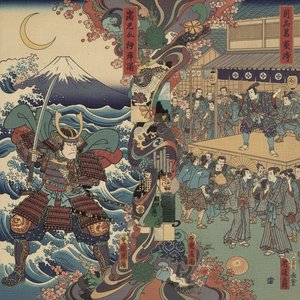
Kobayakawa Kiyoshi (小早川清) – A Pioneer of Shin Hanga Elegance
Kiyoshi Kobayakawa (小早川 清), born December 11, 1899, in Fukuoka Prefecture, Japan, stands as a pivotal figure within the Shin Hanga movement—a revitalizing force that breathed new life into traditional Japanese woodblock printing during the early 20th century. His artistic journey intertwined seamlessly with the broader cultural landscape of his time, marked by rapid modernization alongside an enduring fascination for preserving Japan’s heritage. Despite limited biographical information remaining available, Kobayakawa's impact on modern art history is undeniable, primarily due to his masterful blending of Western influences—particularly the Impressionist concept of light and atmospheric perspective—with the core tenets of Edo-period aesthetics.Early Life and Artistic Training
Kobayakawa’s formative years instilled in him a profound appreciation for both Eastern and Western artistic traditions. He commenced his formal training under the tutelage of Kaburagi Kiyokata (鏑木清方), a celebrated Nihonga artist whose teachings profoundly shaped Kobayakawa's stylistic approach. This mentorship ensured he grasped the foundational techniques of Ukiyo-e—the art form that would define his oeuvre—establishing him firmly within the Shin Hanga lineage. The influence of Kaburagi Kiyokata extended beyond mere technical proficiency; it fostered a sensitivity to capturing nuanced emotions and conveying atmospheric depth, characteristics that would become hallmarks of Kobayakawa’s distinctive visual language.The Shin Hanga Movement: Innovation Amidst Tradition
Kobayakawa's involvement in the Shin Hanga movement represents a cornerstone of his artistic legacy. Emerging in the 1920s, this collaborative endeavor championed by Watanabe Shōzaburō sought to reinvigorate Ukiyo-e’s artistic spirit while maintaining its established production system—a division of labor between artist, carver, printer, and publisher. Kobayakawa skillfully navigated this dynamic environment, integrating Western techniques like Impressionistic light rendering with traditional themes such as landscapes, portraits of beautiful women (bijin-ga), depictions of Kabuki actors, and serene flower arrangements (kusuma). This fusion cemented Shin Hanga’s position as a bridge between East and West, propelling it to international acclaim.Kobayakawa's Artistic Style: Light, Emotion, and Delicate Color Palette
Kobayakawa’s artistic style is characterized by an exceptional command of color—particularly pastel hues—and a meticulous attention to detail that captures the ephemeral beauty of nature and human emotion. Unlike many contemporaries who prioritized bold stylistic statements, Kobayakawa favored subtlety and nuance, prioritizing atmospheric illumination and expressive tonal gradations. His prints frequently portray scenes bathed in soft light, conveying moods of tranquility and contemplation. Furthermore, he demonstrated an uncanny ability to distill complex emotions into visual representations—a skill that resonated deeply with audiences captivated by his evocative imagery.Notable Works and Legacy
Kobayakawa’s artistic output encompassed a diverse range of subjects, reflecting the multifaceted concerns of his era. Among his most celebrated pieces are “Cool Evening at a Restaurant,” depicting Ichimaru, a geisha, showcasing intricate details and refined beauty—a testament to Shin Hanga's commitment to capturing realistic representations alongside symbolic resonance. His prints also explored themes of urban life and social change, mirroring the dynamism of Tokyo during the Jazz Age. Kobayakawa’s enduring influence extends beyond his artistic achievements; he served as an inspiration for subsequent generations of artists striving to reconcile tradition with modernity—a pursuit that continues to shape Japanese art today. He died April 4, 1948, in Tokyo.- Notable Works: “Cool Evening at a Restaurant,” “The Laughing Girl,” “Cherry Blossoms”
- Influences: Kaburagi Kiyokata (Nihonga), Impressionism
- Movement Affiliations: Shin Hanga