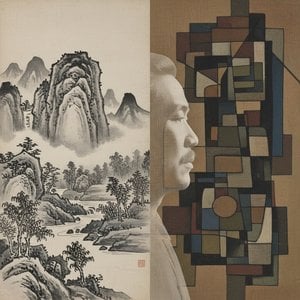
Kim Byung-jong (Dan-A): A Synthesis of East and West
Kim Byung-jong, known professionally as Dan-A, stands as a prominent figure in contemporary Korean painting, recognized for his distinctive artistic approach that seamlessly blends Eastern traditions with Western influences. Born in Seoul, South Korea, in 1953, Kim’s journey into art began amidst the burgeoning cultural landscape of post-war Korea and has evolved into a career marked by unwavering dedication to exploring themes of life, nature, and spirituality.
- Early Influences & Education: Kim’s formative years were deeply impacted by Seoul National University's College of Fine Arts, where he honed his skills in oriental painting—a discipline rooted in centuries of Korean artistic heritage. This foundational training instilled within him a profound appreciation for brushwork techniques and compositional principles characteristic of traditional ink wash landscapes and portraits.
- The Turning Point: A serious accident in 1989 served as a catalyst for Kim’s artistic introspection, prompting him to confront mortality and fostering an enduring fascination with the fragility and beauty of existence. This pivotal experience fueled his desire to capture the essence of life—a theme that would become central to his oeuvre.
- Style & Technique: Dan-A's signature style distinguishes itself through a masterful fusion of Eastern and Western aesthetics. He employs textured canvases, often incorporating Hanji (Korean mulberry paper), to imbue his paintings with tactile qualities reminiscent of traditional Korean art forms. Simultaneously, he draws inspiration from Impressionistic color palettes and compositional strategies, resulting in works that resonate with both visual richness and emotional depth.
Exploring Life’s Essence Through Landscape & Portraiture
Kim Byung-jong's artistic vision consistently centers on portraying the profound interconnectedness between humanity and nature—a motif powerfully expressed in his landscape paintings. Recurring motifs include cranes, birds, and fish, symbolizing longevity, harmony, and spiritual aspiration. These elements are meticulously arranged against serene backgrounds rendered with subtle gradations of color, mirroring the contemplative spirit of Zen Buddhism and reflecting Korea’s rich cultural heritage.
- Landscape Series: His “Song of Life” series exemplifies this preoccupation with nature's vitality, utilizing Hanji to create a textured surface that subtly captures the ephemeral beauty of fleeting moments. The incorporation of symbolic imagery—such as the red flower—represents not only life itself but also its inherent vulnerability and transformative potential.
- Portraiture: Alongside landscapes, Kim’s portraits delve into psychological complexity, capturing subjects with sensitivity and nuance. He skillfully employs expressive brushstrokes to convey emotion and personality, mirroring the humanist tradition prevalent in Western art while retaining a distinctly Korean aesthetic sensibility.
Recognition & Legacy
Throughout his prolific career, Kim Byung-jong has garnered considerable acclaim for his artistic contributions—receiving the Korea Order of Cultural Merit in 2014 from the Ministry of Culture, Sports and Tourism—a testament to his enduring influence on Korean art. His work has been exhibited internationally, showcasing his distinctive style and furthering dialogue between Eastern and Western artistic traditions.
- Institutional Involvement: Kim served as Director of Seoul National University Museum from 2002 to 2004, actively promoting the preservation and dissemination of Korean art history.
- Donations & Exhibitions: He generously donated approximately 440 artworks—including his celebrated “Song of Life” series—to the Kim Byungjong Art Museum established in Namwon, bolstering the city’s cultural landscape and ensuring that his artistic legacy would endure for generations to come.
Continuing Artistic Exploration
Currently residing in Seoul, Kim Byung-jong continues to refine his artistic practice, experimenting with new mediums and exploring fresh thematic concerns—most notably utilizing five cardinal colors in his latest series. His unwavering commitment to capturing the essence of life through art underscores his enduring belief in the transformative power of creative expression and reaffirms his position as a pivotal voice within Korean contemporary art.