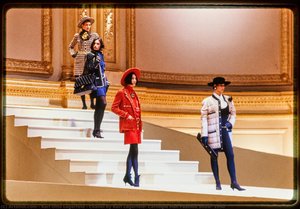
The Enduring Vision of Karl Lagerfeld
Karl Otto Lagerfeld, a name synonymous with reinvention and enduring style, was more than just a fashion designer; he was a cultural phenomenon. Born in Hamburg, Germany, in 1933, his life story is one of relentless creativity and an unwavering dedication to the art of design. From his early beginnings sketching designs as a young boy, captivated by the world of haute couture, it became clear that Lagerfeld possessed a unique artistic sensibility. His family’s move to Paris in the wake of rising political tensions proved pivotal, immersing him in the heart of the fashion world and setting the stage for an extraordinary career. He wasn't merely observing trends; he was destined to *create* them. The removal of the “t” from his surname – Lagerfeldt becoming Lagerfeld – was an early indication of his desire to shape his own narrative, to craft a brand as precise and impactful as his designs.
A Master of Many Houses
Lagerfeld’s ascent in the fashion industry wasn't confined to a single house; it was a masterful orchestration across several iconic brands. His early work with Pierre Balmain provided invaluable experience, honing his technical skills and understanding of garment construction. He then moved through Jean Patou and Chloé, each position allowing him to refine his aesthetic and develop a signature style – one characterized by sharp tailoring, innovative silhouettes, and an audacious spirit. However, it was his long-standing collaboration with Fendi, beginning in 1965 and lasting over five decades, that demonstrated his remarkable versatility. He revolutionized the perception of fur, transforming it from a traditional material into a symbol of modern luxury through inventive techniques and playful designs. But it was 1983 when Lagerfeld truly cemented his legacy, accepting the role of creative director at Chanel. The house, steeped in history but perceived by some as fading into irrelevance, needed revitalization. Lagerfeld didn’t attempt to replicate Coco Chanel; he *reinterpreted* her vision for a new era, injecting energy and modernity while respecting the core principles of elegance and sophistication.
Deconstructing and Rebuilding Elegance
Lagerfeld's genius lay in his ability to deconstruct established codes and rebuild them into something entirely fresh. At Chanel, he understood that true innovation wasn’t about abandoning tradition but rather reimagining it. He reintroduced the iconic tweed suit, but updated its proportions and styling for contemporary women. He embraced bold colors and unexpected materials, challenging conventional notions of what Chanel could be. His designs weren't simply clothes; they were statements – declarations of independence, confidence, and a refusal to conform. Beyond clothing, Lagerfeld extended his creative vision into photography, capturing the essence of his collections through striking imagery that often featured himself behind the lens. These photographs weren’t merely promotional tools; they were artistic expressions in their own right, solidifying his reputation as a visual storyteller. He understood the power of image and used it to build a cohesive brand identity that resonated with audiences worldwide.
The Kaiser's Lasting Influence
Karl Lagerfeld’s impact on the fashion industry is immeasurable. His relentless work ethic, his unwavering commitment to innovation, and his distinctive personal style – the dark sunglasses, the fingerless gloves, the high-collared shirts – made him an instantly recognizable figure, earning him the moniker “Kaiser Karl.” He wasn't just designing clothes; he was crafting a persona, a myth. His influence extends far beyond the runway, inspiring countless designers and shaping contemporary aesthetics.
- Museum Collections: His designs are now preserved in prestigious institutions like The Museum Collection Hugo Fischer and the Gemäldegalerie Alte Meister, recognizing his contribution to art and culture.
- A Legacy of Collaboration: Lagerfeld’s willingness to collaborate with artists from diverse fields further broadened his creative horizons and demonstrated his open-minded approach to design.
- Redefining Luxury: He challenged traditional notions of luxury, making it more accessible while maintaining a sense of exclusivity and sophistication.
Even after his passing in 2019, Karl Lagerfeld’s vision continues to resonate. His designs remain timeless, his aesthetic principles continue to inspire, and his legacy as one of the most influential figures in fashion history is firmly secured. He proved that true style isn't about following trends; it's about creating them – a lesson that will undoubtedly endure for generations to come.