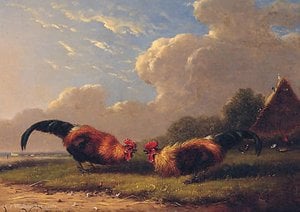
Franz van Severdonck: A Flemish Landscape Painter Embraced by Cattle
Franz van Severdonck (1809-1889) stands as a significant figure in Belgian art history, particularly renowned for his captivating depictions of rural landscapes populated with cows and sheep. Born in Brussels, he emerged from a milieu steeped in artistic tradition—the legacy of Eugène Verboeckhoven—a fellow artist who championed the portrayal of livestock as a genre, establishing it as a popular subject amongst Flemish painters during the 19th century. While biographical details remain somewhat sparse, his meticulous technique and profound understanding of animal behavior speak volumes about his dedication to capturing the essence of the Belgian countryside.
- Early Life & Training: Precise information regarding van Severdonck’s formative years is elusive. However, it's believed he honed his artistic skills through self-study and perhaps informal instruction, mirroring the prevalent practice among artists of his era who prioritized independent exploration over formal academic training.
- Verboeckhoven’s Influence: Eugène Verboeckhoven’s success in depicting cattle—particularly at the Salon—served as a powerful catalyst for van Severdonck's artistic trajectory. Verboeckhoven’s masterful compositions and expressive brushstrokes instilled in Severdonck a commitment to conveying not merely visual accuracy but also emotional resonance within his landscapes.
- Style & Technique: Van Severdonck’s distinctive style is characterized by a restrained palette—primarily muted greens, browns, and blues—that effectively conveys the atmospheric conditions of Belgian fields and pastures. His brushwork is deliberate and textured, meticulously rendering the contours of animals and vegetation with remarkable precision.
- Notable Works: Among his most celebrated paintings are “Domestic Fowl In A Landscape” and “Flock Of Sheep,” which exemplify his mastery of genre painting and landscape artistry. These works showcase his ability to capture fleeting moments of rural life, imbued with a palpable sense of tranquility and observation.
- Legacy & Historical Significance: Franz van Severdonck’s contribution to Belgian art extends beyond individual masterpieces; he represents a pivotal voice in the broader artistic movement of his time—the Flemish Cattle Painters—a group dedicated to elevating livestock depictions as a genre, reflecting the socio-economic realities of rural Belgium during the Victorian period. His work continues to inspire admiration for its understated beauty and unwavering fidelity to nature’s grandeur.
Exploring Themes of Pastoral Tranquility and Observation
Van Severdonck's artistic vision centered on conveying a profound connection between humanity and the natural world—a sentiment deeply rooted in the Romantic tradition that prevailed throughout Europe during his lifetime. Unlike more flamboyant Impressionists who sought to capture immediate sensory impressions, Severdonck prioritized careful observation and nuanced rendering of light and shadow, aiming to evoke a contemplative mood within the viewer. His landscapes are populated not merely with animals but also with figures engaged in quiet activities—farmers tending their herds, children playing amidst the fields—creating scenes that resonate with timelessness and simplicity.
Connections to Eugène Verboeckhoven and the Cattle Painters Movement
The influence of Eugène Verboeckhoven cannot be overstated on Franz van Severdonck’s artistic development. Verboeckhoven's pioneering success at the Salon in depicting cattle—particularly his monumental canvases featuring herds of cows—established livestock painting as a respected genre within Belgian art circles. Severdonck wholeheartedly embraced this trend, adopting Verboeckhoven’s compositional strategies and expressive brushstrokes to imbue his own landscapes with similar dynamism and emotional depth. This shared commitment to portraying animals in rural settings solidified van Severdonck's position as a key figure in the Cattle Painters Movement—a collective of artists who championed the depiction of livestock as a symbol of national identity and pastoral virtue.
Notable Paintings & Artistic Achievements
“Domestic Fowl In A Landscape” stands as perhaps Severdonck’s most iconic work, demonstrating his exceptional skill in capturing atmospheric conditions and conveying subtle nuances of emotion. The painting's muted palette—dominated by earthy tones—creates a sense of serene contemplation, mirroring the artist’s own aesthetic sensibilities. Similarly, “Flock Of Sheep,” executed with meticulous detail and textural brushwork, exemplifies Severdonck’s dedication to portraying animal behavior with accuracy and sensitivity. These paintings secured his reputation as one of Belgium's foremost landscape artists during the Victorian era—a testament to his artistic prowess and unwavering devotion to capturing the beauty of rural life.
Concluding Reflections: A Lasting Impression
Franz van Severdonck’s legacy extends beyond his individual artworks; he embodies the spirit of Belgian Romanticism—a movement characterized by idealism, emotion, and a reverence for nature's sublime grandeur. His paintings continue to captivate viewers with their understated elegance and profound observation of the natural world—reminding us that true artistic achievement lies not merely in technical virtuosity but also in conveying enduring themes of tranquility, contemplation, and human connection to the pastoral landscape.