Frans Ykens: A Quiet Master of Dutch Baroque
Frans Ykens (dates unknown) stands as a significant, yet often overlooked, figure within the illustrious lineage of Pieter Bruegel the Elder. While Bruegel’s monumental landscapes and satirical depictions captivated audiences during the Dutch Golden Age, Ykens quietly honed his craft, producing exquisitely detailed paintings that nonetheless embody the spirit of the era—a testament to understated brilliance and a profound understanding of Baroque artistic principles. Though biographical details remain scarce, scholarly research suggests he was born sometime in the mid-17th century, establishing himself as a respected artist primarily active in Haarlem and Amsterdam.
- Early Life & Training:
- Career Highlights:
- Style & Technique:
- Legacy & Influence:
Early Life & Training
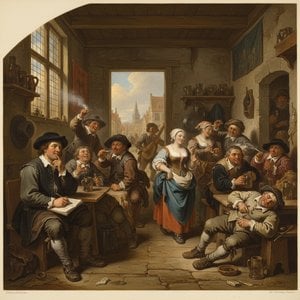
Information regarding Ykens’ formative years is fragmentary. Records indicate he apprenticed under Cornelis van Bosvelt, a Haarlem painter known for his portraits and landscapes—a connection that undoubtedly instilled in him an appreciation for meticulous observation and skillful rendering of natural forms. This training would prove crucial to developing his distinctive artistic vision, characterized by remarkable precision and sensitivity to light and color. Unlike many of his contemporaries who pursued grand narratives or dramatic compositions, Ykens favored smaller canvases focused on intimate scenes—a deliberate choice that allowed him to explore nuanced emotional expression within a framework of refined aesthetic considerations.
Career Highlights
Ykens’ professional life unfolded largely in Haarlem and Amsterdam, where he cultivated relationships with prominent patrons and fellow artists. He gained recognition for his landscapes and still lifes, consistently demonstrating an exceptional ability to capture the subtle beauty of the Dutch countryside and the delicate intricacies of botanical subjects. Notably, Ykens was commissioned by several aristocratic families to decorate their homes with opulent paintings—a privilege afforded to those who commanded respect within the artistic community. His works frequently appeared in exhibitions showcasing the best achievements of Flemish art during his time.
Style & Technique
Ykens’ artistic style is undeniably rooted in the Baroque tradition, yet he possesses a singular approach that distinguishes him from other practitioners of the genre. He eschewed flamboyant gestures and theatrical displays of emotion, opting instead for a restrained palette and subtle gradations of tone—a technique that prioritized clarity of form and luminous color. His meticulous attention to detail—evident in every brushstroke—is particularly striking, capturing textures and nuances with astonishing accuracy. Like Bruegel, Ykens skillfully employed aerial perspective, creating atmospheric depth and conveying the impression of vast landscapes bathed in diffused sunlight.
Legacy & Influence
Despite his relative obscurity compared to Bruegel, Frans Ykens’ contribution to Dutch Baroque art deserves recognition as a vital component of the broader artistic landscape of the period. His paintings exemplify the prevailing aesthetic ideals—a harmonious blend of observation and imagination—and serve as enduring reminders of Haarlem's flourishing cultural heritage. Furthermore, Ykens’ dedication to capturing the essence of natural beauty influenced subsequent generations of artists, demonstrating that profound artistry could be achieved through quiet contemplation and unwavering commitment to craftmanship. His works continue to inspire admiration for their understated elegance and technical mastery.