A Delicate Hand: The Life and Art of Francesco Carbonara
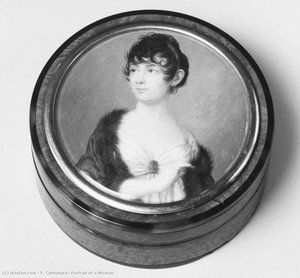
Francesco Carbonara, a name perhaps less celebrated than some of his contemporaries, nevertheless occupies a significant niche in the history of Italian portraiture. Born in Naples in 1750, Carbonara flourished during a period of artistic transition – the waning years of Rococo giving way to the burgeoning Neoclassical style. While biographical details remain somewhat sparse, we know he dedicated himself primarily to painting and miniature work, achieving particular renown for his exquisitely rendered ivory portraits. His career spanned the late 18th and early 19th centuries, a time marked by political upheaval and shifting aesthetic sensibilities, yet Carbonara maintained a consistent focus on capturing the likenesses of Naples’ elite with remarkable precision and grace. He died in 1830, leaving behind a legacy of intimate portraits that offer a fascinating glimpse into the lives and fashions of his era.
The Neapolitan Context and Early Influences
Carbonara's artistic formation unfolded within the vibrant cultural landscape of Naples, a city steeped in history and brimming with artistic activity. The court of Charles III, and later Ferdinand IV, fostered a flourishing arts scene, attracting artists from across Europe. While specific mentors remain undocumented, it’s reasonable to assume Carbonara was exposed to the prevailing styles of the Neapolitan school – a blend of Baroque drama tempered by an emerging Rococo lightness. However, his true mastery lay in miniature painting, specifically portraits executed on ivory. This demanding technique required not only exceptional skill in capturing likeness but also a profound understanding of light and shadow to imbue such small-scale works with life and depth. The influence of French portrait miniaturists, popular amongst the European aristocracy at the time, cannot be discounted; their emphasis on refined detail and elegant poses likely shaped Carbonara’s early development.
A Portraitist of Refinement: Style and Technique
Carbonara's work is immediately recognizable for its meticulous attention to detail and delicate execution. He specialized in portraying members of the Neapolitan aristocracy, capturing not merely physical resemblance but also a sense of their social standing and individual character. His portraits are typically head-and-shoulders compositions, often set against neutral backgrounds that serve to emphasize the sitter’s features and attire. The ivory support itself dictated a particular approach – Carbonara employed thin layers of paint, building up tones gradually to create subtle gradations of light and shadow. This technique resulted in works characterized by an almost luminous quality, with a remarkable sense of realism.
His ‘Portrait of a Woman’, held in the collection of the Metropolitan Museum of Art, exemplifies this mastery – the subject's gaze is both direct and engaging, her features rendered with exquisite precision, while the delicate rendering of her lace collar and hairstyle speaks to his technical skill. He wasn’t merely replicating appearances; he was crafting enduring images that conveyed a sense of elegance, refinement, and social status.
Major Achievements and Lasting Significance
While Carbonara did not produce a vast body of work, the quality of his surviving portraits is consistently high. His success lay in catering to the demands of a discerning clientele who valued both artistic skill and accurate representation.
His ‘Portrait of a Man’, also at the Metropolitan Museum of Art, demonstrates his ability to capture masculine strength and dignity with equal finesse. These works are not simply historical documents; they are compelling portraits that offer insights into the lives and values of 18th-century Naples. Carbonara's significance lies in his dedication to a specific genre – ivory miniature portraiture – and his exceptional skill in mastering its demanding techniques. He represents a bridge between the Rococo and Neoclassical periods, blending elements of both styles in his refined and elegant compositions.
Rediscovering Carbonara: A Legacy of Intimacy
In recent years, there has been renewed interest in Francesco Carbonara’s work, as scholars and collectors alike recognize the quality and historical importance of his portraits. His paintings offer a unique window into the world of 18th-century Naples, providing valuable insights into the fashions, social customs, and artistic tastes of the era.
- His meticulous technique continues to inspire admiration.
- The intimacy of his portraits offers a compelling glimpse into the lives of his sitters.
- Carbonara’s work serves as a reminder of the importance of preserving and celebrating lesser-known artists who made significant contributions to art history.
As more of his works come to light, we can expect a fuller appreciation of this delicate hand and his enduring legacy.