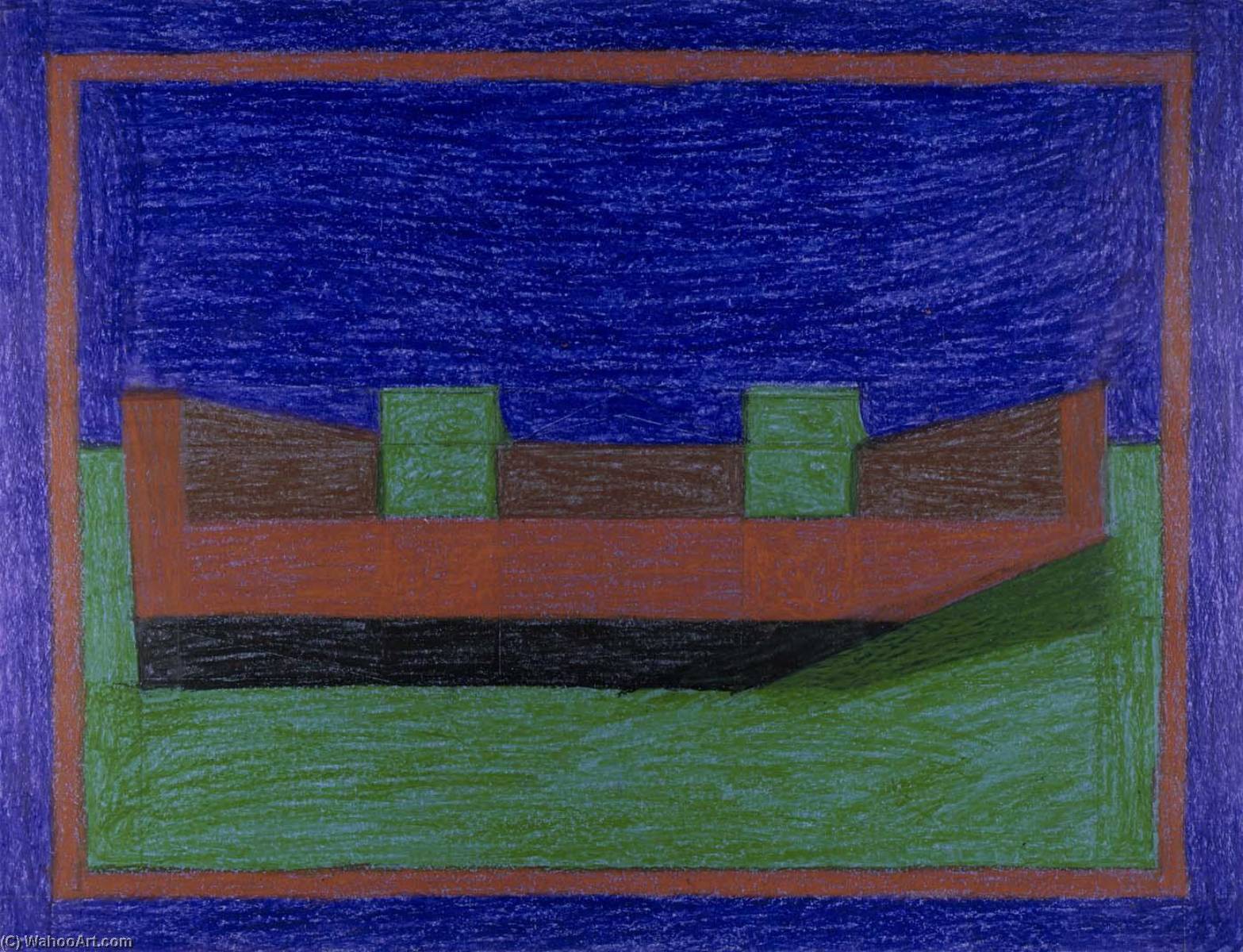
A Vision in Crayon: The Singular World of Eddie Arning
Eddie Arning (1898-1993) was an American outsider artist whose work, largely created during the latter half of his life, offers a profoundly unique and compelling vision of faith, Americana, and everyday existence. Born in Texas, Arning lived a relatively quiet life as a farmer and handyman before embarking on a prolific artistic journey that would only gain recognition after his death. He wasn’t formally trained; his medium was almost exclusively crayon, and his subjects sprang from the depths of his personal beliefs and observations. To call him “self-taught” feels inadequate – Arning didn't seek instruction, he simply *needed* to create, driven by an inner compulsion that manifested in a vibrant, often startlingly direct style. His art isn’t about technical mastery; it’s about raw expression, unwavering conviction, and the unfiltered translation of his internal world onto paper.
From Farm Life to Artistic Revelation
Arning's early life provided little indication of the artistic fervor that would later consume him. He worked the land, a practical existence far removed from galleries or art schools. The turning point appears to have come in his 60s, when he began producing an astonishing number of crayon drawings and paintings. These weren’t sketches or preliminary studies; they were fully realized works, often large in scale, depicting scenes ranging from biblical narratives – particularly those surrounding
Jesus Christ – to depictions of contemporary
American life, rural landscapes, and even abstract patterns. The sheer volume of his output is remarkable, suggesting a relentless creative energy that demanded release. He wasn’t creating for an audience; he was creating because he *had* to. This inherent need is crucial to understanding the power and authenticity of his work. His home became filled with these images, transforming his living space into a personal chapel and gallery simultaneously.
Themes and Symbolism: A Personal Mythology
The core of Arning’s artistic vision revolves around religious themes, specifically his interpretation of Christianity. However, his depictions of Jesus are far from conventional. They are often intensely emotional, sometimes unsettling, and imbued with a distinctly personal
symbolism. Figures radiate light, appear in multiple forms within the same composition, or are surrounded by swirling patterns that suggest divine energy. Beyond
religious iconography, Arning’s work is populated with scenes of
everyday life – families,
farm animals, cars, houses – rendered with a naive simplicity that belies their
emotional depth. He frequently incorporated text into his works, often repeating phrases or biblical verses, further emphasizing the spiritual and moral weight he attached to his subjects.
Vintage Americana is also a key element; images of mid-century automobiles, clothing styles, and domestic interiors ground his visions in a specific time and place, creating a fascinating juxtaposition between the sacred and the mundane. The repetition of certain motifs – stars, crosses, swirling lines – suggests a personal mythology that unfolds across the breadth of his oeuvre.
Technique and Style: The Power of Crayon
Arning’s choice of crayon as his primary medium is perhaps one of the most striking aspects of his work. It's an unconventional material for serious art, often associated with childhood or amateur expression. Yet, Arning wielded it with remarkable skill and intensity. He layered colors to create depth and texture, used bold outlines to define forms, and exploited the inherent vibrancy of the crayon itself. His style is characterized by a
naive simplicity, a lack of traditional perspective or anatomical accuracy that contributes to the raw emotional power of his images. The slightly waxy texture of the crayon adds another layer of tactility to his work, inviting viewers to engage with it on a visceral level. He often worked on large sheets of paper or cardboard, creating expansive compositions that envelop the viewer in his world. This deliberate choice of scale and medium reinforces the sense of immediacy and authenticity that defines his art.
Legacy and Historical Significance: The Outsider’s Voice
Eddie Arning remained largely unknown during his lifetime. His work was discovered after his death by a collector who recognized its extraordinary power and originality. Since then, it has gained increasing attention from the art world, earning him recognition as a significant figure in
outsider art and
American folk art. Arning’s work challenges conventional notions of artistic training and skill, demonstrating that profound creativity can emerge from unexpected sources. His unwavering faith, his unique vision, and his raw
emotional expression resonate deeply with viewers, offering a glimpse into the inner world of an artist who remained true to himself despite – or perhaps because of – his isolation. He stands as a testament to the power of art as a means of personal revelation and spiritual exploration, a voice from the margins that continues to captivate and inspire.
- His work is now held in numerous private collections and museums.
- Arning’s “Jesus craze” artwork has become particularly sought after by collectors.
- He represents a significant example of self-taught American art from the 20th century.