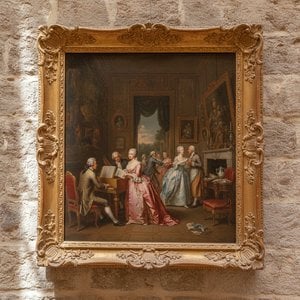
Basile De Loose (1809–1885): Belgian Painter, Genre Master of Genre Scenes
Basile De Loose ( Zele 1809-1885 City of Brussels) was Belgian painter, genre master of genre scenes. Studied painting from his father … Twelve paintings by his father hang in the church of Zele, where also one painting by Basile De Loose is located (The Way of the Cross). He was trained in Antwerp and by 1835 was active in Paris. De Loose was trained by his father, and was also a pupil of Mattheus Ignatius van Bree.
He died in Brussels on 24 October 1885.
Early Life & Training:
Born in Zele, East Flanders, United Kingdom of the Netherlands, on December 17, 1809, Basile De Loose was the son of Johannes Josephus de Loose, who himself was a painter. This familial artistic heritage profoundly influenced his own artistic development. He began his formal training in Antwerp and later studied under Mattheus Ignatius van Bree, establishing a solid foundation for his future endeavors.
Parisian Period & Artistic Influences:
By 1835, De Loose had relocated to Paris, immersing himself in the vibrant artistic milieu of the Barbizon school. This period witnessed significant exposure to Impressionist techniques and ideas, shaping his distinctive style—characterized by meticulous realism combined with subtle tonal nuances.
Notable Works & Genre Painting:
Genre Scenes: De Loose excelled in capturing everyday life, portraying domestic interiors and familial relationships with remarkable sensitivity. His paintings exemplify the Barbizon aesthetic's focus on depicting rural landscapes and scenes of human activity with unflinching honesty.
"The Lacemaker": A quintessential example of De Loose’s genre style, this artwork captures a serene moment of domestic tranquility—a woman delicately tending to lace-making.
"Wafels Bakken": This evocative depiction portrays the bustling activity of a waffle bakery, conveying warmth and conviviality through masterful brushwork and color palettes.
Legacy & Recognition:
Basile De Loose remains a pivotal figure in Belgian art history, celebrated for his unwavering commitment to realism and his ability to infuse his canvases with profound emotional resonance. His paintings continue to inspire admiration for their technical brilliance and artistic integrity—a testament to his enduring contribution to the Barbizon movement.
Further Exploration:
Visit Museo Casa de los Tiros de Granada: Explore this historic museum showcasing Renaissance art, Fajalauza ceramics & royal portraits.
Discover Wilhelmus de Zwart: Realism, Spanish Identity & Artistic Authenticity: Delve into the captivating world of Wilhelmus de Zwart—a Dutch master bridging Realism & Impressionism.
Explore the profound beauty of genre painting. From Dutch Golden Age masters to global traditions, discover how artists capture the essence of everyday life through masterful realism and timeless storytelling.