Antanas Žmuidzinavičius: A Lithuanian Visionary
Antonas Žmuidzinavičius (Polish: Antoni Żmujdzinowicz, October 31, 1876 – August 9, 1966) stands as a monumental figure in Lithuanian art history—a painter, collector, educator, and ardent champion of national identity. Born in Seirijai, Lithuania (then part of Congress Poland), his life was inextricably linked to the turbulent currents of Lithuanian independence movements and the burgeoning modernist spirit of the early 20th century. His artistic legacy continues to inspire admiration for its lyrical landscapes and profound exploration of human emotion.
Early Life and Education
Žmuidzinavičius’s formative years were marked by hardship and resilience. Growing up in a peasant family amidst the political tensions of Russian rule instilled in him a deep connection to Lithuanian folklore and tradition—influences that would permeate his artistic vision. He pursued his education diligently, attending Veiveriai Teachers' Seminary before embarking on studies at Warsaw University and subsequently immersing himself in Parisian art academies. These experiences honed his technical skills while exposing him to the avant-garde movements of Impressionism and Expressionism, shaping his distinctive style—characterized by delicate brushstrokes, atmospheric perspective, and a palpable sense of melancholy.
Artistic Career: Landscape Painter Extraordinaire
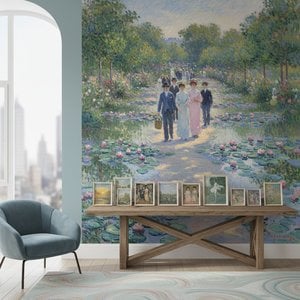
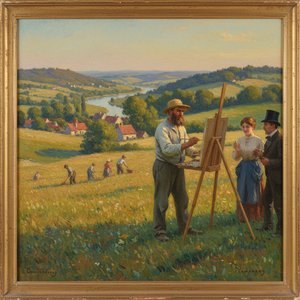
Žmuidzinavičius’s artistic output spanned over six decades, producing more than 2,000 paintings—primarily landscapes that captured the beauty of Lithuania's rural countryside with remarkable sensitivity. His canvases depict serene meadows bathed in golden sunlight, misty forests teeming with life, and dramatic vistas overlooking Lake Galvė—each imbued with a profound emotional resonance. Unlike many of his contemporaries who sought to portray Lithuania grandly or heroically, Žmuidzinavičius focused on capturing the quiet dignity of everyday existence—the rhythms of peasant life, the changing seasons, and the subtle nuances of human experience. His landscapes are not merely representations of scenery; they are meditations on time, memory, and the enduring spirit of Lithuanian culture.
Contributions to Lithuanian Art Society and National Identity
Žmuidzinavičius’s commitment to Lithuanian art extended beyond his own creative endeavors. He founded the Lithuanian Art Society in 1906—a pivotal institution that fostered artistic collaboration and championed Lithuanian cultural heritage. As its chairman, he tirelessly advocated for the recognition of Lithuanian artists and promoted exhibitions showcasing their work—laying the groundwork for Lithuania's burgeoning modernist movement. Furthermore, he played a crucial role in designing the modern flag of Lithuania—a symbol of national unity and aspiration—and contributed to the creation of a revised version of the Lithuanian coat of arms that served as emblem during the interwar period. His involvement in the Lithuanian Riflemen’s Union and his dedication to educating young artists solidified his position as a pillar of Lithuanian intellectual life.
The Devil Museum and Legacy
Perhaps Žmuidzinavičius's most singular achievement—and enduring fascination—was his obsessive collection of devil sculptures—a project begun in 1921 that culminated in the establishment of the Žmuidzinavičius Museum in Kaunas—now known as the Devil Museum. Driven by a conviction that Lithuanian folklore held profound spiritual truths, he embarked on a quest to assemble a global repository of demonic imagery—resulting in an unparalleled assemblage of over 3,000 sculptures from across continents. The museum itself stands as a testament to Žmuidzinavičius’s vision—a space dedicated to preserving and celebrating the darker side of Lithuanian artistic imagination. Today, his paintings continue to be exhibited at museums throughout Lithuania and internationally—ensuring that his distinctive voice—infused with melancholy and imbued with an unwavering devotion to Lithuanian culture—remains alive for generations to come.