A World Built of Fragments: The Paper Landscapes of Andrew Allan
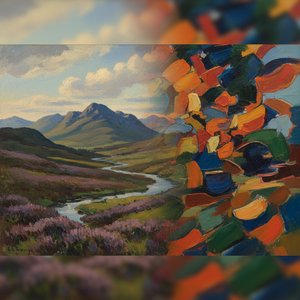
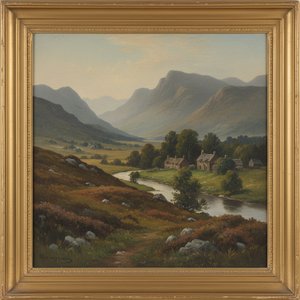
Andrew Allan is an artist who quietly constructs worlds from the remnants of others. His work, primarily focused on paper collage, isn’t about grand gestures or bold pronouncements; it's a delicate excavation of memory, atmosphere, and the subtle beauty found within discarded materials. Emerging as a contemporary voice in Scottish art, Allan has quickly garnered attention for his ability to transform humble scraps into evocative landscapes and intimate studies of nature. While biographical details remain intentionally sparse – Allan prefers to let the work speak for itself – it’s clear that his artistic journey is rooted in a deep connection to place and a fascination with the inherent textures and histories embedded within paper. He operates from WahooArt, making his unique vision accessible to a wider audience through meticulously crafted reproductions of his originals.
The Alchemy of Paper: Technique and Process
Allan’s technique is deceptively simple in its appearance. He doesn't paint or sculpt; instead, he *builds* images from layers of torn and carefully arranged paper fragments. These aren’t pristine sheets but rather salvaged materials – old maps, book pages, sheet music, ephemera collected over time. The process is one of intuitive layering and subtraction, a constant dialogue between the artist and the inherent qualities of the paper itself. He often begins with a foundational layer representing the broader landscape or environment, then gradually adds details—the suggestion of trees, water, light—through smaller, more precisely placed pieces. The resulting surfaces are richly textured, possessing a tactile quality that invites close inspection. The subtle variations in tone and color, the visible edges of torn paper, and the ghostly remnants of text all contribute to a sense of depth and history. It’s an alchemy of sorts, transforming discarded fragments into something new and resonant. His work isn't about replicating reality but rather evoking a feeling, a mood, or a fleeting moment in time.
Influences: From Scottish Tradition to Minimalist Aesthetics
While Allan’s style is distinctly his own, it’s possible to trace echoes of various influences within his work. The muted color palettes and atmospheric qualities of the Scottish Colourists – artists like Samuel Peploe and Francis Cadell – resonate in his landscapes, particularly in their ability to capture the subtle nuances of light and shadow. There's also a clear affinity for minimalist aesthetics, evident in the pared-down compositions and emphasis on form and texture. Allan’s work shares a kinship with abstract collagists like Kurt Schwitters, though he eschews Schwitters’ chaotic energy in favor of a more contemplative approach.
Ultimately, his greatest influence seems to be the natural world itself – the rugged beauty of the Scottish Highlands, the ever-changing patterns of light and weather, and the quiet dignity of rural landscapes. He doesn't attempt to directly represent these scenes but rather distill their essence into a series of abstract forms and textures.
Themes and Symbolism: Memory, Place, and Ephemerality
Recurring themes in Allan’s work include memory, place, and the ephemerality of time. The use of salvaged paper inherently imbues his collages with a sense of history—each fragment carries its own story, its own past life. By layering these fragments together, Allan creates new narratives, suggesting connections between different times and places. His landscapes often evoke a feeling of nostalgia, a longing for a lost or idealized past.
The absence of human figures in his work further emphasizes this sense of solitude and contemplation. The natural world is presented as both beautiful and fragile, vulnerable to the forces of time and change. His collages are not simply representations of landscapes but rather meditations on our relationship with the environment and the fleeting nature of existence. The minimalist approach allows for a greater focus on these underlying themes, inviting viewers to project their own memories and emotions onto the work.
A Contemporary Voice: Allan’s Place in the Art World
Andrew Allan represents a compelling new direction within contemporary art. In an age dominated by digital imagery and large-scale installations, his intimate paper collages offer a refreshing alternative—a return to tactile materials and handcrafted techniques. His work resonates with audiences seeking authenticity and emotional depth. Through WahooArt, he’s able to share his unique vision with collectors around the world, bringing the quiet beauty of his landscapes into new homes and spaces.
- His commitment to sustainable practices – utilizing salvaged materials – aligns with a growing awareness of environmental issues.
- The accessibility of his reproductions allows for a wider appreciation of his art form.
- Allan’s work challenges traditional notions of landscape painting, offering a new and innovative approach to representation.
As he continues to develop his artistic practice, Andrew Allan is poised to become an increasingly significant voice in the contemporary art world—a quiet master of fragments, building worlds from the remnants of our past.