Peržiūrėti realybėje Peržiūrėti AR Perejti prie spausdinimo Perejti prie skaitmeninio vaizdo Pasidalinti
Išsamiau Pridėti į mėgstamiausius Atsisiųsti Panašūs eksponatai Rentgeno nuotrauka Automatinė diorama Statistika

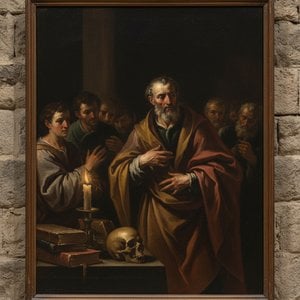
ŠVENTAS BONAVENTŪRAS ĮPRIEKŠŲ ŠVENTĄJŲ JĖGAS PRIIMTAS ANGELIU

Šventosios Bonaventūros į priekšų šventąsias Jėgas priimtimo sceną Vaizduoja baroko meistras Francisco Herrera el Viejo, kuri yra įsikurta į Švento Bonaventūros gyvenimą ir įsikurta į Švento Bonaventūros gyvenimą.

Francisco de Herrera le Vieux: Spanish painter of the Seville School. Known for 'Last Judgment' & religious scenes, his work exhibits bold technique & influenced Velázquez.

Rankų darbo aliejinės reprodukcijos

Rankiniu būdu tapytas aliejus ant droblio jūsų pageidaujamame dydį ir rėmuose – mūsų menininkų darbas pagal užsakymą. ( Perejti prie spausdinimo Perejti prie skaitmeninio vaizdo)

P118B $10
P118H $10
P118W $10
P438Z $10
P508JH $12
P508YH $12
P805H $10
P805Z $10
P919BZ $10
P919G $10
P919XJ $10
P959ZH $10
P968JZ $12
W106C $8
W218G $10
W218JH $8
W218Y $10
W307PJ $10
W316G $10
W316PJ $8
W316Y $10
W398PJ $8
W4111J $10
W500HY $15
W500JH $15
W692G $12
W849H $8
W940BG $15
W953PJ $8

Standartinis dydis
individualiame dydį
CM
INCH

Pasirinkite iš mūsų nustatytų dydžių, atitinkančių originalaus meno kūrinio proporcijas.

plotis
aukštis

Galite įvesti savo matmenis, kad jie atitiktų konkretų rėmą ar erdvę. Jei pasirinktas dydis neatitinka originalaus paveikslėlio proporcijų, mes arba apkropsime meno kūrinį, arba papildysime tapybą rankomis dažytい elementais. Prieš pradėdami gamybą, jūsų patvirtinimui atsiųsime skaitmeninį maketą.
Atkreipkite dėmesį, kad ekrane rodomas vaizdas neatspindi tikrojo apkarpymo ar papildymo. Tik maketas tiksliai parodys galutinę kompoziciją.
Nors galima rinktis ir individualius dydžius, rekomenduojame pasirinkti matmenis iš nustatytos sąrašo, kad būtų išlaikytos originalios proporcijos.

Ką galima pakeisti (pavyzdžiai): Pakeisti veidą į kliento nuotrauką; Pridėti augintinį (pvz., pakeisti katę šunimi); Įtraukti paslėptą žinutę fone; Pakeisti fono kraštovaizdį ar elementus.
Gavus užsakymą, WahooArt.com komanda susisieks su klientu el. paštu dėl instrukcijų ir pateiks maketo pavyzdį.

Pristatymas visame pasaulyje () per 3–4 savaites, o ne įprastai – per 5 savaites. (16 rugsėjis). Kokybė lieka nepakeičiama.

why_choose_icon
Nemokamas greitasis pristatymas visame pasaulyje
why_choose_icon
Aukštos kokybės lininis drobė
why_choose_icon
Pilnas siuntimo draudimas
why_choose_icon
Muitinės mokesčių grąžinimo garantija
why_choose_icon
Tikro spalvų atitikimo garantija
why_choose_icon
100 dienų grąžinimo politika (tik esant įtaigoms)
why_choose_icon
100% pinigų grąžinimo garantija
why_choose_icon
Nuolaida už kelias reprodukcijas

Visų darbų kaina

$ 272

reproduction

ŠVENTAS BONAVENTŪRAS ĮPRIEKŠŲ ŠVENTĄJŲ JĖGAS PRIIMTAS ANGELIU

Reprodukcijos technika

Reprodukcijos matmenys

-

Galutinė kaina

$ 272

Trumpos informacija

  • Subject or theme: Religious iconography; Communion
  • Location: Louvre Museum
  • Dimensions: 234 × 218 cm
  • Notable elements or techniques: Dramatic light & shadow; Detailed drapery folds
  • Movement: Baroque
  • Title: Saint Bonaventure Recevant La Communion Des Mains D'Un Ange
  • Influences: Renaissance

Karo viktorina

Kiekviename klausime yra tik vienas teisingas atsakymas.

Klausimas 1:
What artistic style is predominantly characterized by dramatic use of light and shadow?
Klausimas 2:
Who signed the painting "Saint Bonaventure Recevant La Communion Des Mains D'Un Ange", indicating his authorship?
Klausimas 3:
In which museum is the artwork "Saint Bonaventure Recevant La Communion Des Mains D'Un Ange" currently housed?
Klausimas 4:
What type of painting technique was employed by Francisco de Herrera el Viejo in this artwork?
Klausimas 5:
The painting depicts Saint Bonaventure receiving communion from an angel. What does the angel symbolize in this religious scene?

Saint Bonaventure Recevant La Communion Des Mains D'Un Ange – Une Symphonie Baroque de Foi et Lumière

La peinture intitulée « Saint Bonaventure Recevant La Communion Des Mains D’Un Ange » représente une scène religieuse emblématique du XVIe siècle, témoignant de la puissance artistique et émotionnelle de l’École sévillane dirigée par Francisco de Herrera el Viejo. Cette œuvre fascinante est bien plus qu'une simple représentation visuelle ; elle incarne les valeurs fondamentales de la Renaissance espagnole et offre un aperçu profond des préoccupations esthétiques et spirituelles de son époque. ### Analyse Stylistique et Technique – Une Maîtrise Du Baroque Andalou Herrera el Viejo, véritable pionnier du baroque andalou, adopte une approche innovante pour traduire la spiritualité chrétienne sur toile. Son style est caractérisé par une dramaturgie intense et une recherche constante de réalisme émotionnel, éléments essentiels à l’expression artistique dominante au XVIIe siècle. La peinture utilise une technique raffinée basée sur l'huile sur toile, permettant une précision remarquable dans la reproduction des détails et une richesse chromatique exceptionnelle. Les effets d’ombre et lumière sont particulièrement remarquables, créant une atmosphère mystique et accentuant les expressions faciales des personnages pour transmettre leur émotion intérieure. Cette maîtrise technique témoigne de l’investissement intellectuel et artistique du peintre et contribue à renforcer l'impact visuel de l'œuvre. ### Le Contexte Historique – La Renaissance Religieuse Espagnole Et L’Influence De Saint Bonaventure La création de cette peinture s'inscrit dans le contexte d'une Espagne profondément marquée par la Renaissance religieuse, période où la foi catholique exerçait une influence considérable sur tous les domaines de la vie intellectuelle et artistique. Saint Bonaventure, docteur de l'Église et fondateur de l’ordre franciscain, était considéré comme un modèle de vertu morale et intellectuelle, symbole de la sagesse chrétienne et de la recherche de Dieu. Cette œuvre célèbre donc la communion comme acte sacré et exprimait une profonde admiration pour le saint personnage qu'elle représente. La commande initiale faite à Herrera par les religieux du collège Saint-Bonaventure reflète l’intérêt croissant pour la décoration intérieure des lieux saints et souligne l’importance de l’art dans la diffusion de la pensée chrétienne. ### Symbolisme Et Émotion – Une Composition Dramatique Pour Exprimer La Foi Intérieure La composition picturale est soigneusement étudiée pour transmettre une émotion spécifique : la crainte du Seigneur et la joie de la communion. L'angel, symbole de la grâce divine et de l’amour rédempteur, offre à Saint Bonaventure le corps du Christ, représentant ainsi la présence réelle de Dieu dans les sacrements. Les vêtements des personnages sont ornés de couleurs vives et richement travaillées, reflétant la richesse matérielle et spirituelle de l'époque et renforçant l'effet dramatique de la scène. La lumière douce et diffuse utilisée par Herrera crée une atmosphère calme et contemplative, invitant le spectateur à méditer sur les valeurs fondamentales de la foi chrétienne. Cette œuvre demeure un témoignage poignant de la beauté esthétique et émotionnelle du baroque andalou et continue d'inspirer les artistes contemporains. ### Préservation Et Patrimoine – Un Œuvre À Admirer Dans Le Musée Du Louvre Aujourd’hui, « Saint Bonaventure Recevant La Communion Des Mains D’Un Ange » est conservée au Musée du Louvre Département des Peintures à Paris, où elle constitue un élément essentiel de la collection nationale et attire les visiteurs du monde entier. Cette œuvre exceptionnelle offre une opportunité unique d'apprécier l'art baroque espagnol dans son contexte historique et esthétique original et témoigne de l’importance de la préservation du patrimoine artistique pour transmettre aux générations futures les valeurs universelles exprimées par les œuvres majeures de l'histoire de l'art.

Autoriaus biografija

The Soul of the Seville School: The Life and Legacy of Francisco de Herrera le Vieux

To encounter the works of Francisco de Herrera le Vieux is to witness the very moment when the restrained elegance of Mannerism surrendered to the breathtaking drama of the Baroque. Born in the vibrant artistic hub of Seville around 1590, Herrera emerged as a pivotal figure who did not merely participate in the Spanish Renaissance but actively helped redefine its emotional boundaries. His journey was one of profound transformation, bridging the gap between stylized, intellectual abstraction and a new, visceral reality that sought to touch the very soul of the viewer. As a foundational pillar of the Seville School, his brushwork became a vessel for spiritual fervor, turning canvas into a stage for divine intervention.

The formative years of Herrera were steeped in the rich, competitive atmosphere of Seville, a city flourishing under the patronage of the Habsburg reign. It was within the prestigious Escuela Real de San Fernando that his talent began to coalesce, shaped by an environment shared with other luminaries such as Diego Velázquez and Juan Carreton Céspedes. This period of intense training instilled in him a reverence for meticulous observation and a technical command over light and shadow. While his contemporaries often sought perfection through line and form, Herrera leaned into the burgeoning influence of Caravaggio, embracing the revolutionary use of chiaroscuro to create compositions that felt less like static images and more like theatrical, living moments.

A Master of Divine Drama and Technical Brilliance

The true essence of Herrera’s genius lies in his ability to render the miraculous with a tangible, earthly weight. His religious compositions are far more than mere illustrations of scripture; they are immersive spiritual experiences. In masterpieces such as Guérison de saint Bonaventure enfant par saint François, one observes a masterclass in Baroque energy. The artist utilizes dynamic arrangements and a palette dominated by warm earth tones—ochres, deep reds, and burnished browns—to ground the supernatural within a recognizable reality. His handling of light is particularly evocative; it does not simply illuminate the scene but seems to emanate from the divine action itself, casting dramatic highlights that pull the viewer into the sacred narrative.

Beyond the spiritual impact, Herrera’s technical prowess provided a blueprint for future generations of Spanish painters. He possessed an unparalleled ability to manipulate texture and volume through the strategic use of impasto and delicate glazes. This allowed him to capture the profound contrast between the soft luminescence of human skin and the heavy, tactile folds of velvet and liturgical robes. In works like Saint Basile dictant sa doctrine, his command over narrative density is evident, as figures emerge from deep, mysterious shadows in clusters that suggest both scholarly weight and divine inspiration. Every brushstroke serves a dual purpose: to build physical form and to heighten the emotional tension of the scene.

Historical Significance and Artistic Heritage

The historical importance of Francisco de Herrera le Vieux cannot be overstated, as his stylistic evolution mirrored the broader shift in European art toward emotional authenticity. By moving away from the rigid formalism of his predecessors, he helped establish a visual language for the Counter-Reformation—a language of movement, light, and palpable piety. His influence acted as a bridge, connecting the classical traditions of the Renaissance to the exuberant, high-drama era of the Baroque.

His legacy is woven into the very fabric of Spanish art history through several key contributions:

  • Founding the Seville School: Alongside Velázquez, he helped establish Seville as one of the most influential artistic centers in Europe.
  • Pioneering Baroque Emotion: He was instrumental in transitioning art from intellectual abstraction to a style characterized by dramatic lighting and intense human emotion.
  • Technical Innovation: His sophisticated use of chiaroscuro and textural layering influenced the development of the Spanish Baroque aesthetic.
  • Spiritual Narrative: He redefined religious iconography, making the divine feel accessible, physical, and profoundly moving for the faithful.

Though his life ended in 1656, the echoes of Herrera’s dramatic vision continue to resonate. He remains a titan of the Spanish Golden Age, an artist who understood that to truly depict the divine, one must first master the profound, beautiful, and often turbulent reality of the human experience.

Trumpa informacija

  • Artistic Movement Or Style: Baroque
  • Artists Or Movements Influenced By This Artist: ['Diego Velázquez']
  • Date Of Death: 1656
  • Full Name: Francisco de Herrera le Vieux
  • Nationality: Spanish
  • Notable Artworks:
    • The Last Judgment
    • Holy Family
  • Place Of Birth: Seville, Spain
Tyrinėkite meno kūrinius, suskirstytus pagal temas, stilius ir savybes.