


x

 Pirkti atspaudą Pirkti skaitmeninį paveikslą
 Pasidalinti
 Details
 Pridėti į mėgstamiausius
 Atsisiųsti
 Panašūs eksponatai
 X-Ray
X-Ray
 Automatinė diorama
 Akrilas ant drobėsSienų dekoracijosRenaissance Mannerism
 1563
1563 508.0 x 670.0 cm
 Kunsthistorisches Museum
Rankiniu būdu tapytas aliejus ant droblio jūsų pageidaujamame dydį ir rėmuose – mūsų menininkų darbas pagal užsakymą.





























Pasirinkite iš mūsų nustatytų dydžių, atitinkančių originalaus meno kūrinio proporcijas.

Galite įvesti savo matmenis, kad jie atitiktų konkretų rėmą ar erdvę. Jei pasirinktas dydis neatitinka originalaus paveikslėlio proporcijų, mes arba apkropsime meno kūrinį, arba papildysime tapybą rankomis dažytい elementais. Prieš pradėdami gamybą, jūsų patvirtinimui atsiųsime skaitmeninį maketą.
Atkreipkite dėmesį, kad ekrane rodomas vaizdas neatspindi tikrojo apkarpymo ar papildymo. Tik maketas tiksliai parodys galutinę kompoziciją.
Nors galima rinktis ir individualius dydžius, rekomenduojame pasirinkti matmenis iš nustatytos sąrašo, kad būtų išlaikytos originalios proporcijos.
Pristatymas visame pasaulyje () per 3–4 savaites, o ne įprastai – per 5 savaites. (2 liepa). Kokybė lieka nepakeičiama.


Summer
Reprodukcijos matmenys
Giuseppe Arcimboldo's "Summer," painted in 1563, isn’t merely a portrait; it’s an immersive experience. Born in Milan and steeped in the artistic traditions of his family – including archbishops among his ancestors – Arcimboldo defied conventional portraiture, forging instead a singular style that continues to bewilder and delight centuries later. This particular work, housed within the Kunsthistorisches Museum in Vienna, is a masterclass in visual alchemy, transforming the human form into a vibrant, overflowing harvest of fruits, vegetables, and flowers. It’s a testament to his innovative approach and a window into the intellectual currents of the Renaissance.
The painting immediately captivates with its sheer abundance. Arcimboldo meticulously arranges an astonishing array of produce – plump apples blushing crimson, golden oranges radiating warmth, clusters of deep purple grapes, delicate cherries, and even the subtle green of broccoli and carrots—onto the head of a figure whose features are deliberately obscured. This isn’t a random collection; each element is carefully positioned to evoke the essence of summer: heat, growth, abundance, and the cyclical nature of life. The artist skillfully manipulates textures and colors, creating an illusion of depth and volume that draws the viewer into this edible landscape.
Arcimboldo’s work is deeply rooted in Renaissance philosophy, particularly the ideas of Aristotle. He believed in a fundamental interconnectedness between the microcosm (the small) and the macrocosm (the large), suggesting that all things are reflections of one another. “Summer,” therefore, isn't just a depiction of a season; it’s an allegory for the emperor’s power – mirroring the fertility and vitality of nature under his rule. The fiery reds and yellows of the fruits and vegetables directly correspond to the element of fire, representing strength, passion, and dominion. The inclusion of elements like water (represented by the subtle blues and greens) speaks to balance and moderation, essential qualities for a wise ruler.
Further enriching this symbolic tapestry is the context provided by Giovanni Baptista Fonteo’s poems, commissioned by Maximilian II. These verses, penned in 1569, served as a key conceptual framework for Arcimboldo's project. They celebrated the emperor’s authority not just over his kingdom but also over the natural world itself – a potent metaphor for divine right and absolute power. The artist skillfully translated these philosophical ideas into a visual language that was both accessible and profoundly resonant.
Arcimboldo’s technique is nothing short of astonishing. He didn't simply paint fruits and vegetables onto a face; he constructed an entire head from them, layering elements to create the illusion of three-dimensionality. The meticulous detail in each piece—the individual veins on a leaf, the glossy sheen of an orange—demonstrates his extraordinary skill as a painter and his deep understanding of botanical forms. The use of oil paint allowed him to achieve remarkable realism within this fantastical composition. It’s a testament to his mastery that the viewer is initially drawn in by the sheer beauty of the arrangement before realizing the deliberate artistry behind it.
“Summer” transcends its status as a mere decorative piece; it's a powerful statement about the relationship between humanity and nature, power and responsibility. Rediscovered in the 19th century, Arcimboldo’s work has captivated audiences for generations with its inventive spirit and intellectual depth. Reproductions of this iconic painting offer a unique opportunity to bring this extraordinary vision into your home or office – a vibrant reminder of the Renaissance's fascination with beauty, symbolism, and the boundless possibilities of artistic expression.


1527 - 1593 , Italija

Explore the rich history of still life painting & the symbolism of fruit across art movements. Discover masterpieces from Caravaggio to Cézanne with WahooArt – expert guidance & museum-quality reproductions.

Transform your cherished photos into timeless oil paintings with WahooArt's expert artists. Museum-quality reproductions & custom portraits, crafted to last a lifetime. Discover the art of personal legacy.
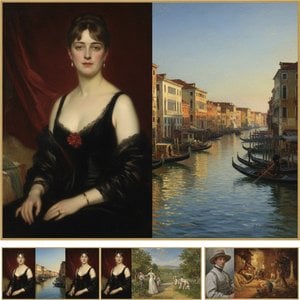
Explore 25 iconic John Singer Sargent paintings – from dazzling portraits to Impressionist landscapes. Discover the stories behind Madame X, El Jaleo & more! Find museum-quality art reproductions and elevate your home decor with WahooArt.com.
Explore the fascinating history of status symbols in art, from Renaissance masterpieces to modern expressions of wealth & identity. Discover how collecting art reflects and shapes legacy with expert insights.
Explore the Italian Renaissance! Discover how competitive patronage & humanist ideals fueled artistic innovation in republics like Florence & Venice. Expert insights for art lovers and collectors.


Sekite naujausias meno naujienas, išskirtinius pasiūlymus ir dekoravimo idėjas.
Pasakokite mums apie savo projektą, o mūsų meno ekspertai parengs jums 3 asmeniškus meno pasiūlymus.
Leiskite mums parinkti 3 variantus būtent jums – nemokamai!

 Dalintis

 Skaityti daugiau







 Stiklo variantas prieinamas tik pasirinkus dydį iki 110 cm


