


x

 Pirkti atspaudą Pirkti skaitmeninį paveikslą
 Pasidalinti
 Details
 Pridėti į mėgstamiausius
 Atsisiųsti
 Panašūs eksponatai
 X-Ray
X-Ray
 Automatinė diorama
Rankiniu būdu tapytas aliejus ant droblio jūsų pageidaujamame dydį ir rėmuose – mūsų menininkų darbas pagal užsakymą.
Pasirinkite iš mūsų nustatytų dydžių, atitinkančių originalaus meno kūrinio proporcijas.

Galite įvesti savo matmenis, kad jie atitiktų konkretų rėmą ar erdvę. Jei pasirinktas dydis neatitinka originalaus paveikslėlio proporcijų, mes arba apkropsime meno kūrinį, arba papildysime tapybą rankomis dažytい elementais. Prieš pradėdami gamybą, jūsų patvirtinimui atsiųsime skaitmeninį maketą.
Atkreipkite dėmesį, kad ekrane rodomas vaizdas neatspindi tikrojo apkarpymo ar papildymo. Tik maketas tiksliai parodys galutinę kompoziciją.
Nors galima rinktis ir individualius dydžius, rekomenduojame pasirinkti matmenis iš nustatytos sąrašo, kad būtų išlaikytos originalios proporcijos.
Pristatymas visame pasaulyje () per 3–4 savaites, o ne įprastai – per 5 savaites. (1 liepa). Kokybė lieka nepakeičiama.


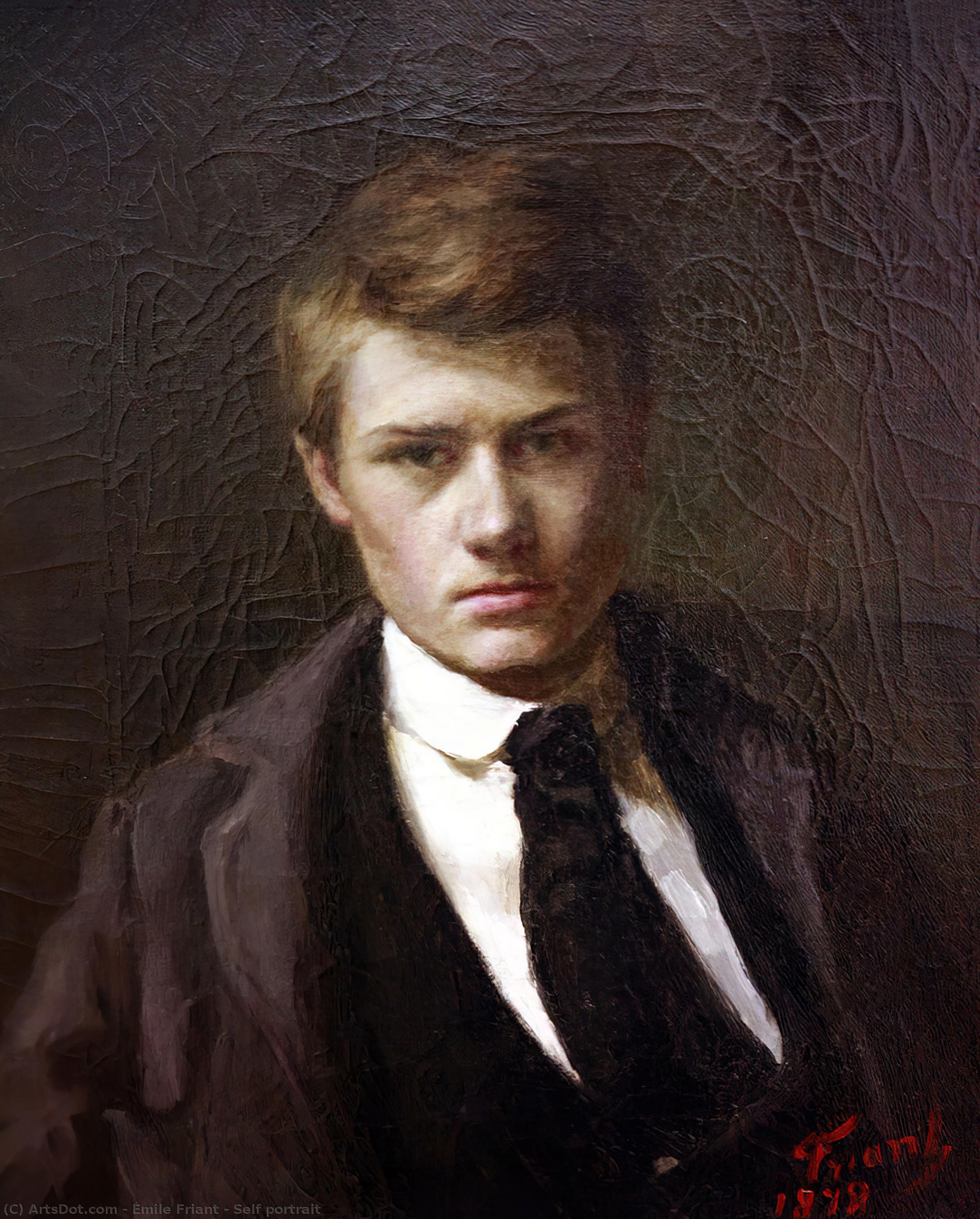
Self portrait
Reprodukcijos matmenys
In the quiet intimacy of 1878, a young Émile Friant turned his gaze inward, capturing not just a likeness, but a moment of profound self-reflection. His Self Portrait serves as a captivating window into the late 19th century, presenting a man poised between the rigid formalities of his era and the burgeoning psychological depth that would define his later career. Dressed in the dignified attire of the period—a meticulously rendered suit, tie, and dark vest—the subject stares back at the viewer with an intensity that transcends the canvas. The presence of his well-groomed mustache and the sharp focus of his gaze suggest a man deeply aware of his own identity and his place within the evolving French social fabric.
The technique employed in this masterpiece is a testament to Friant’s early mastery of realism. Every thread of his formal clothing, every subtle shadow cast by his features, and the precise texture of his hair are rendered with an almost scientific precision. This dedication to detail does not merely serve a decorative purpose; it anchors the subject in a tangible reality, making the encounter feel immediate and personal. The artist’s ability to manipulate light and shadow creates a sense of volume and presence, inviting collectors and art enthusiasts to step into the room and share in this silent, contemplative dialogue.
Beyond its technical brilliance, the painting acts as a vital historical document. To look upon this work is to witness the sartorial elegance of 19th-century France, where clothing was a language of status, discipline, and grace. For interior designers and curators, this piece offers an unparalleled sense of timelessness. It possesses that rare quality of "period charm" that can anchor a room, providing a sophisticated focal point that complements both classical and contemporary settings. The somber tones and structured composition lend themselves beautifully to grand libraries, formal dining rooms, or quiet study alcoves where one might seek inspiration from the past.
The emotional impact of Friant’s work lies in its ability to evoke nostalgia and introspection. There is a certain gravity in his expression, a weight of thought that resonates with anyone who has ever paused to consider their own journey. As a reproduction, this painting offers more than just visual beauty; it offers an atmosphere of intellectual depth and cultural heritage. Owning a piece of such profound craftsmanship allows the modern collector to preserve a fragment of history, bringing the quiet, powerful spirit of Émile Friant into the sanctuary of the home.


1863 - 1932 , Prancūzija
Explore the captivating world of detailed realism in painting! Discover historical movements, key artists & collecting insights for discerning art enthusiasts. Expert analysis at WahooArt.


Sekite naujausias meno naujienas, išskirtinius pasiūlymus ir dekoravimo idėjas.
Pasakokite mums apie savo projektą, o mūsų meno ekspertai parengs jums 3 asmeniškus meno pasiūlymus.
Leiskite mums parinkti 3 variantus būtent jums – nemokamai!
 Dalintis






































 Skaityti daugiau
 Stiklo variantas prieinamas tik pasirinkus dydį iki 110 cm


