
x
Rankiniu būdu tapytas aliejus ant droblio jūsų pageidaujamame dydį ir rėmuose – mūsų menininkų darbas pagal užsakymą.
Pasirinkite iš mūsų nustatytų dydžių, atitinkančių originalaus meno kūrinio proporcijas.
Galite įvesti savo matmenis, kad jie atitiktų konkretų rėmą ar erdvę. Jei pasirinktas dydis neatitinka originalaus paveikslėlio proporcijų, mes arba apkropsime meno kūrinį, arba papildysime tapybą rankomis dažytい elementais. Prieš pradėdami gamybą, jūsų patvirtinimui atsiųsime skaitmeninį maketą.
Atkreipkite dėmesį, kad ekrane rodomas vaizdas neatspindi tikrojo apkarpymo ar papildymo. Tik maketas tiksliai parodys galutinę kompoziciją.
Nors galima rinktis ir individualius dydžius, rekomenduojame pasirinkti matmenis iš nustatytos sąrašo, kad būtų išlaikytos originalios proporcijos.
Pristatymas visame pasaulyje () per 3–4 savaites, o ne įprastai – per 5 savaites. (2 liepa). Kokybė lieka nepakeičiama.
Boating
Reprodukcijos matmenys
Egon Schiele's "Boating," painted in 1907, isn’t merely a depiction of individuals enjoying a leisurely outing; it’s a poignant exploration of isolation within proximity, a recurring theme that defines much of Schiele’s intensely personal and emotionally charged oeuvre. Born into a world shadowed by illness and loss – his father succumbing to syphilis at the tender age of fourteen – Schiele's early life instilled in him a profound awareness of mortality and the precariousness of human existence. This sensitivity permeates “Boating,” manifesting not through overt grief, but rather through a subtle, almost unsettling, portrayal of figures adrift on the water. The painting’s stark black and white palette immediately establishes a timeless quality, stripping away extraneous detail to focus entirely on the faces and postures of those within the small boat. The composition itself is deliberately arresting; the figures are arranged in a dynamic, almost claustrophobic, manner, suggesting a contained tension beneath the surface of their shared experience.
Schiele’s masterful use of oil on board is crucial to understanding the painting's impact. The medium allows for a remarkable textural richness – visible brushstrokes build up layers of paint, creating a sense of immediacy and raw emotion. The deliberate roughness of the surface mirrors the emotional turbulence hinted at within the scene. Notice how Schiele employs short, broken strokes, particularly around the faces, to convey a feeling of vulnerability and unease. This technique is characteristic of his early Expressionist explorations, moving away from academic realism towards a more subjective and emotionally driven representation of reality. The limited color range – primarily shades of gray and white – amplifies this effect, forcing the viewer to focus on form, gesture, and the subtle nuances of expression.
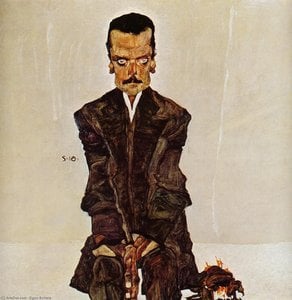
The presence of two umbrellas is perhaps the most compelling element of “Boating,” immediately drawing the eye and inviting interpretation. These aren’t simply objects providing shade; they function as potent symbols, simultaneously suggesting protection from an unseen threat – whether literal rain or a deeper emotional storm – and, paradoxically, reinforcing a sense of isolation. Each figure seems to be enveloped in their own personal shield, creating a visual barrier between them. The placement of the umbrellas—one near the center, another slightly off-kilter—further emphasizes this feeling of disconnectedness. It’s as if each individual is navigating their own private world, despite being physically together on the boat.
“Boating” stands as a pivotal work in Schiele's artistic development and a significant precursor to the Expressionist movement. His unflinching exploration of human psychology, coupled with his innovative use of line and color, paved the way for future generations of artists grappling with similar themes of alienation and emotional intensity. The painting’s raw honesty and its willingness to confront uncomfortable truths about the human condition resonate powerfully even today. At WahooArt.com, we are proud to offer meticulously crafted hand-painted oil reproduction reproductions of “Boating,” allowing you to experience the profound beauty and unsettling power of this iconic work in your own space. These reproductions capture not only Schiele’s distinctive style but also the very essence of his emotional vision – a timeless testament to the complexities of human connection and the enduring shadow of mortality.
Austrijos pozicija dviejų pasaulinio karo horizonte buvo labai abejojanti: vienu metu ji buvo šiek tiek iš Šiaurės į rytus, lengvai įsitikinusi veiksmų vyrai. Mažėjęs šalis po 1918 m., beveik visiškai neišplitusi tarptautiniu pasauliu buvo lengvai įvykdinta Hitlerio Reichui 1938 m.; meno srityje tai reiškė kad modernizmo istorija buvo išvykstanti nuo Šiaurės iki pietų, su pagrindiniu dėmesiu į formą. Vokelių šiek tiek pripažino ekspresionizmą kaip svarbų meno srovę; jis buvo vienas iš žymiausius austrių artistas XX amžiaus pradžioje – kartu su Gustavu Klimtu ir Oskar Kokoschka išvykę į Vieną buvo laikomas vienu iš Žyduvo šimtmečio svarbiausių vizualinių menininkų.
Egonas Šylė gimė 1890 m. vasario 3 d. Tulne, Austrijoje. Jo tėvas Adolfas Šylė buvo Tulno geležinkelio stoties direktorius ir gimė 1851 m. Vienoje Adolfo Šyly tevai turėjo tris jaunesnes seseris: Elvirą, Melaniją ir Gertrūdą. Elvira mirė vaikyste dėl gimtinių sifiliso. Jo tėvas buvo užsikrėtęs sifiliu įsimėlynėje savo jaunystės metais po vienos jo naujosios žmonos išėjimo iš kambario.
Šylė mokytojo Christian Griepenkerl įtaką išgyveno Vienoje 1907 m. ir G. Klimtas tapo jo svarbiu rėmėju. Šylė paliko akademiją 1906 m., nes jos mokymo metodai buvo labai konservatyvus, ir įkūrė Naują austrių dailės grupę 1909 m. Grupėje vyravo ekspresionistinė estetika, kuri iššūkiant šiuolaikinėms kultūros normas.
Šylė buvo vienas iš žymiausius austrių artistas XX amžiaus pradžioje – kartu su Gustavu Klimtu ir Oskar Kokoschka išvykę į Vieną buvo laikomas vienu iš Žyduvo šimtmečio svarbiausių vizualinių menininkų. Šylė buvo ekspresionizmo meno srovės atstovas.
Šylė buvo žinomas dėl savo iššūkiantį įžiūrą į pasaulio problemas ir šiuolaikinę estetika, kuri iššūkiant šiuolaikinėms kultūros normas. Šylė buvo ekspresionizmo meno srovės atstovas.
1890 - 1918 , Austrija
Pasakokite mums apie savo projektą, o mūsų meno ekspertai parengs jums 3 asmeniškus meno pasiūlymus.
Leiskite mums parinkti 3 variantus būtent jums – nemokamai!



































