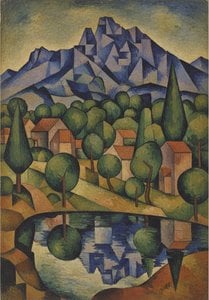
The Architectural Visionary of Rome
In the vibrant, sun-drenched streets of seventeenth-century Rome, a unique artistic voice emerged from the Spanish landscape to leave an indelible mark on the Baroque era. Vicente Giner, born around 1636 in the town of Castellón de la Plana near Valencia, was a man of dual callings. While he rose to the esteemed position of a Spanish canon and Catholic priest, his soul was deeply entwined with the visual grandeur of the classical world. His life was a fascinating bridge between the spiritual devotion of the clergy and the meticulous, structural precision of an architectural painter.
Giner’s journey from the Valencian coast to the heart of the Eternal City allowed him to immerse himself in the most profound artistic currents of his time. By the time he was established in Rome, he had become a vital figure within the city's international artistic community. His presence in the Roman district of Campo Marzio placed him at the epicenter of Baroque innovation, where the boundaries between reality and imagined grandeur were constantly being redrawn through the medium of paint.
A Master of Space and Collaboration
The true essence of Giner’s artistry lies in his mastery of capricci and vedute—genres that demand both a keen eye for architectural detail and a soaring imagination. He did not merely record buildings; he constructed worlds. His work often featured complex architectural compositions, where the interplay of light and shadow across marble columns and vaulted ceilings created a sense of breathtaking depth. This talent was significantly refined through his close relationship with the legendary architectural painter Viviano Codazzi.
Giner’s role in the Roman art scene was often one of essential collaboration. He possessed a specialized skill in painting figures that breathed life into static structures. It is widely believed that he contributed human elements to the grand architectural vistas of Codazzi, and his hand can be seen in the works of Niccolò Codazzi as well. This symbiotic relationship allowed for the creation of masterpieces like Saint Peter Baptizing the Centurion, where the monumental scale of the architecture is balanced by the intimate, emotive presence of the figures Giner so skillfully rendered.
Legacy and Historical Significance
Beyond his brushwork, Giner was a figure of notable social and political influence among the expatriate community in Rome. He stood as a leader for Spanish artists, participating in significant petitions to establish an Academy for Spanish artists in Rome, modeled after the prestigious French academies. This endeavor, though met with resistance from the Spanish authorities, highlights his commitment to elevating the status of his compatriots within the Roman hierarchy.
Though his life was relatively short, ending in 1681, the legacy of Vicente Giner remains etched in the history of Baroque architectural painting. His ability to blend the rigid discipline of architecture with the fluid grace of figure painting helped define a period of spectacular visual storytelling. Today, his works serve as windows into a lost era of Roman splendor, reminding us of a time when the boundaries between the sacred duties of a priest and the creative passions of an artist were beautifully, seamlessly intertwined.
Q&A
Vicente Giner의 활동 시기는 어떻게 구분되어 있나요?
Vicente Giner의 작품 세계를 시간순으로 정리한 기록은 아티스트 연대기 페이지에서 확인하실 수 있으며, 이곳에서는 각 시기별로 분류된 챕터를 따라 작품들을 제작 순서대로 만나보실 수 있습니다.
특정 색상 팔레트의 Vicente Giner 작품은 어디에서 찾아볼 수 있나요?
특정 색상 팔레트의 Vicente Giner 작품을 찾으시려면, 작가의 컬러 팔레트별로 보기 페이지를 이용해 보세요.
특정 매체로 분류된 Vicente Giner의 모든 작품을 어떻게 찾을 수 있나요?
특정 매체로 제작된 Vicente Giner의 모든 작품을 확인하시려면, 작가의 모든 매체별 페이지를 이용해 주세요.
Vicente Giner 작가의 다른 활동명이나 알려진 이름이 있나요?
Vicente Giner은(는) فيسنتي Giner, Хінер Вісенте라는 이름으로도 활동하고 있습니다.