오노레 도미에, 1808 – 1879

오노레 도미에: 가장 유명한 작품 100선

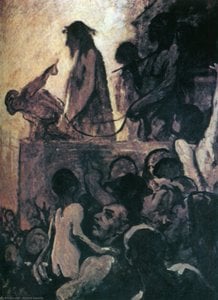
오노레 도미에 바라바를 원한다 (Ecce Homo) (1852)은(는) 오노레 도미에의 가장 유명한 작품으로, 에센의 Museum Folkwang에 소장되어 있습니다. The Third-class Carriage (1860)와 Unknown, maybe Hippolyte Lucien-Joseph Lucas (1807-1878), a Journalist, maybe P.Mendez de Vigo (1790-1860) a Spanish General, but Most Probably the Count Pelet de la Lozere (1785-1871), a Politician (1833)는 세계적으로 가장 잘 알려진 다음 두 작품입니다. 우리 카탈로그에 수록된 오노레 도미에의 작품 355점 중, 컬렉터와 미술관 관람객들이 가장 많이 찾는 100점을 선정하여 제작 연도, 소장 미술관 및 작품에 담긴 이야기와 함께 소개합니다.

각 작품의 검색, 방문 및 주문 수를 결합한 인기 점수를 기준으로 순위를 매깁니다. 10월 2026 업데이트됨. 이 페이지의 모든 명작은 원하시는 크기로 박물관 품질의 수작업 유화 복제화 또는 파인 아트 프린트로 주문하실 수 있습니다.

오노레 도미에의 초상화
오노레 도미에 · 1808 – 1879
생몰 연도
1808 – 1879, 마르세유
사조
사실주의
카탈로그 작품 목록
355
가장 유명한
오노레 도미에 바라바를 원한다 (Ecce Homo) (1852)
최다 소장처
오르세 미술관

Top 10: 오노레 도미에의 대표작

오노레 도미에 바라바를 원한다 (Ecce Homo) (1852) 의 오노레 도미에
1

오노레 도미에 바라바를 원한다 (Ecce Homo)

1852 · 캔버스에 유채 · Museum Folkwang, 에센

Powerful Depiction of Human Suffering and Social Justice This compelling artwork captures a poignant biblical scene that resonates deeply with themes of compassion, injustice, and societal critique. Rendered in a raw, expressive style, the scene invites viewers into a moment of collective emotion and moral reflection. The figures, depicted with gestural immediacy, evoke a sense of urgency and human vulnerability, making it a profound statement on social conscience and spiritual…

The Third-class Carriage (1860) 의 오노레 도미에
2

The Third-class Carriage

1860 · Oil On Canvas · 메트로폴리탄 미술관, 뉴욕

In the crowded, dimly lit confines of a mid-19th-century railway carriage, Honoré Daumier captures more than just a moment in transit; he captures the very essence of human endurance. The Third-class Carriage serves as a profound window into the burgeoning urban reality of France during the Second Empire. As the industrial revolution reshaped the landscape of Europe, Daumier turned his gaze away from the gilded salons of the aristocracy and…

Unknown, maybe Hippolyte Lucien-Joseph Lucas (1807-1878), a Journalist, maybe P.Mendez de Vigo (1790-1860) a Spanish General, but Most Probably the Count Pelet de la Lozere (1785-1871), a Politician (1833) 의 오노레 도미에
3

Unknown, maybe Hippolyte Lucien-Joseph Lucas (1807-1878), a Journalist, maybe P.Mendez de Vigo (1790-1860) a Spanish General, but Most Probably the Count Pelet de la Lozere (1785-1871), a Politician

1833 · Clay / Terracotta · 오르세 미술관, 파리

This evocative portrait captures more than just the likeness of an elderly gentleman; it arrests a moment in time, freezing the very essence of 19th-century Parisian intellectual life. The subject, whose identity is suggested by the possibilities of a journalist or politician, possesses a gaze that seems to look past the viewer, into some distant, weighty contemplation. Rendered with the unmistakable hand of Honoré Daumier, the piece transcends mere portraiture;…

Ratapoil (front view) (1850) 의 오노레 도미에
4

Ratapoil (front view)

1850 · Bronze · 오르세 미술관, 파리

Honoré Daumier's "Ratapoil (front view)," created around 1850, is more than just a bronze sculpture; it’s a potent distillation of 19th-century French social commentary and political critique. This arresting figure, rendered with remarkable dynamism and a touch of unsettling realism, offers a captivating window into the turbulent world of post-Revolutionary France – a world grappling with nascent democracy, imperial ambitions, and the pervasive inequalities of its society. The sculpture’s enduring…

Intermission at the Comédie Française (1858) 의 오노레 도미에
5

Intermission at the Comédie Française

1858 · Watercolor · 에르미타주 박물관, 상트페테르부르크

Honoré Daumier's “Intermission at the Comédie Française,” painted in 1858, isn’t merely a depiction of an elderly gathering; it’s a meticulously crafted observation of a specific moment frozen in time – and brimming with unspoken commentary. The artwork immediately draws the viewer into a densely packed scene: rows upon rows of men, their faces etched with age and lined with contemplation, are absorbed in reading newspapers or pamphlets within the…

Ratapoil (1850) 의 오노레 도미에
6

Ratapoil

1850 · Bronze · Staatliche Kunsthalle Karlsruhe, 카를스루에

The photograph captures a pivotal moment – a frozen dance of energy and emotion rendered in the enduring medium of bronze. This exquisite reproduction offers an intimate encounter with "Ratapoil," a sculpture by the visionary artist Honoré Daumier, born in Marseille in 1808 and tragically lost in 1879. More than just a depiction of a figure, it’s a window into the social anxieties and artistic fervor that defined mid-19th century…

Scene from a Comedy (1858) 의 오노레 도미에
8

Scene from a Comedy

1858 · Oil On Canvas · 오르세 미술관, 파리

Honoré Daumier's "Scene from a Comedy," painted in 1858, isn’t merely a depiction of two figures; it’s a meticulously crafted snapshot of Parisian society and the biting social commentary that defined the artist’s career. Housed within the walls of the Musée d’Orsay, this oil on canvas offers a rare glimpse into Daumier's world – a world brimming with observation, critique, and an undeniable sense of humor laced with profound sadness.…

Ratapoil (1850) 의 오노레 도미에
9

Ratapoil

1850 · Acrylic On Canvas · Artizon Museum, 도쿄

Honoré Daumier's "Ratapoil," created in 1850, isn’t merely a sculpture; it’s a distilled embodiment of the anxieties and frustrations simmering beneath the surface of mid-19th century France. This arresting figure, rendered in cast iron with a deliberate roughness that mirrors its subject matter, captures a moment of profound disillusionment – a silent indictment of societal hypocrisy and the precariousness of human existence. The sculpture’s power lies not just in its…

Family on the Barricades in 1848 (1854) 의 오노레 도미에
10

Family on the Barricades in 1848

1854 · Oil · 나르오드니 갈레레, 프라하

In the heart of Honoré Daumier’s 1854 masterpiece, Family on the Barricades in 1848, we find a moment suspended in the amber of history. This is not merely a painting of a political uprising; it is a profound psychological study of human resilience. As the Second French Revolution tore through the streets of Paris, Daumier captured the very essence of the era's turbulent spirit. The scene presents a family huddled…

오노레 도미에 순위 나머지, 11위부터 100위까지

The Print Collector (1865) 의 오노레 도미에
#11

The Print Collector

1865 · 시카고 미술관

Honoré Daumier's "The Print Collector" isn’t merely a depiction of a man surrounded by prints; it’s a carefully constructed tableau of introspection, a poignant meditation on knowledge, legacy,…

내 공간에 소장하기 →
The Republic (1848) 의 오노레 도미에
#12

The Republic

1848 · 오르세 미술관

Honoré Daumier’s “The Republic” (1848) isn't merely a painting; it’s a potent distillation of the anxieties and aspirations swirling within post-revolutionary France. Captured with his signature blend of…

내 공간에 소장하기 →
On a Bridge at Night (1848) 의 오노레 도미에
#14

On a Bridge at Night

1848 · 필립스 컬렉션

The scene captures a moment of silent intimacy under the artificial glow of lamplight. Two figures move across a bridge, their forms defined by expressive, simplified outlines that…

내 공간에 소장하기 →
Burden (1850) 의 오노레 도미에
#16

Burden

1850 · 에르미타주 박물관

In the quiet, somber depths of Honoré Daumier’s 1850 masterpiece, "Burden," we are invited into a moment of profound human endurance that transcends the boundaries of time. The…

복제화 주문하기 →
The Studio (1870) 의 오노레 도미에
#19

The Studio

1870 · J. 폴 게티 미술관

In this intimate oil on canvas, a man leans toward a seated woman within a dimly lit interior. The composition is tightly cropped, creating a sense of enclosure…

복제화 주문하기 →
Jean-Marie Fruchard (1788-1872), Deputy (1833) 의 오노레 도미에
#20

Jean-Marie Fruchard (1788-1872), Deputy

1833 · 오르세 미술관

Honoré Daumier’s 1833 sculpture of Jean-Marie Fruchard, a deputy of the French parliament, functions as a sharp political indictment. Rather than an idealized likeness, the bust utilizes deliberate…

Load (Washerwoman) (1853) 의 오노레 도미에
#21

Load (Washerwoman)

1853 · 나르오드니 갈레레

In this 1853 lithograph, a woman moves through a Parisian street, her form defined by the heavy burden she carries. A large basket, filled to the brim with…

내 공간에 소장하기 →
Two Lawyers (1860) 의 오노레 도미에
#24

Two Lawyers

1860 · 시카고 미술관

This small-scale oil painting presents two men in profile, positioned side-by-side while facing one another. The subjects are captured from the upper torso upward, creating a close-up view…

복제화 주문하기 →
Exit from the Theater (1863) 의 오노레 도미에
#26

Exit from the Theater

1863 · 넬슨-애킨스 미술관

The work titled Exit from the Theater is an oil on panel. It is attributed to the artist Honoré Daumier. The painting captures a street scene of theater-goers…

내 공간에 소장하기 →
The Uprising (L (1848) 의 오노레 도미에
#28

The Uprising (L

1848 · 필립스 컬렉션

For Duncan Phillips, the jewel of his unit of works by Honoré Daumier was The Uprising. When this long forgotten painting appeared on the market, Phillips seized the…

복제화 주문하기 →
Susannah and the Elders (1853) 의 오노레 도미에
#33

Susannah and the Elders

1853 · Burrell Collection

A central female figure is caught in a claustrophobic embrace of shadow and light. The composition is tight, pressing the viewer into the immediate space shared by the…

복제화 주문하기 →
Penelopa's Dream (1842) 의 오노레 도미에
#34

Penelopa's Dream

1842 · 국립 도서관 (Bibliothèque Nationale)

Penelopa's Dream is a lithograph created by the artist Honoré Daumier. The work was produced in 1842. This specific piece belongs to the Ancient History series, a collection…

내 공간에 소장하기 →
The Washerwoman (1863) 의 오노레 도미에
#36

The Washerwoman

1863 · 오르세 미술관

Honoré Daumier’s “The Washerwoman,” painted in 1863, is more than just a depiction of a woman laboring by the Seine; it's a poignant meditation on poverty, resilience, and…

복제화 주문하기 →
The Beautiful Narcissus (1842) 의 오노레 도미에
#59

The Beautiful Narcissus

1842 · 국립 도서관 (Bibliothèque Nationale)

Honoré Daumier’s lithograph, "The Beautiful Narcissus," transcends mere depiction; it embodies the spirit of Realism—a courageous confrontation with societal realities tempered by profound artistic sensitivity. Created in 1842…

내 공간에 소장하기 →
Two Singers 의 오노레 도미에
#66

Two Singers

하버드 미술관

In this oil painting, we find ourselves drawn into a quiet, private moment between two figures. A man and a woman are positioned closely together, their upper bodies…

내 공간에 소장하기 →
The Serenade (1858) 의 오노레 도미에
#69

The Serenade

1858 · 스코틀랜드 국립 미술관

The Serenade is a painting by Honoré Daumier, created about 1858. In this work, the artist captures a strolling player singing within the setting of a garden restaurant.…

손그림 복제화 주문 제작하기 →
The Print Amateur (1855) 의 오노레 도미에
#70

The Print Amateur

1855 · 하버드 미술관

The Print Amateur is an oil on panel by Honoré Daumier. Created in France, this work captures a specific moment of observation. The pigment rests upon the hard,…

내 공간에 소장하기 →
Jacques Lefévre (1777-1856), Banker and Deputy (1833) 의 오노레 도미에
#72

Jacques Lefévre (1777-1856), Banker and Deputy

1833 · 오르세 미술관

Honoré Daumier's 1833 sculpture, “Jacques Lefévre (1777-1856), Banker and Deputy,” is far more than a simple bust; it’s a meticulously crafted caricature brimming with social commentary. Captured in…

The Print Collector (1862) 의 오노레 도미에
#73

The Print Collector

1862 · Burrell Collection

is an oil on canvas work by Honoré Daumier, dated 1865. The painting belongs to the Realism and Satirical realism movements of the 19th Century. It captures the…

복제화 주문하기 →
Theater Audience (1856) 의 오노레 도미에
#80

Theater Audience

1856 · 국립서양미술관

Theater Audience is an oil painting by the French artist Honoré Daumier. The work was created about 1856-60. Daumier was a male artist born in 1808 and he…

복제화 주문하기 →
Don Quixote Reading (1866) 의 오노레 도미에
#81

Don Quixote Reading

1866 · National Museum Cardiff

In this oil on canvas, Honoré Daumier presents us with a quiet, intense moment of absorption. The work, titled Don Quixote Reading, captures the titular character lost within…

내 공간에 소장하기 →
Avant l (1865) 의 오노레 도미에
#84

Avant l

1865

Honoré Daumier’s “Avant l’audience” (Before the Hearing), painted in 1865, is a deceptively simple yet profoundly resonant work that captures a pivotal moment of restrained tension and intellectual…

복제화 주문하기 →
Don Quixote and Sancho Panza (1864) 의 오노레 도미에
#89

Don Quixote and Sancho Panza

1864 · Burrell Collection

The composition centers on the physical and psychological distance between two travelers moving through a rugged, mountainous landscape. In the foreground, Sancho Panza is seen from behind, riding…

복제화 주문하기 →
The Reader 의 오노레 도미에
#91

The Reader

The quiet intensity of The Reader meets the viewer through the focused gaze of its subject. Painted by Honoré Daumier, this work captures a moment of profound stillness.…

복제화 주문하기 →
Street Scene (1864) 의 오노레 도미에
#92

Street Scene

1864 · Museum Boijmans Van Beuningen

The shadows of a mid-19th-century urban environment emerge through Street Scene, a work by the French painter Honoré Daumier. Created about 1864, this piece captures a fleeting moment…

손그림 복제화 주문 제작하기 →
To the Street (1850) 의 오노레 도미에
#97

To the Street

1850 · 필립스 컬렉션

In the evocative monochrome of Honoré Daumier’s To the Street, we are transported back to the mid-19th century, a period defined by the rapid pulse of urban transformation.…

내 공간에 소장하기 →
Mother (1855) 의 오노레 도미에
#100

Mother

1855 · Народний музей Сербії

Executed in 1855, Mother by Honoré Daumier presents a portrait of disquiet. This work functions as a genre painting, utilizing a depiction of a mother and child to…

내 공간에 소장하기 →

오노레 도미에의 시대별 작품

오노레 도미에 작가가 가장 많이 그린 주제

이 걸작들 사이에서 가장 자주 등장하는 네 가지 주제와 각 주제를 가장 잘 나타내는 대표작들.

오노레 도미에의 작품 감상하기

이 페이지에 있는 작품을 가장 많이 소장하고 있는 8개의 미술관

소장 미술관 도시 오노레 도미에의 작품 이 목록의 작품들
오르세 미술관, 파리오르세 미술관 파리 33 Unknown, maybe Hippolyte Lucien-Joseph Lucas (1807-1878), a Journalist, maybe P.Mendez de Vigo (1790-1860) a Spanish General, but Most Probably the Count Pelet de la Lozere (1785-1871), a Politician, Ratapoil (front view), Ratapoil (rear view)
Burrell Collection, 글래스고Burrell Collection 글래스고 9 The Good Samaritan, Susannah and the Elders, The Miller, His Son and the Donkey
필립스 컬렉션, 워싱턴 D.C.필립스 컬렉션 워싱턴 D.C. 8 On a Bridge at Night, The Uprising (L, The Strong Man
시카고 미술관, 시카고시카고 미술관 시카고 4 The Print Collector, Street Musicians, Two Lawyers
National Museum Cardiff, 카디프National Museum Cardiff 카디프 8 Head of a Man, A Third Class Carriage, Don Quixote Reading
Rhode Island School of Design Museum of Art, 프로비던스Rhode Island School of Design Museum of Art 프로비던스 4 Second-Class Carriage, Mme Pipelet, the Concierge, Au Palais de Justice (At the Law Courts)
국립 도서관 (Bibliothèque Nationale), 파리국립 도서관 (Bibliothèque Nationale) 파리 3 Penelopa's Dream, The Beautiful Narcissus, Rue Transnonain, April 15, 1834
하버드 미술관, 캠브리지하버드 미술관 캠브리지 3 Scapin, Two Singers, The Print Amateur

오노레 도미에의 시대별 걸작: 각 시대를 대표하는 명작 하나씩

  1. 1830s
  2. 1840s
    The Republic (1848) 의 오노레 도미에
    순위 12 / 100

    The Republic

    연령대 32 – 41 · 오르세 미술관

    Honoré Daumier’s “The Republic” (1848) isn't merely a painting; it’s a potent distillation of the anxieties and aspirations swirling within post-revolutionary France. Captured with his signature blend of…

  3. 1850s
    오노레 도미에 바라바를 원한다 (Ecce Homo) (1852) 의 오노레 도미에
    100명 중 1위

    오노레 도미에 바라바를 원한다 (Ecce Homo)

    연령대 42 – 51 · Museum Folkwang

    Powerful Depiction of Human Suffering and Social Justice This compelling artwork captures a poignant biblical scene that resonates deeply with themes of compassion, injustice, and societal critique. Rendered…

  4. 1860s
    The Third-class Carriage (1860) 의 오노레 도미에
    100개 중 2위

    The Third-class Carriage

    연령대 52 – 61 · 메트로폴리탄 미술관

    In the crowded, dimly lit confines of a mid-19th-century railway carriage, Honoré Daumier captures more than just a moment in transit; he captures the very essence of human…

  5. 1870s
    The Studio (1870) 의 오노레 도미에
    100명 중 19위

    The Studio

    연령대 62 – 71 · J. 폴 게티 미술관

    In this intimate oil on canvas, a man leans toward a seated woman within a dimly lit interior. The composition is tightly cropped, creating a sense of enclosure…

오노레 도미에의 작품: 자주 묻는 질문

오노레 도미에의 가장 유명한 작품은 무엇인가요?정답 보기

오노레 도미에 바라바를 원한다 (Ecce Homo) (1852), Museum Folkwang, 에센. 다음은 The Third-class Carriage (1860)와(과) Unknown, maybe Hippolyte Lucien-Joseph Lucas (1807-1878), a Journalist, maybe P.Mendez de Vigo (1790-1860) a Spanish General, but Most Probably the Count Pelet de la Lozere (1785-1871), a Politician (1833)입니다.

오노레 도미에 작가는 몇 살 때 오노레 도미에 바라바를 원한다 (Ecce Homo)을(를) 그렸나요?정답 보기

44세: 오노레 도미에 바라바를 원한다 (Ecce Homo)은(는) 1852년 작품이며, 오노레 도미에은(는) 1808년에 태어났습니다.

오노레 도미에의 가장 유명한 작품 10가지는 무엇인가요?정답 보기

오노레 도미에 바라바를 원한다 (Ecce Homo), The Third-class Carriage, Unknown, maybe Hippolyte Lucien-Joseph Lucas (1807-1878), a Journalist, maybe P.Mendez de Vigo (1790-1860) a Spanish General, but Most Probably the Count Pelet de la Lozere (1785-1871), a Politician, Ratapoil (front view), Intermission at the Comédie Française, Ratapoil, Ratapoil (rear view), Scene from a Comedy, Ratapoil 및 Family on the Barricades in 1848. 위 순위는 각 작품의 제작 연도와 소장 박물관을 나타냅니다.

오노레 도미에의 작품은 몇 점인가요?정답 보기

오노레 도미에의 작품 355점을 1832년부터 1870년 사이의 연대로 분류하여 목록에 담았습니다.

가장 유명한 오노레 도미에의 작품은 어디에서 볼 수 있나요?정답 보기

대부분의 작품은 오르세 미술관 (파리), Burrell Collection (글래스고) 및 필립스 컬렉션 (워싱턴 D.C.)에 소장되어 있습니다. 위 표에 각 박물관 목록이 나열되어 있습니다.

오노레 도미에의 대표작들은 어느 시대에 그려졌나요?정답 보기

1850s 기간 동안: 이 페이지의 총 100점의 작품 중 34점이 해당 시기의 작품이며, 그중 오노레 도미에 바라바를 원한다 (Ecce Homo)점이 포함되어 있습니다.

오노레 도미에의 가장 초기 유명 작품은 무엇이며, 가장 최근 작품은 무엇인가요?정답 보기

이 페이지의 가장 오래된 작품은 Count Antoine-Maurice-Apollinaire d'Argout (1782-1858), Minister and Peer of France (1832), 가장 최근 작품은 The Studio (1870)입니다.

오노레 도미에은(는) 어떤 주제를 그렸나요?정답 보기

이 페이지의 총 100점의 작품 중 People (18), Satire (15) 및 Man (13)

오노레 도미에은(는) 무엇에 무엇으로 그림을 그렸을까요?정답 보기

Oil On Canvas: 이 페이지의 총 100점 중 15점

오노레 도미에의 작품은 어떤 미술 사조에 속하나요?정답 보기

이 페이지의 작품들이 보여주듯, 사실주의

오르세 미술관에는 어떤 오노레 도미에의 작품이 있나요?정답 보기

Unknown, maybe Hippolyte Lucien-Joseph Lucas (1807-1878), a Journalist, maybe P.Mendez de Vigo (1790-1860) a Spanish General, but Most Probably the Count Pelet de la Lozere (1785-1871), a Politician, Ratapoil (front view) 및 Ratapoil (rear view)은(는) 오르세 미술관, 파리이(가) 소장한 이 페이지의 작품 19점 중 일부입니다.

오노레 도미에의 복제화는 어디에서 구매할 수 있나요?정답 보기

네, 이 페이지에 있는 모든 작품은 해당 작품의 상세 페이지에서 원하시는 크기로 박물관 품질의 수작업 유화 복제본 또는 파인 아트 프린트로 주문하실 수 있습니다.

오노레 도미에: 약력

삶의 여정: 열아홉 세기 프랑스와 오노레 도미에

1808년 마르세유에서 태어난 오노레 빅토랭 도미에는 격동적인 19세기 프랑스의 흐름과 깊이 얽힌 삶을 살았습니다. 그의 어린 시절은 아버지의 시적 열망과 함께 1814년 파리로 이주하면서 예술 에너지로 가득 찬 도시 속으로 빠져들었습니다. 법조계 진출이라는 운명을 타고났지만, 젊은 도미에는 거부할 수 없는 예술적 재능에 이끌렸습니다. 그는 알렉상드르 레누아의 지도 아래 고전적인 영향을 흡수하고 루벤스의 극적인 키아로스쿠로 기법을 감상하며 아카데미 쉬즈에서 기술을 연마했습니다. 이러한 기초 훈련은 사실주의와 표현력이 조화를 이룬 그의 독특한 스타일 형성에 결정적인 역할을 했습니다. 그러나 도미에를 정의한 것은 단순히 예술적 기교만이 아니었습니다. 주변의 사회 부조리와 정치적 모순에 대한 깊은 감수성이 그의 작품 세계를 특징지었습니다.

날카로운 펜: 풍자와 사회 비평

도미에의 경력은 1830년 혁명 이후 본격적으로 시작되었습니다. 이 사건은 프랑스 역사의 흐름을 바꾸었을 뿐만 아니라 그의 뛰어난 풍자적 재능이 꽃피울 수 있는 비옥한 토양을 제공했습니다. 그는 익명으로 여러 간행물에 기고하며 빠르게 리소그래피 분야의 거장으로 자리매김했고, 찰스 필리폰이 설립한 독립적인 만화 저널 *르 샤리바리*를 통해 명성을 얻었습니다. 바로 이곳에서 도미에의 천재성이 빛을 발했습니다. 그의 풍자는 단순한 유머러스한 묘사가 아니었습니다. 부르주아 계층, 법률 시스템, 정치 권력 체제에 대한 신랄한 비판이 담겨 있었습니다. 그는 루이 필리프 왕을 대담하게 조롱하며 1832년 특히 날카로운 풍자로 인해 6개월간의 투옥형을 받았습니다. 이 경험은 그를 침묵시키기는커녕, 예술을 통해 위선을 폭로하고 권위에 도전하겠다는 그의 의지를 더욱 확고히 했습니다. 그의 리소그래피 작품들은 시각적인 선언문이 되어 당시 사회의 악폐에 대한 비판적 논평을 담아냈습니다. 이 기간 동안 그가 쏟아낸 엄청난 양의 작품은 대중의 오락거리이자 강력한 정치적 성명서 역할을 했습니다.

풍자를 넘어: 회화와 조각 세계로

도미에가 리소그래피 분야에서 가장 큰 명성을 얻었지만, 그를 풍자의 영역에만 가두는 것은 그의 예술적 깊이를 간과하는 것입니다. 그는 또한 헌신적인 화가이자 조각가였습니다. 하지만 이러한 작품들에 대한 인정은 후년에 이르러서야 비로소 찾아왔습니다. 그의 회화들은 종종 일상 파리인의 삶을 담고 있습니다—3등 열차 객실, 세탁부, 변호사들— 깊은 현실감과 공감을 불러일으킵니다. 그는 이상적인 묘사가 아닌 고난과 투쟁의 모습을 가감 없이 표현했습니다. 느슨한 붓질과 극적인 조명을 능숙하게 사용하여 감정과 분위기를 전달했으며, 이는 나중에 인상주의자들이 받아들인 기법을 예견하기도 했습니다. 그의 조각 작품은 주로 점토로 제작되었으며(생전에 구워지지 않은 작품이 많았습니다), 인간의 형태를 정직하고 진솔하게 포착하려는 그의 노력을 보여줍니다. 사후에 재발견된 이 조각들은 놀라운 모델링 기술과 신체적인 제스처를 통해 심리적 복잡성을 표현하는 능력을 입증했습니다.

영원한 유산: 영향력과 역사적 중요성

오노레 도미에의 예술사적 영향력은 부인할 수 없습니다. 그는 낭만주의와 사실주의를 연결하며, 있는 그대로의 세계를 묘사하려는 미래 세대 화가들에게 길을 열었습니다. 그의 날카로운 사회 비판은 귀스타브 쿠르베와 에두아르 마네와 같은 예술가들에게 영향을 미쳤으며, 혁신적인 리소그래피 기법은 판화 기술에 혁명을 일으켰습니다. 그의 작품은 오늘날에도 여전히 우리에게 감동을 주며, 권위에 도전하고 불의를 폭로하며 인간 조건에 대한 증언으로서 예술의 힘을 상기시켜 줍니다. 파리의 오르세 미술관에는 그의 회화와 조각 컬렉션이 소장되어 있으며, 방문객들에게 그가 생생하게 그려낸 세계를 엿볼 수 있는 기회를 제공합니다. 그의 리소그래피 작품은 WahooArt와 같은 컬렉션을 통해 널리 접할 수 있어 그의 풍자적인 천재성이 계속해서 사고를 자극하고 대화를 불러일으키고 있습니다. 도미에는 단순한 예술가가 아니었습니다. 그는 자신의 재능을 사용하여 침묵하는 사람들의 목소리를 대변하고 권력에 책임을 물은 시대의 기록자이자 시각적인 시인이었습니다. 그의 유산은 사회 변화를 위한 예술의 지속적인 관련성을 증명합니다.

오노레 도미에의 작품 355점 전체 보기 →