Oil On CanvasWallArtSocial Realism
 186019th Century
 65.0 x 90.0 cm
 메트로폴리탄 미술관
작가가 직접 캔버스에 손으로 그린 유화 작품으로, 원하는 크기와 액자로 맞춤 제작해 드립니다. ( 프린트 판매로 전환 디지털 이미지 판매 채널로 전환)





























작품의 원본 비율을 그대로 유지하는 프리셋 사이즈 중에서 선택해 보세요.

액자나 벽면 크기에 맞춰 필요한 가로와 세로 길이를 입력해 주세요. 본 작품은 수작업으로 제작되므로, 요청하신 비율에 따라 작가가 그림의 가장자리를 조금 더 넓게 그리거나 일부를 조정하여 작업할 수 있습니다. 작업 시작 전, 최종 확인을 위해 디지털 목업 이미지를 보내드립니다. 이 페이지에 표시된 이미지는 실제 결과물과 다를 수 있으며, 오직 목업 이미지만이 정확한 결과물을 보여줍니다.
The Third-class Carriage
복제본 규격
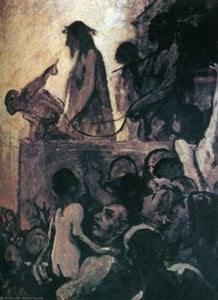
In the crowded, dimly lit confines of a mid-19th-century railway carriage, Honoré Daumier captures more than just a moment in transit; he captures the very essence of human endurance. The Third-class Carriage serves as a profound window into the burgeoning urban reality of France during the Second Empire. As the industrial revolution reshaped the landscape of Europe, Daumier turned his gaze away from the gilded salons of the aristocracy and toward the weary faces of the common people. The painting invites us to step into a space defined by proximity and shared struggle, where the boundaries between strangers dissolve in the cramped, rhythmic motion of the train.
The composition is a masterclass in realism, utilizing a tight, almost claustrophobic perspective that forces the viewer to sit alongside the passengers. There is no escape from the density of the scene; we are pressed against the heavy textures of worn clothing and the weathered surfaces of the carriage walls. Daumier’s ability to evoke the atmosphere of a moving vessel is palpable, as if one can almost feel the vibration of the tracks beneath the wooden benches. This sense of enclosure does not merely depict a setting; it symbolizes the social limitations and the heavy, inescapable weight of class distinctions that defined the era.
Technically, Daumier employs a palette dominated by somber earth tones—deep browns, muted ochres, and shadowy blues—which lends the work an incredible sense of gravity and permanence. His use of chiaroscuro is particularly striking; light does not flood this carriage but rather seeps in, catching the edge of a forehead, the curve of a shoulder, or the texture of a bundle of belongings. This selective illumination directs our eyes through the crowd, highlighting the individual stories hidden within the collective mass. The brushwork, while grounded in realism, possesses an expressive, almost sculptural quality that gives the figures a monumental presence despite their humble status.
For the discerning collector or interior designer, this piece offers a sophisticated emotional depth that transcends mere decoration. It is a work of profound empathy. Each figure—the elderly woman, the young mother, the stoic laborer—carries an expression of quiet resignation and quiet strength. There is no melodrama here, only the dignified reality of daily life. Incorporating a high-quality reproduction of this masterpiece into a space brings with it a sense of historical weight and intellectual curiosity, making it an ideal centerpiece for a room designed to inspire reflection and conversation.
Beyond its visual beauty, The Third-class Carriage remains a powerful piece of social commentary. Daumier, a master of satire and a keen observer of political absurdity, uses this scene to honor the fortitude of the working class. He finds beauty in the unvarnished truth, transforming a mundane journey into an epic of human resilience. The painting does not look away from poverty or fatigue; instead, it elevates these experiences through art, granting the subjects a level of importance usually reserved for kings and deities.
To own a reproduction of this work is to possess a fragment of history—a piece that speaks to the enduring human spirit amidst the tides of change. Whether placed in a contemporary gallery setting or a classic study, Daumier’s vision continues to resonate, reminding us that even in the most crowded and difficult of journeys, there is a profound, quiet dignity to be found.
"The Third-class Carriage"에서 가장 돋보이는 색상은 Phthalo Green (#191415)입니다. 작품의 주된 색상은 인테리어와 작품을 조화롭게 매치할 때 유용합니다.
1860년에 제작된 "The Third-class Carriage"은(는) 오노레 도미에의 Mature Period에 해당합니다.
오노레 도미에의 "The Third-class Carriage"의 이미지는 작품의 다운로드 페이지에서 다운로드하실 수 있습니다: 고해상도 디지털 이미지 다운로드.


1808 - 1879 , 프랑스

Explore 10 defining masterpieces of Romantic Realism! Discover Courbet, Millet & Daumier's powerful paintings—capturing emotion and social realities. Find museum-quality reproductions for your home at WahooArt.com.

현실을 충실히 담아낸 리얼리즘 명작 10선! 쿠르베, 밀레 등 거장의 작품으로 미술사의 흐름을 만나보세요. 와후아트에서 고품질 예술 작품과 인테리어 영감을 얻고, 당신의 공간에 예술적 감성을 더하세요. 지금 바로 와후아트에서 모든 명작을 발견해보세요!

Journey through 19th century art with WahooArt! Explore 10 iconic paintings – from Monet & Renoir to Courbet – and discover the stories behind Romanticism, Realism & Impressionism. Find museum-quality reproductions for your home decor. Explore the full collection online!

Explore the captivating world of 19th-century Realism! Discover key artists like Courbet & Millet, masterpieces, and the powerful social commentary behind this influential art movement. Expert insights at WahooArt.

Explore the life & work of Honoré Daumier, a master of 19th-century French realism and satire. Discover his powerful lithographs, paintings, and sculptures critiquing society – and his lasting influence on modern art.

 실제 크기로 보기
 보내기
보내기 공유하기
공유하기
 상세 보기
상세 보기 가이드 보기

 이미지 다운로드
 유사 작품 더 보기
 X-레이
X-레이 슬라이드 쇼 보기
 통계 정보
통계 정보 상세 보기
상세 보기









 유리 옵션은 110cm 미만 크기에서만 선택 가능합니다.