The Brief, Luminous Life of Rodolphe Bel
In the annals of nineteenth-century European art, few figures possess a story as poignant and fleeting as that of Rodolphe Bel. Born in Zurich, Switzerland, in 1822, Bel emerged as a singular voice during a transformative era for both landscape and portrait painting. His life, however, was defined by a tragic brevity; passing away at the tender age of twenty-seven, he left behind a body of work that serves as a profound testament to a talent interrupted. Despite the short duration of his career, Bel managed to cultivate an artistic legacy characterized by meticulous observation and an uncanny ability to distill complex human emotions into exquisitely rendered canvases. His presence in the art world was not merely marked by technical skill, but by a deep, soulful engagement with the sublime beauty of the natural world and the psychological intricacies of the human spirit.
The foundation of Bel’s artistic sensibility was laid during his formative years, where a childhood fascination with botany and geology profoundly influenced his perception of form and texture. This scientific curiosity translated into a painterly approach that valued the structural integrity of his subjects. His development was further accelerated through his studies under the legendary Jean-Baptiste Camille Corot. From this mentorship, Bel inherited a masterful command of light and color, specifically the ability to capture atmospheric effects that breathe life into a static image. Under Corot’s influence, Bel learned to balance a dedication to realism with a poetic sensitivity, allowing him to move beyond mere imitation toward a more evocative, emotional representation of his surroundings.
A Mastery of Light and Quiet Grandeur
Bel’s stylistic signature is defined by what many critics describe as a quiet grandeur. He deliberately eschewed the dramatic gestures and flamboyant ornamentation that characterized much of the academic art of his time, opting instead for a more restrained and contemplative aesthetic. His technique relied heavily on subtle tonal gradations and precise, deliberate brushwork to convey the delicate nuances of his subjects. Whether he was rendering the rugged textures of an Alpine rock face or the soft folds of a sitter's garment, his work possessed a tactile quality that invited close inspection.
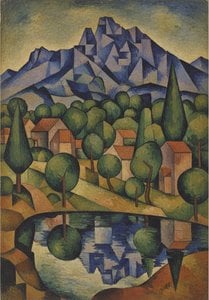
In his landscapes, Bel often turned his gaze toward the majestic vistas of the Swiss Alps. These works are frequently bathed in an ethereal, silvery light that evokes a sense of profound stillness and serenity. He had a remarkable gift for capturing the shimmering surfaces of water and the shifting mists of mountain passes, creating scenes that felt less like static landscapes and more like captured moments of spiritual contemplation. His portraits were equally compelling; rather than focusing solely on physical likeness, Bel sought to reveal the inner life of his subjects. Through carefully considered poses and nuanced facial expressions, he achieved a psychological depth that allowed viewers to glimpse the hidden complexities of the human experience.
Legacy and Lasting Significance
Though his career was cut short by illness, the impact of Rodolphe Bel’s work continues to resonate within the tradition of European Old Masters. His ability to marry the precision of a naturalist with the soul of a romanticist places him in a unique position within nineteenth-century art history. His notable works, such as “The Alpine Lake” and “Portrait of Madame Dubois,” remain quintessential examples of his stylistic hallmarks—demonstrating both his ability to evoke the majesty of nature and his skill in capturing human intimacy.
Today, Bel is remembered not just as a Swiss painter, but as a visionary who found extraordinary meaning in the subtle details of the world. His life serves as a reminder of the enduring power of art to transcend the limitations of time. Through his canvases, the light of the Alps and the quiet dignity of his subjects continue to live on, offering a window into a brief but brilliant era of artistic achievement.