Patrick Downie (1854–1945): A Quiet Observer of Rural Scotland
Patrick Downie was a Scottish painter who quietly documented the landscapes and daily life of rural Scotland during the late Victorian and Edwardian eras. Born in Glasgow in 1854, he possessed an innate talent for capturing the subtleties of nature and human experience—a skill that would define his artistic output and solidify his place as a significant figure within Pictorialism, a movement emphasizing atmospheric effects and tonal harmonies. Though largely unrecognized during his lifetime, Downie’s work has gained considerable appreciation in recent decades for its understated beauty and profound connection to the spirit of its time.- Early Life & Artistic Training: Downie received a formal artistic education at Glasgow School of Art, where he honed his skills in watercolor and oil painting under instructors who championed Impressionistic principles.
- Pictorialism & Atmospheric Rendering: His involvement with Pictorialism profoundly shaped his approach to artmaking. He meticulously studied the work of artists like Frederic Church and Jules Bastien-Lepage, adopting techniques designed to convey mood and emotion through subtle gradations of color and tonal variation. This dedication resulted in paintings characterized by luminous washes and hazy skies—a deliberate departure from academic realism.
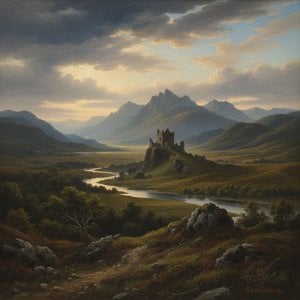
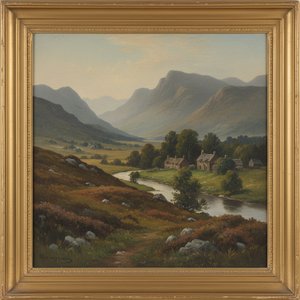
- Subject Matter & Recurring Themes: Downie’s oeuvre predominantly focused on landscapes, particularly scenes depicting Scottish moorlands and coastal vistas. However, he also excelled at portraying domestic interiors and animals, notably ducks—subjects that frequently appeared in his paintings throughout his career.
Notable Works & Artistic Style
Downie’s artistic style is marked by a remarkable sensitivity to light and color. He skillfully employed atmospheric perspective—a technique borrowed from Renaissance painters—to create depth and illusion within his canvases. His brushwork was deliberate yet understated, prioritizing tonal harmony over precise detail. Consider “A View of William Street from Mid Quay,” Greenock – the muted palette and hazy atmosphere perfectly encapsulate the mood of a wintry harbor town. The painting’s meticulous observation of texture and subtle shading reveals Downie's mastery of capturing the essence of his subjects. Similarly, "The Duck Pond" exemplifies his fascination with wildlife and his ability to convey tranquility through simple compositions.- "A View of William Street from Mid Quay": Demonstrates masterful atmospheric perspective and tonal harmony.
- "The Duck Pond": Captures the serenity of a rural landscape with careful attention to detail.
Influence & Legacy
Downie’s artistic vision resonated within Pictorialism, contributing to its aesthetic ideals. He championed tonal painting as a means of expressing emotion and capturing the intangible qualities of nature—a stance that anticipated developments in modern art. Although he lacked widespread fame during his lifetime, Downie's paintings continue to inspire admiration for their quiet beauty and evocative portrayal of Scottish rural life. His work serves as a testament to the enduring power of observation and artistic sensitivity—qualities that remain relevant to artists and viewers alike today.Further Exploration
For more information about Patrick Downie’s life and art, visit Patrick and Beatrice Haggerty Museum of Art in Milwaukee. Explore their collection featuring Keith Haring’s mural and rotating exhibitions – free admission awaits! A cultural gem on Marquette University campus.질의응답
키워드로 Patrick Downie의 작품을 찾아볼 수 있나요?
특정 주제의 Patrick Downie 작품을 찾으려면 키워드별로 작품이 분류된 작가의 키워드별로 페이지를 이용해 보세요.
Patrick Downie의 작품을 분위기별로 모아둔 곳은 어디인가요?
아티스트의 무드 룸 페이지에서는 Patrick Downie의 작품들을 분위기에 따라 큐레이션된 형태로 만나보실 수 있습니다.
Patrick Downie은(는) 어느 시대에 활동했나요?
Patrick Downie은(는) 19th Century 시대에 활동했습니다. 이 시기는 역사적 맥락에서 작가의 활동 위치를 보여줍니다.