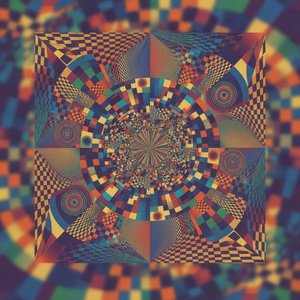
A Visionary of Pattern and Polychromy
Owen Jones was far more than a mere architect; he was a profound design theorist whose influence rippled through the nineteenth century, reshaping how the world perceived color, geometry, and ornament. Born in London, England, Jones possessed a versatile intellect that allowed him to navigate the realms of architecture, decorative design, and scholarly writing with equal mastery. While his architectural training at the Royal Academy Schools provided him with a structural foundation, it was his obsession with the soul of decoration—the vibrant, rhythmic application of color and pattern—that would ultimately secure his place in the annals of design history. He famously believed that "form without colour is like a body without a soul," a sentiment that drove his lifelong pursuit of a modern aesthetic liberated from the austere whiteness of Neoclassicism.
His creative journey was deeply shaped by his travels and an insatiable curiosity about the ancient and the exotic. During his Grand Tour, Jones immersed himself in the rich visual languages of Italy, Greece, Egypt, and Turkey. However, it was his meticulous study of Islamic decoration at the Alhambra Palace that became the cornerstone of his professional identity. Alongside the French architect Jules Goury, Jones spent months documenting the breathtaking intricate details of the Alhambra, producing hundreds of drawings and plaster casts. This deep dive into Moorish artistry allowed him to develop groundbreaking theories on flat patterning and abstraction, moving away from the rigid revivalist styles of his era toward a more fluid, organic, and colorful approach to ornamentation.
The Grammar of Ornament and Lasting Legacy
The culmination of Jones's scholarly and artistic endeavors was his seminal publication, The Grammar of Ornament. This work served as a global and historical design sourcebook, presenting a vast array of motifs from various cultures that continues to inspire designers even today. Through this text, he pioneered new standards in chromolithography, using the medium to bring the vivid polychromy of ancient and Islamic art to a wider audience. His ability to translate complex geometric patterns into a teachable framework made him a pivotal figure in the formation of design education, particularly through his close association with the development of what would become the Victoria and Albert Museum.
Beyond his theoretical writings, Jones left an indelible mark on the physical landscape of London through several significant commissions. His work was instrumental in the interior decoration and layout of the 1851 Great Exhibition building, a moment of immense cultural importance. He also contributed to the design of St James's Hall and worked extensively on various decorative elements, including tiles, wallpapers, and textiles. Whether designing for the Crystal Palace or creating intricate patterns for glassware showrooms, Jones remained committed to his vision of a modern style—one that embraced the richness of color and the mathematical beauty of geometry to create spaces that were as intellectually stimulating as they were visually enchanting.
Q&A
Owen Jones 작가의 작품을 연도별로 어떻게 확인할 수 있나요?
Owen Jones의 작품 연표를 확인해 보세요: 작품 연대기 페이지에서 작품들을 제작 날짜순으로 보실 수 있습니다.
Owen Jones의 작품 중 몇 점을 둘러보실 수 있나요?
전체 작품 보기 페이지에서 Owen Jones의 작품 작품 12점점을 만나보실 수 있습니다.
키워드로 Owen Jones의 작품을 찾아볼 수 있나요?
Owen Jones의 작품은 아티스트의 키워드별 탐색 페이지에서 키워드별로 찾아보실 수 있습니다. 각 키워드를 통해 관련 작품들을 모아 감상하실 수 있습니다.
Owen Jones의 출생 도시와 국가는 어디인가요?
Owen Jones은(는) United Kingdom London에서 태어났습니다.