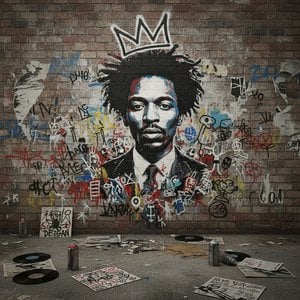
The Visual Architect of Cleveland
Mark Schwartz operated at the intersection of fine art and high-level visual communication. While many associate the term artist solely with the canvas, Schwartz’s influence was felt through his ability to bridge the gap between raw creative impulse and structured design. He was a man of dualities, moving from the experimental energy of New York to the institutional stability of Cleveland. His work was never about mere decoration; it was about the precision of seeing and the discipline of execution.
His trajectory was shaped by a series of deliberate shifts. What began as a potential career in law was discarded for the lens of a camera. This pivot was not a whim but a fundamental redirection of his intellect. He studied at Rutgers and Princeton, refining his eye under the guidance of Emmet Gowin, before securing an M.F.A. from Ohio University. This academic rigor provided the foundation for a career that was as much about leadership as it was about aesthetics.
A Legacy of Design and Advocacy
Schwartz’s professional life was defined by his role as the founder and creative director of Nesnadny +Schwartz. He did not simply design; he curated a specific standard for visual storytelling. He understood that fine art could serve a functional purpose, famously commissioning photographers to illustrate annual reports, such as those for the George Gund Foundation. This approach brought a level of sophistication to corporate and institutional communications that was uncommon.
His commitment to the arts extended far beyond his own studio or design firm. He was a central figure in the cultural infrastructure of Cleveland, holding positions that ensured the vitality of the local scene. His influence was felt through several key roles:
- Board member of the Cleveland Museum of Art
- Board member of MOCA Cleveland
- Member of the CMA marketing and collections committees
- Member of the CMA Friends of Photography group
He was a man who understood the mechanics of the art world. He did not just observe the institutions; he helped direct them. His involvement in exhibitions and installations, such as those at MOCA Cleveland, demonstrated a practical commitment to making art accessible and relevant to the public sphere.
The Discipline of Seeing
Schwartz’s early years were marked by a restless, searching energy. Growing up in Brooklyn and moving through the counterculture of the time, he was a conscientious objector who engaged deeply with the social and political realities of his era. This period of his life, which included driving a yellow cab in New York and traveling through Europe and North Africa, informed a perspective that was both worldly and intensely focused. He was a lateral thinker who applied this mindset to every project, whether he was developing art curricula for youth in NYC or managing a preeminent design firm.
Ultimately, his importance lies in this refusal to stay within a single lane. He was a painter, a photographer, a designer, and a mentor. He moved between the grit of social activism and the polished precision of award-winning design without losing his specific, sharp-edged clarity. He did not just participate in the art world; he helped build the structures that allow it to function.
Q&A
Mark Schwartz 작가의 작품을 연도별로 어떻게 확인할 수 있나요?
Mark Schwartz의 작품은 작품 연대기 페이지에서 연도순으로 확인하실 수 있습니다.
Mark Schwartz의 연도별 활동 기록이 있나요?
Mark Schwartz의 작품 세계를 시간순으로 정리한 기록은 아티스트 연대기 페이지에서 확인하실 수 있으며, 이곳에서는 각 시기별로 분류된 챕터를 따라 작품들을 제작 순서대로 만나보실 수 있습니다.
Mark Schwartz의 작품을 팔레트별로 모아둔 곳은 어디인가요?
Mark Schwartz의 작품은 작가의 컬러 팔레트별로 보기 페이지에서 컬러 팔레트별로 만나보실 수 있습니다.
Mark Schwartz의 작품들은 어떤 분위기를 담고 있나요?
Mark Schwartz의 작품은 각 작품이 지닌 분위기에 따라 분류된 무드 룸 페이지에서 무드별로 감상하실 수 있습니다.