

Mark Catesby을(를) 유명하게 만든 작품은 The red Wing (1731)이며, 워싱턴 D.C.에 위치한 스미소니언 미국 미술관에 전시되어 있습니다. English jewel-mounted Case (1918)와 The Pied-billed Dobchick, Natural History of Carolina, Florida and the Bahama Islands가 컬렉터와 미술관 관람객들의 마음을 그 뒤로 잇고 있습니다. Mark Catesby의 작품 3점 중 가장 많은 사랑을 받은 3점을 소개합니다. 각 작품은 제작 연도, 소장 미술관 및 작품의 특징과 함께 제공됩니다.
각 작품의 검색, 방문 및 주문 수를 결합한 인기 점수를 기준으로 순위를 매깁니다. 11월 2026 업데이트됨. 이 페이지의 모든 명작은 원하시는 크기로 박물관 품질의 수작업 유화 복제화 또는 파인 아트 프린트로 주문하실 수 있습니다.


The Pied-billed Dobchick or Grebe was first depicted and described by Mark Catesby nearly 300 years ago. The bird in Catesby’s illustration was a male, collected in South Carolina, and its description is headed by a Latin phrase that very neatly sums up most of what most birders know about this species: Podicepes minor rostro vario, a “rather small grebe with a marked bill.”Catesby’s rendition is a remarkable piece of…
이 페이지에 있는 작품을 가장 많이 소장하고 있는 3개의 미술관
| 소장 미술관 | 도시 | Mark Catesby의 작품 | 이 목록의 작품들 |
|---|---|---|---|
 스미소니언 미국 미술관 |
워싱턴 D.C. | 1 | The red Wing |
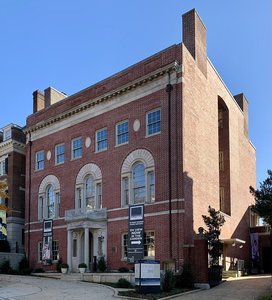 The President Woodrow Wilson House |
워싱턴, D.C. | 1 | English jewel-mounted Case |
 Huntington Museum of Art |
헌팅턴 | 1 | The Pied-billed Dobchick, Natural History of Carolina, Florida and the Bahama Islands |
이 페이지에 있는 Mark Catesby의 모든 연도별 명작은 1731년 작품입니다. 여기에서 확인해 보세요.

The red Wing (1731), 스미소니언 미국 미술관, 워싱턴 D.C.. 다음은 English jewel-mounted Case (1918)와(과) The Pied-billed Dobchick, Natural History of Carolina, Florida and the Bahama Islands입니다.
49세: The red Wing은(는) 1731년 작품이며, Mark Catesby은(는) 1682년에 태어났습니다.
Mark Catesby의 작품 3점이 카탈로그에 등록되어 있습니다.
대부분의 작품은 스미소니언 미국 미술관 (워싱턴 D.C.), The President Woodrow Wilson House (워싱턴, D.C.) 및 Huntington Museum of Art (헌팅턴)에 소장되어 있습니다. 위 표에 각 박물관 목록이 나열되어 있습니다.
네, 이 페이지에 있는 모든 작품은 해당 작품의 상세 페이지에서 원하시는 크기로 박물관 품질의 수작업 유화 복제본 또는 파인 아트 프린트로 주문하실 수 있습니다.
In the golden age of scientific discovery, few figures captured the raw, untamed essence of the New World as vividly as Mark Catesby. Born in the quiet landscapes of Essex, England, around 1683, Catesby possessed a spirit that could not be contained by the borders of Europe. While his early education in classical studies and mathematics provided him with the analytical rigor necessary for scientific inquiry, it was an innate passion for ornithology that would ultimately lead him across the Atlantic. His journey was more than a mere expedition; it was a profound artistic and scientific pilgrimage that sought to bridge the gap between the known European natural world and the mysterious, vibrant ecosystems of North America.
Catesby’s arrival in Virginia in 1712 marked the beginning of a transformative era for both natural history and botanical art. Moving through the tidewater regions and eventually venturing into the lush territories of Carolina, Florida, and the Bahama Islands, he acted as both an explorer and a chronicler. Unlike many of his contemporaries who relied on dried specimens or second-hand descriptions, Catesby sought the living pulse of nature. He observed birds in flight, reptiles amidst foliage, and the delicate interplay between flora and fauna, translating these fleeting moments into permanent, exquisite records that would stun the scientific community upon their return to England.
The crowning achievement of Catesby’s career remains his monumental publication, The Natural History of Carolina, Florida and the Bahama Islands. Produced between 1729 and 1747, this work was a revolutionary treatise that fundamentally altered the Western understanding of American biodiversity. Through a painstaking process of collecting specimens and rendering them in detailed watercolors and etchings, Catesky produced 220 plates of unparalleled beauty and accuracy. Each plate served as a window into a world previously unseen by European eyes, featuring an array of birds, reptiles, amphibians, fish, insects, and plants.
His technique was characterized by a remarkable marriage of scientific precision and artistic grace. Catesby did not merely illustrate subjects in isolation; he often depicted them within their ecological context, showing the symbiotic relationships between plants and the creatures that inhabited them. This approach predated many modern ecological concepts and gave his work a narrative depth that set it apart from purely taxonomic drawings. The vibrant colors and meticulous textures of his watercolors—such as those seen in his famous depiction of the Red Winged Starling—conveyed a sense of life and vitality that made his scientific observations feel deeply personal and emotionally resonant.
The impact of Mark Catesby’s work reverberated through the centuries, establishing him as a foundational figure in the tradition of naturalistic illustration. Before the arrival of John James Audubon, whose Birds of America would later become a legendary standard, Catesby’s volumes stood as the most significant illustrated record of North American life. His ability to document the habits and environments of species with such fidelity earned him a permanent place in the annals of both art and science. He paved the way for future generations of naturalists, proving that rigorous scientific observation could be elevated through the medium of fine art.
Beyond his technical contributions, Catesby’s life represents the quintessential Enlightenment pursuit: the quest to categorize, understand, and celebrate the wonders of the natural world. His legacy is found not only in museum archives but in the very way we perceive the beauty of the wild. Through his eyes, the flora and fauna of the New World were transformed from mere curiosities into subjects of profound scientific importance and aesthetic wonder, ensuring that his name remains synonymous with the dawn of American natural history.