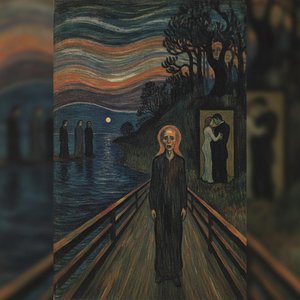
The Quiet Resonance of Konstanty Mańkowski
In the fleeting twilight of the nineteenth century, a period marked by profound cultural shifts and the burgeoning spirit of Polish identity, the works of Konstanty Mańkowski emerged as tender whispers of reality. Born in 1861, Mańkowski navigated an era where the brushstroke served not only as a tool for representation but as a vessel for capturing the ephemeral essence of life. Though his time was tragically brief, spanning only until his death in 1897, the legacy he left behind resonates with a quiet, enduring dignity that speaks to the soul of the late Romantic and early Realist traditions.
Mańkowski’s artistic journey was one of delicate observation. He possessed an uncanny ability to find the extraordinary within the ordinary, turning simple subjects into profound meditations on existence. His repertoire was diverse, ranging from the intimate stillness of Still Life with Kontush Belt, Walking Stick and Cap to the more narrative-driven compositions that explored human connection and solitude. Whether he was depicting a young girl lost in thought or the dramatic tension of a seascape in works like Po burzy morskiej, there was always an underlying pulse of emotion, a sense that the subject matter held secrets just beneath the surface of the oil and canvas.
A Mastery of Light and Intimacy
The technical prowess of Mańkowski lay in his command over light and texture, elements he used to breathe life into his figurative and genre paintings. His approach to portraiture, such as the poignant Portrait of a young girl, demonstrates a profound sensitivity to the human form and the psychological depth of his sitters. He did not merely paint faces; he painted the weight of a gaze and the softness of a shadow, creating a sense of presence that transcends the flat plane of the painting.
In his still lifes, Mańkowski displayed a meticulous attention to detail that elevated mundane objects to the status of icons. Through his use of light, he could imbue a simple belt or a walking stick with a historical and tactile significance, connecting the viewer to the cultural fabric of 19th-century Poland. His ability to manipulate medium—often working with oil on board to achieve specific densities of color—allowed him to create works that felt both grounded in reality and elevated by an almost poetic atmosphere.
Legacy and Historical Significance
While Mańkowski may not have achieved the global fame of some of his contemporaries, his significance within the context of Polish art remains undeniable. His work serves as a vital window into the aesthetic sensibilities of his time, capturing the transition from the grand narratives of history painting to the more intimate, observant styles of late 19th-century realism. He was an artist who found beauty in the quiet corners of life, documenting the textures of Polish heritage and the universal language of human emotion.
Today, his contributions are preserved in esteemed collections, such as the National Museum in Kraków, ensuring that his vision continues to inspire. To look upon a Mańkowski painting is to engage in a silent dialogue with the past, a reminder of the power of art to freeze a moment of grace in the relentless flow of time. His life, though short, remains a testament to the enduring impact of an artist who mastered the art of seeing.
Q&A
Konstanty Mańkowski의 작품을 매체별로 찾아볼 수 있나요?
Konstanty Mańkowski의 작품은 작가 페이지인 모든 매체별에서 매체별로 둘러보실 수 있습니다.
Konstanty Mańkowski 작가는 어떤 사조의 작품 활동을 했나요?
모든 미술 사조 페이지에서는 Konstanty Mańkowski의 작품을 예술 사조별로 모아 볼 수 있습니다.
Konstanty Mańkowski의 출생 도시와 국가는 어디인가요?
Konstanty Mańkowski은(는) Poland Kraków에서 태어났습니다.
Konstanty Mańkowski 작가의 작품을 연도별로 어떻게 확인할 수 있나요?
Konstanty Mańkowski의 작품은 작품 연대기 페이지에서 연도순으로 확인하실 수 있습니다.