The Genesis of a Czech Visionary
Born in the historic town of Hořice in 1883, Karel Vik entered a world where the foundations of modern European art were beginning to shift. His early life was defined by an intense, burgeoning passion for the visual arts, a drive that propelled him through rigorous training and into the heart of the Czech creative community. As he developed his craft, Vik did not merely observe the world; he sought to interpret it through a lens that combined technical precision with a profound emotional depth. His journey from a young student to a prominent figure in the art scene was marked by a relentless pursuit of mastery in both painting and printmaking, establishing a foundation that would support a lifetime of significant artistic exploration.A Tapestry of Color and Form
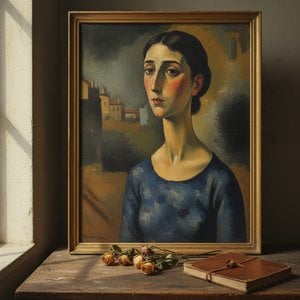
The true brilliance of Vik’s work lies in his ability to navigate the complex intersection of tradition and modernity. His style emerged as a powerful dialogue between established techniques and the radical, avant-garde movements of his era, most notably Expressionism and Cubism. In his oil paintings, one finds a visceral use of bold colors and rich, tactile textures that evoke a sense of movement and raw emotion. This expressive quality is equally present in his masterful woodcut prints, where the stark contrast of line and shadow reveals a deep understanding of graphic strength. By blending these diverse influences, Vik created a visual language that was uniquely his own—one that captured the tension and energy of a changing century.An Enduring Legacy in the Global Canon
The impact of Karel Vik’s artistry extends far beyond the borders of the Czech Republic, finding a permanent home in some of the most esteemed galleries in the world. His works are held in prestigious collections such as the Smithsonian American Art Museum and the National Gallery in Prague, serving as enduring witnesses to his technical skill and visionary spirit. Through his contributions to both printmaking and painting, Vik has left an indelible mark on the history of modern art. His legacy continues to resonate with collectors and scholars alike, inspiring new generations to explore the profound connection between the artist's hand and the emotional truth of the human experience.Q&A
Karel Vik은(는) 어느 시대의 작품을 남겼나요?
Karel Vik은(는) Modern 시대에 활동했습니다. 이 시기는 역사적 맥락 속에서 작가의 예술적 위치를 보여줍니다.