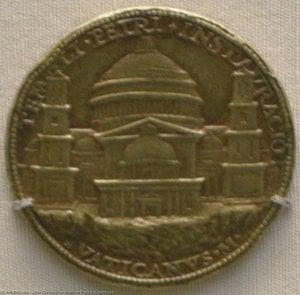
The Master of Bronze: The Life and Legacy of Caradosso
In the vibrant, transformative era of the Italian Renaissance, few artisans captured the delicate intersection of classical grandeur and meticulous craftsmanship as profoundly as Cristoforo Foppa, known to history by his evocative moniker, Caradosso. Born around 1445 in the quiet landscapes of Mondonico, or perhaps within the industrious atmosphere of Pavia, Caradosso emerged not merely as a sculptor, but as a master of metal who breathed life into bronze. His journey from a skilled goldsmith to a celebrated figure of the Genoese and Milanese artistic circles represents the quintessential Renaissance ascent, where technical precision met the soaring intellectual ambitions of humanism.
Caradosso’s artistry was defined by an extraordinary ability to manipulate the medium of bronze through the lost wax casting technique. This method allowed him to achieve a level of textural complexity that seemed almost impossible for metal; he could render the softest fold of drapery, the subtle tension of a muscle, and the profound depth of a facial expression with breathtaking accuracy. His work often functioned as a bridge between worlds, blending the intricate, ornamental traditions of Byzantine influence with the monumental, structural clarity of classical Roman reliefs. This stylistic duality gave his pieces a unique presence—they possessed the weight of history yet maintained an intimate, jewel-like detail that invited close, contemplative study.
A Legacy Cast in Gold and Bronze
The true significance of Caradosso lies in his ability to translate the grand narratives of his age into tangible, enduring forms. His career was marked by prestigious commissions that placed him at the heart of European power and religious devotion. One of his most monumental achievements was his involvement in ambitious public projects, including the creation of bronze reliefs that celebrated the architectural triumphs of the era, such as those depicting St. Peter's Basilica under the patronage of Pope Julius II. These works did more than decorate; they served as powerful symbols of faith and civic identity, cementing Genoa’s reputation as a vital center of artistic innovation.
Beyond his religious contributions, Caradosso’s mastery extended to the creation of exquisite medals and commemorative reliefs that captured the likenesses of the era's most influential figures. His work often featured:
- Classical Mythology: Scenes such as the Rapimento Di Ganimede, where he utilized his skill in relief to depict heroic movement and divine intervention.
- Portraiture and Commemoration: Medals like the Medaglia Di Donato Bramante, which showcased his ability to imbue metal with a sense of living character and intellectual gravity.
- Architectural Reverence: Detailed depictions of contemporary structures, blending the artist's technical skill with the burgeoning architectural wonders of the Renaissance.
Though history often directs its gaze toward the towering shadows of Michelangelo or Leonardo, Caradosso remains an indispensable figure for understanding the true breadth of the Renaissance. He was a master of the small and the monumental alike, a die sinker who could capture the soul of an era in a single strike of metal. His legacy survives in the museums of the world, where his bronzes continue to radiate the light of a period defined by the pursuit of perfection.
질의응답
John Christopher Matthew Foppa (Caradosso) 작가 작품에 대한 통계 정보는 어디에서 확인할 수 있나요?
John Christopher Matthew Foppa (Caradosso) 작가 작품에 관한 통계 정보는 작가의 통계 페이지에서 확인하실 수 있습니다.
John Christopher Matthew Foppa (Caradosso)은(는) 어느 시대에 활동했나요?
John Christopher Matthew Foppa (Caradosso)은(는) Renaissance 시대에 활동했습니다. 이 시기는 역사적 맥락에서 작가의 활동 위치를 보여줍니다.
John Christopher Matthew Foppa (Caradosso) 작가 작품의 컬러 프로필은 어디에서 확인할 수 있나요?
John Christopher Matthew Foppa (Caradosso)의 팔레트 지놈는 작가의 작품 세계를 구성하는 컬러 프로필을 보여주는 페이지입니다.