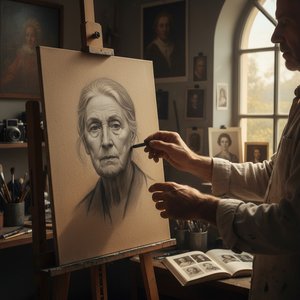
The Visionary Architect of the American Landscape
John Martin Feeney, known to the world by the singular and commanding name John Ford, was far more than a mere director; he was a poet of the moving image whose lens captured the very soul of the American frontier. Born on February 1, 1894, in the coastal serenity of Cape Elizabeth, Maine, his origins were deeply rooted in an Irish heritage that would later infuse his work with themes of displacement, tradition, and resilience. The son of John Augustine Feeney and Barbara Curran, Ford’s early life was shaped by the stories of his ancestors—immigrants from Galway and the Aran Islands—and a subtle connection to the world of fine art through his paternal grandfather, the Pre-Raphaelite painter Ford Madox Brown. This lineage of visual storytelling provided a silent but profound foundation for a man who would eventually redefine the aesthetic boundaries of Hollywood.
His journey toward cinematic immortality was not paved with immediate prestige but through the grit and determination of a true craftsman. Moving through various roles—from stagehand and extra to stuntman and prop man—Ford learned the technical language of film from the ground up. This practical, hands-on education, often facilitated by his brother Francis Ford, allowed him to master the mechanics of composition and light long before he became an auteur. His early years in the industry were spent navigating the rugged demands of low-budget Westerns, a period that served as a vital laboratory for his developing style. It was here that he began to cultivate his signature use of wide shots and location shooting, learning to frame human drama against the vast, unforgiving, and majestic textures of the natural world.
A Master of Narrative and Visual Grandeur
As Ford’s career matured, he transitioned from a skilled technician to a legendary storyteller, capable of weaving complex tapestries of morality, heroism, and loss. His filmography, spanning over 130 films, is anchored by masterpieces that have become the very cornerstones of American cinema. In works such as Stagecoach (1939), he revitalized the Western genre, transforming it from simple action fare into a profound exploration of character and destiny. This ability to elevate genre filmmaking through visual sophistication earned him unprecedented critical acclaim, including a record-breaking four Academy Awards for Best Director for The Informer, The Grapes of Wrath, How Green Was My Valley, and The Quiet Man.
The brilliance of Ford’s technique lay in his ability to balance the epic with the intimate. While he was renowned for capturing the sweeping vistas of Monument Valley—using the landscape as a silent protagonist that mirrored the internal struggles of his characters—he never lost sight of the human heart. His visual language was characterized by:
- The use of deep focus and wide shots to integrate characters into their environmental context.
- A masterful command of light and shadow, drawing inspiration from classical painting to create mood and tension.
- An evocative approach to landscape, where the rugged terrain served as both a physical obstacle and a symbolic reflection of the frontier spirit.
Through his lens, the American West was not merely a setting but a living, breathing entity that shaped the destinies of legends like John Wayne and Henry Fonda. His films were meticulously crafted explorations of the human condition, often dealing with the tension between civilization and savagery, and the heavy price of progress.
Legacy and Enduring Influence
The historical significance of John Ford cannot be overstated. He was one of the first directors to be recognized as an auteur, a filmmaker whose personal vision and stylistic fingerprints were unmistakable in every frame. His influence rippled through the decades, shaping the work of subsequent generations of masters, from Akira Kurosawa to modern cinematic icons. Even as the Hollywood landscape shifted, Ford’s ability to capture the essence of rugged individualism and the bittersweet nature of memory remained timeless.
Beyond the silver screen, his life remains a testament to the power of artistic evolution. From his early days in the trenches of silent film production to his status as a titan of the Golden Age, Ford’s career was a continuous pursuit of visual truth. He left behind a cinematic legacy that continues to inspire awe, reminding us that the most profound stories are often those told through the interplay of light, shadow, and the vast, enduring landscapes of our shared human experience.
Q&A
John A Ford 작가의 작품에서 가장 자주 나타나는 색상은 무엇인가요?
이 사이트에 등록된 작품 전반에 나타나는 John A Ford의 색채 활용은 작가의 팔레트 지놈 페이지에서 자세히 살펴보실 수 있습니다.
미술 사조별로 분류된 John A Ford의 작품은 어디에서 볼 수 있나요?
John A Ford 작가의 작품을 예술 사조별로 모아둔 모든 미술 사조 페이지에서 해당 작가가 활동했던 사조를 확인하실 수 있습니다.
John A Ford의 연도별 활동 기록이 있나요?
John A Ford의 예술적 여정은 연대기 페이지에서 시기별로 펼쳐집니다. 이곳에서는 작가의 활동 시기를 장(chapter)으로 나누어 작품들을 연대순 타임라인 형태로 한눈에 확인할 수 있습니다.
John A Ford 작가의 다른 활동명이나 알려진 이름이 있나요?
John A Ford은(는) John Martin Feeney라는 이름으로도 활동하고 있습니다.