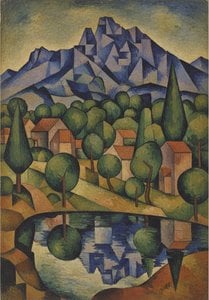
The Architect of Conceptual Space: The Life and Legacy of Joachim Pfeufer
In the vibrant, experimental landscape of mid-twentieth-century avant-garde art, few figures embodied the intersection of structural precision and philosophical inquiry as profoundly as Joachim Pfeufer. Born in 1926 in Sauve, France, Pfeufer emerged not merely as a creator of objects, but as an architect of perception. His journey was one defined by a relentless pursuit to bridge the gap between the tangible world of form and the intangible realms of language and thought. Influenced heavily by the existential and linguistic inquiries of thinkers such as Heidegger and Wittgenstein, Pfeufer’s work sought to dismantle the boundaries between art and life, transforming the gallery space into a site of profound philosophical encounter.
Pfeufer’s artistic foundation was uniquely rooted in the rigorous disciplines of architecture and sculpture. During his formative studies at the École Supérieure d'Architecture et de Beaux-Arts in Paris, he developed a sophisticated understanding of spatial design and materiality. This training allowed him to approach the canvas and the installation with a structural intellect, treating space itself as a medium capable of conveying complex meanings. His early explorations into geometric abstraction were more than mere aesthetic exercises; they were deliberate attempts to use form to provoke contemplation and to challenge the viewer's conventional understanding of reality and physical presence.
The Fluxus Spirit and Collaborative Innovation
The trajectory of Pfeufer’s career was irrevocably altered by his immersion in the Fluxus movement, a radical international network of artists dedicated to spontaneity, chance, and the rejection of traditional artistic hierarchies. It was within this spirit of collective creativity that Pfeufer formed his most significant professional bond: a partnership with the legendary Robert Filliou. Together, they moved away from the solitary production of art toward a more communal, process-oriented approach that emphasized the experience over the finished product.
The pinnacle of this collaborative era was the monumental Poïpoïdrome project of 1963. This ambitious architectural installation, a wooden pavilion erected within a Parisian gallery, served as a physical manifestation of their shared vision. The project was not simply a structure to be viewed, but an environment to be inhabited—a prototype for a new kind of real-time space. Through such works, Pfeufer demonstrated how the principles of architecture could be repurposed to create poetic, ephemeral landscapes that invited the audience to participate in the unfolding of art.
Historical Significance and Lasting Impact
Though his life was relatively brief, ending in 1987, Joachim Pfeufer left an indelible mark on the history of conceptual art. His ability to synthesize the rigid logic of architectural design with the fluid, often chaotic energy of the Fluxus movement provided a blueprint for future generations of installation artists. He remains a pivotal figure for those studying the evolution of spatial politics and the role of the artist as a facilitator of experience.
The enduring importance of his work can be summarized through several key contributions:
- Spatial Poetics: The transformation of architectural elements into tools for philosophical and linguistic exploration.
- Collaborative Ethos: A pioneering role in the development of collective art practices that challenged the myth of the individual genius.
- Conceptual Integration: The seamless blending of structural design with the avant-garde pursuit of spontaneity and chance.
Today, as we look back on the era of experimentalism, Pfeufer’s legacy stands as a testament to the power of art to redefine the very space we inhabit, reminding us that every structure holds the potential for profound, transformative meaning.
Q&A
Joachim Pfeufer 작가의 국적은 어디인가요?
Joachim Pfeufer은(는) France 출신입니다.
Joachim Pfeufer의 작품을 기법별로 모아볼 수 있는 곳은 어디인가요?
특정 매체로 제작된 Joachim Pfeufer의 모든 작품을 확인하시려면, 작가의 모든 매체별 페이지를 이용해 주세요.
Joachim Pfeufer 작가의 작품 관련 통계 정보는 어디에서 확인할 수 있나요?
Joachim Pfeufer 작가의 작품 통계 정보는 방문 통계 페이지에서 확인하실 수 있습니다.
Joachim Pfeufer의 작품 중 몇 점을 둘러보실 수 있나요?
전체 작품 보기 페이지에서 Joachim Pfeufer의 작품 작품 1점점을 만나보실 수 있습니다.