The Formative Years and the London Influence
Born in Launceston, Tasmania, on 26 February 1908, the man who would become known as Jack Carington Smith began his life simply as Smith. His early years were marked by a quiet determination, evidenced when, at only fifteen, he had two watercolours accepted by the Launceston Art Society. This early recognition preceded a period of professional labor, working as a clerk for the Shell Co. of Australia Ltd and later as a commercial artist. By 1936, a turning point arrived in the form of a New South Wales travelling art scholarship. This opportunity allowed him to leave the familiar landscapes of Tasmania to study at the Royal Academy of Arts in London, as well as at the Westminster Technical Institute and in Paris. It was during this period of international study that he adopted the more formal surname, Carington Smith.
His time in Europe introduced him to the sensibilities of Post-Impressionism. He found a particular resonance in the work of British artists like Walter Richard Sickert, an influence that would inform his approach to composition and light. Upon returning to Australia in 1939, he brought with him a refined understanding of how to translate the essence of a subject onto canvas or paper.
A Life of Teaching and Recognition
Smith’s career was defined as much by his role in the classroom as by his own output. He held significant positions within the Tasmanian educational system, serving as the head of the art department at Launceston Technical College before moving to Hobart Technical College in 1940, where he remained until 1970. His teaching philosophy was rooted in the belief that drawing was the essential foundation of all art. He viewed the act of composing a picture—balancing colour, tone, line, and form—as a process akin to musical composition. Through his mentorship, he helped shape the next generation of artists, including Max Angus, Roger Murphy, and Jeff Hook.
His personal achievements in the Australian art circuit were significant and hard-won. His recognition included several prestigious honors:
- The Sulman Prize in 1949 for Bush Pastoral.
- The Archibald Prize in 1963, awarded for his portrait of Professor James McAuley.
- The Rubinstein Prize in 1966.
Technique and Subject Matter
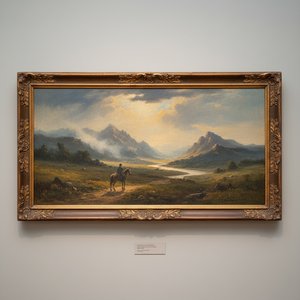
The breadth of his technical skill allowed him to move fluidly between mediums. While he was a prolific painter in oil on canvas, he was perhaps most noted for his mastery of watercolour and pencil. His watercolours possessed a spontaneity that helped define a distinctive Tasmanian school of the medium in the postwar era. His subjects were varied, ranging from the intimate details of a Studio window to the structural presence of trees. Whether working on a portrait or a landscape, his focus remained on the structural integrity of the subject, often utilizing a style that leaned toward abstraction to capture the character of his surroundings.
He remained active in the art community until his death in 1972 in Sandy Bay, Tasmania. His influence remains embedded in the institutional fabric of the region, most notably through the naming of the Carington Smith Library in the Centre for the Arts, University of Tasmania.
Q&A
Jack Carington Smith의 작품은 얼마나 인기가 있나요?
Jack Carington Smith 작가의 작품 통계 정보는 방문 통계 페이지에서 확인하실 수 있습니다.
주제별로 Jack Carington Smith의 작품을 찾아볼 수 있나요?
Jack Carington Smith의 주제별 작품 모음는 작가의 작품들을 주제별로 찾아볼 수 있는 페이지입니다.
Jack Carington Smith 작가의 작품을 감상할 수 있는 가상 박물관에 방문할 수 있나요?
Jack Carington Smith의 3D 갤러리는 작가의 작품들을 가상 3D 갤러리로 감상할 수 있는 페이지입니다.
특정 색상 팔레트의 Jack Carington Smith 작품은 어디에서 찾아볼 수 있나요?
Jack Carington Smith의 작품은 작가의 컬러 팔레트별로 보기 페이지에서 컬러 팔레트별로 만나보실 수 있습니다.