The Master of the Dutch Interior: The Life and Legacy of Hendrik Maertensz Sorgh
In the golden light of the seventeenth-century Netherlands, few artists captured the quiet, rhythmic pulse of everyday life as intimately as Hendrik Maertensz Sorgh. Born in Rotterdam around 1610, Sorgh emerged during a period of unparalleled artistic flourishing, a time when the Dutch Golden Age was redefining the boundaries of genre painting. His journey into the heart of the Baroque tradition began with rigorous training under two formidable masters: the Antwerp virtuoso David Teniers the Younger and the Rotterdam painter Willem Pieterszoon Buytwech. This dual lineage gifted him a unique stylistic vocabulary, blending the theatrical grandeur of the Flemish school with a grounded, meticulous realism that would become his hallmark.
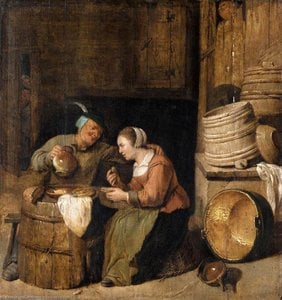
Sorgh’s artistry was never merely about documentation; it was an exploration of atmosphere and the profound beauty found in the mundane. He possessed a singular ability to transform a simple kitchen or a bustling market into a stage for human emotion. His works often feature chiaroscuro, that dramatic interplay of light and shadow, which lends a sculptural depth to his subjects. Whether he was rendering the glint of light on a pewter plate in a still life or the weary expression of a peasant in a tavern, Sorgh used light to guide the viewer’s eye through complex narratives of domesticity and survival.
A Tapestry of Domesticity and Symbolism
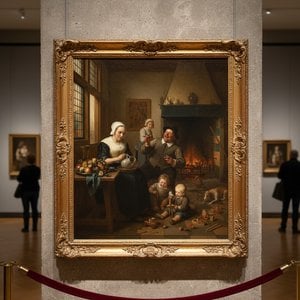
The true soul of Sorgh’s oeuvre lies in his genre paintings, where he invites us into the private corners of 17 and 18th-century life. His interiors are far more than mere settings; they are rich with symbolic resonance. In masterpieces such as “The Lute Player,” created in 1661, we see a profound harmony of elements. The presence of the lute evokes the fleeting nature of music and joy, while carefully placed oranges serve as emblems of abundance and prosperity. Even the inclusion of animals, such as watchful dogs, adds a layer of warmth and companionship to the composition, grounding the scene in a sense of lived reality.
Beyond the cozy domestic sphere, Sorgh demonstrated remarkable versatility, proving his command over diverse subject matters that expanded the reach of his talent. His repertoire included:
- Market Scenes: Vibrant, bustling depictions like “The Fish Market” that capture the energetic commerce of Dutch urban life.
- Maritime Works: Dramatic seascapes such as “Sailing Vessels In A Strong Wind,” showcasing his ability to convey the raw power and struggle of the sea.
- Historical Narratives: Biblical or classical themes, such as “Esau Selling His Birthright,” where he applied his mastery of human expression to profound moral tales.
- Portraiture: Intimate studies of character that reflect the social fabric of his era.
Personal Bonds and Artistic Eminence
Sorgh’s life was deeply intertwined with the very fabric of the Dutch art world. His marriage in 1633 to Adriaantje Hollaer created a connection to some of the most significant figures of the age. In a fascinating historical footnote, Sorgh’s sister served as the model for one of Rembrandt's most famous portraits of his wife—a subtle yet powerful testament to the interconnectedness of the Amsterdam and Rotterdam artistic circles. This web of familial and professional relationships placed Sorgh at the center of a cultural renaissance.
His ascent within the professional community was equally notable. In 1659, he achieved the prestigious position of leader within the Rotterdam Guild of St. Luke, an honor that reflected his high standing among his peers and his commitment to the standards of his craft. As he navigated the complexities of patronage and the evolving tastes of the Dutch Republic, Sorgh remained steadfast in his devotion to capturing the authentic essence of the human experience. Today, his works remain vital windows into a lost world, reminding us that there is profound dignity and artistry to be found in the simplest of moments.
Q&A
Hendrick Maertensz Sorgh 작가는 어떤 사조의 작품 활동을 했나요?
Hendrick Maertensz Sorgh 작가의 작품을 예술 사조별로 모아둔 모든 미술 사조 페이지에서 해당 작가가 활동했던 사조를 확인하실 수 있습니다.
Hendrick Maertensz Sorgh의 전 작품에 걸친 색채 활용을 살펴볼 수 있을까요?
Hendrick Maertensz Sorgh의 팔레트 지놈에서는 작가의 작품 세계를 구성하는 컬러 프로필을 확인하실 수 있습니다.
키워드별로 분류된 Hendrick Maertensz Sorgh의 작품은 어디에서 볼 수 있나요?
특정 주제의 Hendrick Maertensz Sorgh 작품을 찾으려면 키워드별로 작품이 분류된 작가의 키워드별 탐색 페이지를 이용해 보세요.