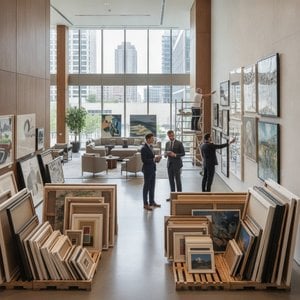
A Visionary Architect: The World of Frédéric Levrat
Frédéric Levrat, born in Versoix, Switzerland in 1963, is more than an architect; he’s a creator deeply invested in the power of design to shape not only physical spaces but also communities and futures. His journey began with formal education at the prestigious École Polytechnique Fédérale de Lausanne, laying a solid foundation for a career that would transcend conventional boundaries. Levrat's philosophy is built upon three core tenets: creation, transmission – the sharing of knowledge and experience – and humanitarianism. This unique blend informs every aspect of his work, from conceptualization to completion, setting him apart as a truly conscientious practitioner in a field often focused solely on aesthetics or functionality.From Switzerland to the Global Stage
Levrat’s early career was marked by a desire to explore innovative architectural solutions, quickly gaining recognition with awards like the New York Foundation for the Arts in Architecture and success in the Young Architects Forum and Europan 5 competition in Zurich. These accolades weren't merely acknowledgements of talent; they were catalysts propelling him onto an international platform. He further honed his skills as an educator, sharing his insights at Columbia University and fostering a new generation of architects with a similar commitment to socially responsible design. Today, based in New York City, Levrat’s influence extends far beyond the Swiss borders, with completed projects spanning diverse locations including Dubai, Kabul, Abu Dhabi, Mumbai, Zurich, and New York itself. This global reach isn't accidental; it reflects a deliberate effort to apply his architectural principles to address challenges across different cultures and contexts.A Portfolio Rooted in Purpose
The breadth of Levrat’s portfolio is striking, encompassing residential buildings like the Arjan-Mizin Residential Building and the Wagnon Residence, ambitious public projects such as the Eight Primary Schools in Afghanistan, and complex urban interventions like the Spreebogen Masterplan. His work isn't defined by a singular style but rather by an adaptable approach that prioritizes context and need. The National Museum of Afghanistan stands as a powerful example of his humanitarian commitment – a project dedicated to preserving cultural heritage amidst conflict. Similarly, the Empower Shack Housing in Cape Town demonstrates a dedication to providing dignified living spaces for marginalized communities. Even seemingly conventional projects like the Taberna 97 reveal Levrat’s attention to detail and ability to create inviting, functional environments. The Axonometric Chair, while appearing as a smaller-scale design piece, hints at his fundamental understanding of spatial relationships and form.Influences and Artistic Development
While pinpointing specific artistic influences is difficult with an architect so focused on practical application, it’s clear that Levrat draws inspiration from a deep respect for human history and cultural diversity. His projects often incorporate local materials and building techniques, demonstrating a sensitivity to the existing environment. The emphasis on ‘transmission’ in his core philosophy suggests a strong connection to architectural traditions – not as something to be replicated blindly, but as a source of knowledge and understanding. The influence of modern architecture is also apparent, particularly in his use of clean lines, open spaces, and innovative structural solutions. His work can be seen as a synthesis of these elements: a forward-looking vision grounded in historical awareness and social responsibility.Legacy and Historical Significance
Frédéric Levrat’s contribution to the field of architecture lies not just in the buildings he designs but also in the principles that guide his practice. He represents a growing movement towards socially conscious design, where architects are increasingly seen as agents of positive change. His commitment to humanitarianism, coupled with his dedication to education and knowledge sharing, ensures that his influence will extend far beyond the physical structures he creates. He is not simply building spaces; he’s fostering communities, preserving cultures, and shaping a more equitable future – a legacy that solidifies his place as a visionary architect of our time.질의응답
Frédéric Levrat의 작품을 연도순으로 어디에서 볼 수 있나요?
Frédéric Levrat의 작품은 작가의 작품 연대기 페이지에서 연도별로 확인하실 수 있습니다.
Frédéric Levrat가 그린 모든 주제를 한눈에 볼 수 있는 개요가 있나요?
주제별 아틀라스 페이지에서는 Frédéric Levrat의 작품들을 주제별로 찾아보실 수 있습니다.
Frédéric Levrat의 출생 도시와 국가는 어디인가요?
Frédéric Levrat은(는) Switzerland의 Versoix에서 태어났습니다.
Frédéric Levrat 작가 작품에 대한 통계 정보는 어디에서 확인할 수 있나요?
Frédéric Levrat의 작품에 관한 통계를 보여주는 통계 페이지가 본 웹사이트에 마련되어 있습니다.
Frédéric Levrat의 모든 작품을 어디에서 볼 수 있나요?
본 웹사이트에 등록된 Frédéric Levrat의 모든 작품은 작가의 모든 작품 보기 페이지에서 확인하실 수 있습니다.
Frédéric Levrat 작가의 출신 국가는 어디인가요?
Frédéric Levrat은(는) Switzerland에서 태어났습니다.
Frédéric Levrat의 다른 이름이나 별칭에는 무엇이 있나요?
Frédéric Levrat은(는) Frederic Levrat라는 다른 이름으로도 알려져 있습니다.
Frédéric Levrat의 작품을 사조별로 둘러볼 수 있나요?
Frédéric Levrat 작가가 활동했던 예술 사조는 작품을 사조별로 분류하여 보여주는 작가의 모든 사조 페이지에서 확인하실 수 있습니다.