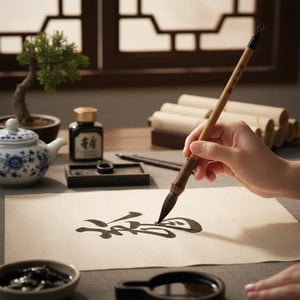
The Scholar's Brush in the Ming Dynasty
The year 1471 marks a moment of transition for Cheng Tao. Having passed the provincial examinations in the capital, he earned the title of juren, a distinction that placed him within the intellectual fabric of the Ming dynasty. He moved through the administrative landscape of Baoying, in the Jiangsu province, navigating a life that balanced the rigid expectations of a scholar-official with the spontaneous impulses of a poet and calligrapher. His existence was defined by this duality, supported by the patronage of opulent figures who provided a shield for his creative pursuits.
His hand moved with a specific intent across various mediums. He did not limit himself to a single subject, instead finding expression in landscapes, portraits, and the delicate anatomy of flowers and birds. There is a particular lightness to his approach, a preference for the small format that allows for an intimate encounter between the viewer and the ink. His work often carries a sense of casual immediacy, as if the brush was guided by a sudden thought rather than a long-planned composition.
The Duality of Ink and Color
In the quiet spaces of his studio, Cheng Tao explored the tension between the monochrome and the tinted. His technique often relied on the subtle gradations of black ink to suggest form, yet he was equally capable of introducing light colors to breathe life into a scene. This versatility allowed him to capture the essence of his subjects through different visual languages:
- Monochrome ink depictions of chrysanthemums, slender bamboo stalks, and rugged rocks.
- Lightly colored renderings of humble subjects like cabbage.
- Blue and green landscapes that emphasize spatial depth.
- Spontaneous, casual sketches of flora and fauna.
This technical range was not merely a display of skill but a way to engage with the philosophical weight of his imagery. By placing his subjects in specific sections of a paper, he invited a dialogue with his peers, leaving space for poetic inscriptions that would complete the visual thought.
Symbolism and the Scholar's Duty
The intersection of art and social responsibility is visible in his most noted compositions. In a gathering of scholar-officials, he produced works that functioned as visual metaphors for the complexities of leadership and character. One side of a composition might allude to the beloved recluse Tao Qian through the imagery of chrysanthemums, signaling an upright and detached spirit. The other side might turn to the cabbage, a symbol of the humble sustenance of the poor. These were not mere observations of nature; they were reflections on the duty of the official to maintain both personal integrity and a profound concern for the citizenry.
His legacy remains tied to this balance of the intellectual and the earthly. Through his brush, the act of painting becomes a method of navigating the responsibilities of a life lived between the high halls of administration and the quietude of the natural world.