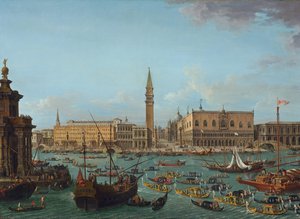
The Theatrical Genesis of a Visionary
Born in the elegant surroundings of Modena in 1700, Antonio Francesco Lodovico Joli began his artistic journey not with the vastness of the horizon, but through the intimate mastery of perspective. Under the watchful eye of his tutor, Raffaello Rinaldi, Joli developed a foundational command of form that would later allow him to breathe life into sprawling urban vistas. His pursuit of excellence led him to the heart of Rome, where he studied under the legendary Giovanni Paolo Panini. It was here that the seeds of the vedutista tradition were sown, as Panini’s idealized landscapes and fascination with classical ruins began to merge with Joli's burgeoning talent.Yet, perhaps most defining of his early years was his immersion in the world of the stage. Studying within the studios of the Galli da Bibbiena family, Joli learned the art of scene-painting, a discipline that would forever haunt his canvases. This period as a stage designer for opera productions in Venice, Dresden, and London instilled in him a unique ability to orchestrate visual drama, teaching him how to manipulate light and architectural scale to create immersive, theatrical environments.
A Grand Tour of Light and Stone
As Joli’s reputation ascended, his canvas became a stage for the great cities of Europe. His travels were more than mere migrations; they were expeditions into the very soul of the 18th-century landscape. In Venice, he solidified his place among the artistic elite, becoming a founding member of the Galleria Accademia di Belle Arti di Venezia in 1754. His work during this era transitioned seamlessly between two distinct modes:- Vedute: Meticulous, realistic depictions of urban life and architectural grandeur, such as his breathtaking views of the Tiber in Rome.
- Capricci: Imaginative compositions where he would playfully rearrange historical landmarks into fantastical, dreamlike settings.
Whether capturing the majestic Tiber River, anchored by the formidable Castel Sant'Angelo, or portraying the bustling maritime energy of Naples during the arrival of Charles III, Joli possessed a singular gift for capturing atmosphere. His time in London allowed him to document the architectural grandeur of the English landscape, such as the serene views of Westminster, through a lens that was simultaneously precise and dreamlike.
The Legacy of the Baroque Eye
The enduring significance of Antonio Joli lies in his ability to harmonize the rigorous precision of an architect with the emotive power of a dramatist. His paintings are characterized by a luminous quality, where the warm Roman light or the misty London air seems to vibrate upon the canvas. By blending the clarity of Enlightenment aesthetics with the opulent embellishments of the Baroque, he created works that were both documents of history and triumphs of imagination.His meticulous attention to detail—the way small boats dot a river or how sunlight strikes a stone monument—reflects a profound commitment to realism, yet it is always tempered by a sense of theatrical wonder. Joli did not merely paint cities; he staged them, inviting the viewer to step into a world where every street corner and harbor vista was a carefully composed masterpiece of light, shadow, and architectural splendor.
Q&A
Antonio Joli의 활동 시기는 어떻게 구분되어 있나요?
Antonio Joli의 예술적 여정은 연대기 페이지에서 시기별로 펼쳐집니다. 이곳에서는 작가의 활동 시기를 장(chapter)으로 나누어 작품들을 연대순 타임라인 형태로 한눈에 확인할 수 있습니다.
Antonio Joli의 다른 이름이나 별칭에는 무엇이 있나요?
Antonio Joli은(는) Antonio Gioli, Ni Idea, Antonio Yoli, Antonio Eolli, Antonio Joli de Dipi라는 이름으로도 활동하고 있습니다.
Antonio Joli 작가의 작품을 연도별로 어떻게 확인할 수 있나요?
Antonio Joli의 작품을 연도별로 정리하여 보여주는 작품 연대기 페이지입니다.
Antonio Joli의 작품을 색상별로 정렬해서 볼 수 있나요?
컬러 인덱스 페이지에서는 Antonio Joli의 작품들을 색상별로 모아 보실 수 있습니다.