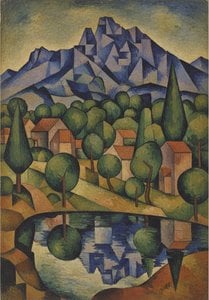
The Quiet Legacy of Albert Spethmann
In the vast tapestry of twentieth-century art, certain names resonate through the subtle mastery of light and form rather than through loud, revolutionary manifestos. Albert Spethmann belongs to this contemplative tradition, an artist whose life and work spanned much of a century defined by profound global shifts. Born in 1894, Spethmann emerged from a period where the boundaries of classical technique were being challenged by the avant-garde, yet he maintained a connection to the foundational elements of visual storytelling. His journey through the decades reflects a steadfast commitment to the craft, capturing the essence of his subjects with a precision that speaks to a deep, internalized understanding of the natural world.
The development of Spethmann’s style was not a sudden rupture but a gradual refinement of perception. As he navigated the complexities of the early to mid-twentieth century, his work began to exhibit a sophisticated command over texture and atmosphere. He possessed an innate ability to manipulate the interplay between shadow and illumination, creating compositions that felt both grounded in reality and elevated by a poetic sensibility. His canvases often serve as windows into a quieted world, where the mundane is transformed into something monumental through the careful application of pigment and the deliberate arrangement of light.
Technique and Artistic Vision
To observe a Spethmann piece is to engage in a silent dialogue with the artist's hand. His technique was characterized by a meticulous attention to detail that never sacrificed the emotional weight of the subject. There is a rhythmic quality to his brushwork, a sense that every stroke was placed with intention to contribute to the overall harmony of the work. He often utilized a palette that favored organic tones, allowing for a seamless transition between different elements within a single composition.
The significance of his contribution lies in his ability to bridge the gap between traditional representation and a more modern, emotive expression. While his roots remained firmly planted in the classical traditions of his era, he was not afraid to explore the psychological depth of his subjects. This is particularly evident in his treatment of space; he understood how to use negative space to create tension and focus, guiding the viewer's eye through a carefully choreographed visual experience. His work does not merely depict a scene; it evokes a mood, inviting the observer to linger within the stillness of his painted worlds.
Historical Context and Enduring Presence
Spethmann’s life, which concluded in 1986, spanned an era of unprecedented change in the art world. From the rise of Impressionism to the emergence of Abstract Expressionism, he witnessed the total reconfiguration of aesthetic values. Despite these seismic shifts, his dedication to a more representational and atmospheric approach allowed him to carve out a unique niche. He remained a guardian of the subtle, focusing on the enduring beauty found in the nuances of light and the quiet dignity of his subjects.
Today, the legacy of Albert Spethmann is found in the way his works continue to offer a sense of respite and reflection. His paintings serve as a testament to the power of disciplined observation and the lasting impact of an artist who sought to capture the soul of the visible world. Through his mastery of form and his evocative use of light, he remains a significant figure for those who appreciate the profound beauty found in the delicate balance of the classical and the contemporary.
Q&A
Albert Spethmann의 작품을 컬러 팔레트별로 둘러볼 수 있나요?
컬러 팔레트별로 보기 페이지에서는 Albert Spethmann의 작품들을 색상 팔레트별로 모아볼 수 있습니다.
Albert Spethmann의 모든 작품을 어디에서 볼 수 있나요?
이 사이트에 등록된 Albert Spethmann의 모든 작품은 작가의 전체 작품 보기 페이지에서 만나보실 수 있습니다.
Albert Spethmann 작가의 작품 관련 통계 정보는 어디에서 확인할 수 있나요?
Albert Spethmann의 방문 통계 페이지에서는 이 사이트에 등록된 작가의 작품들을 바탕으로 산출된 통계 정보를 제공합니다.
Albert Spethmann의 작품 중 몇 점을 둘러보실 수 있나요?
전체 작품 보기 페이지에서 Albert Spethmann의 작품 작품 3점점을 만나보실 수 있습니다.