x

작품의 원본 비율을 유지하는 미리 설정된 크기 중에서 선택하세요.

특정 프레임이나 공간에 맞도록 직접 크기를 입력할 수 있습니다. 선택하신 크기가 원본 이미지의 비율과 일치하지 않는 경우, 작품을 자르거나 추가적인 손으로 그린 요소를 사용하여 그림을 확장합니다. 제작 시작 전 승인을 위해 디지털 목업을 보내드립니다.
화면 미리 보기는 실제 자르기 또는 확장을 반영하지 않습니다. 최종 구성은 목업을 통해서만 정확하게 확인하실 수 있습니다.
맞춤 크기 제작도 가능하지만, 원본 비율을 유지하기 위해 사전 정의된 목록에서 크기를 선택하시는 것을 권장합니다.

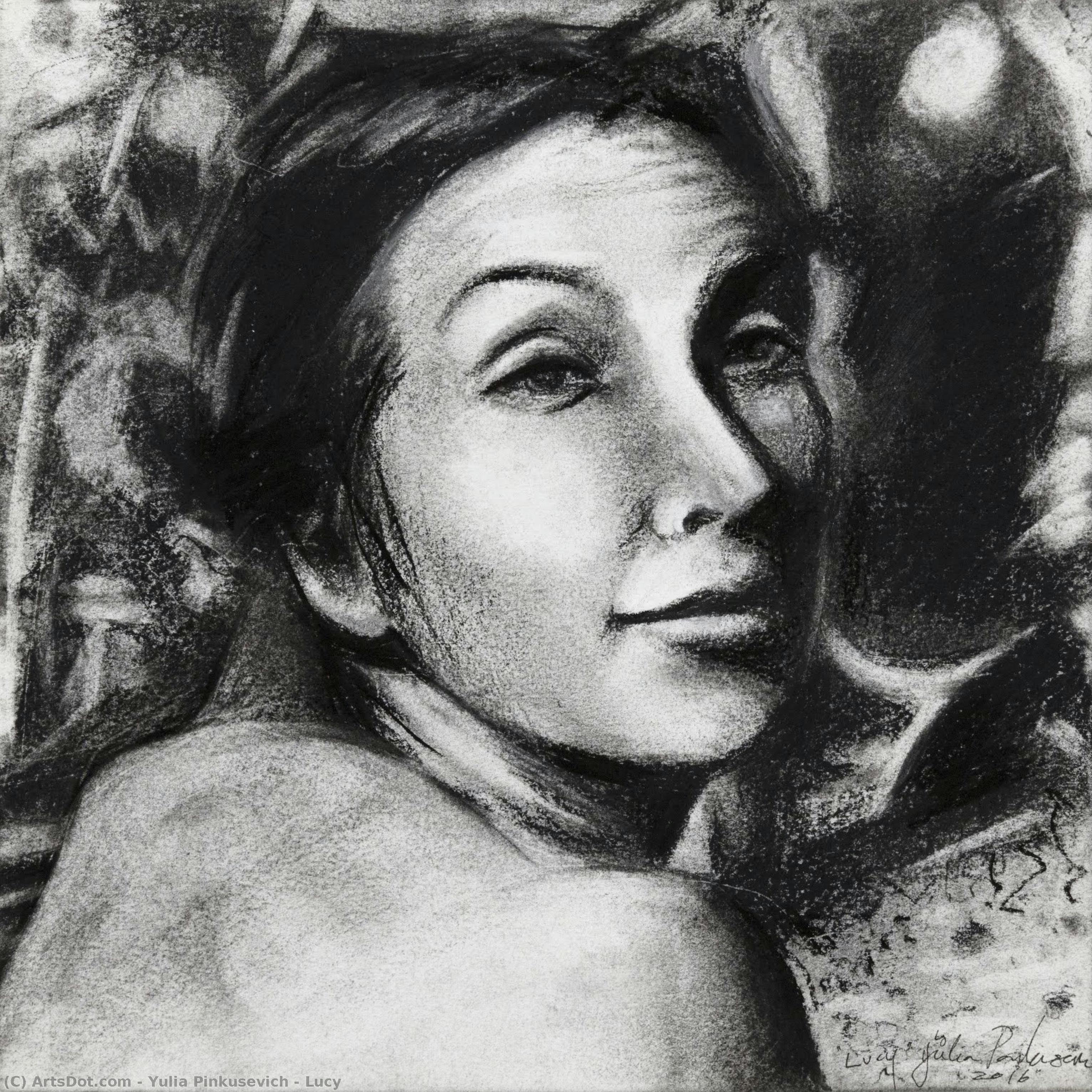
Lucy
복제본 크기

Born in Kharkiv, Ukraine, in 1982, Yulia Pinkusevich’s artistic journey is inextricably linked to a profound sense of displacement and a relentless exploration of space – both physical and psychological. Her early life amidst the shifting political landscape of the late Soviet Union instilled within her a unique perspective, one shaped by the tension between rigid structures and the yearning for freedom, a theme that continues to resonate powerfully in her work today. This formative period, marked by the collapse of the USSR and her family’s subsequent immigration to New York City at age eight, fundamentally altered her worldview, fostering an acute awareness of identity, belonging, and the subjective nature of reality – all elements she meticulously translates into her immersive installations and paintings.
Pinkusevich's artistic education solidified this nascent understanding. She pursued degrees in Fine Arts from Rutgers University (2006) and a Master of Fine Arts from Stanford University (2012), environments that provided the technical skills and theoretical frameworks to articulate her complex vision. These academic pursuits weren’t merely about mastering technique; they were a deliberate process of honing her ability to dissect and reconstruct spatial relationships, mirroring the architectural layering she so often depicts in her work. The influence of figures like Joseph Beuys, known for his exploration of ritual and social critique through art, is subtly present in Pinkusevich's engagement with space as a site of meaning and interaction.
Pinkusevich’s artistic practice centers on creating visually arresting environments that challenge the viewer’s perception. She doesn’t simply represent architecture; she constructs it, deconstructing it, and reassembling it into impossible, dreamlike spaces. Her installations are characterized by a deliberate manipulation of perspective, often employing techniques borrowed from Renaissance painting to create illusions of depth and scale. These aren't static representations but dynamic experiences—spaces that seem to breathe, shift, and invite the viewer to become actively involved in their interpretation.
A key element of her work is the fragmentation of architectural forms. Rather than presenting a complete, unified structure, Pinkusevich isolates individual elements – windows, doorways, walls – and reconfigures them into unsettling juxtapositions. This deliberate disruption mirrors the experience of navigating complex urban environments, where familiar landmarks are often obscured by layers of advertising, signage, and the sheer density of human activity. Her pieces frequently evoke a sense of disorientation, prompting viewers to question their own assumptions about space and reality.
Pinkusevich’s personal history—her Ukrainian heritage and her experience as an immigrant—forms the bedrock of her artistic concerns. The echoes of her childhood in Kharkiv, a city steeped in both Soviet grandeur and post-Soviet uncertainty, are palpable in her work. She grapples with themes of displacement, identity formation, and the lingering effects of historical trauma. Her exploration of Siberian shamanism, rooted in her family’s ancestral homeland, adds another layer to this complex tapestry, connecting her artistic practice to ancient traditions and a deep reverence for the natural world.
This intersection of personal narrative and broader social commentary is evident in her series *Isorithm*, which draws inspiration from declassified military manuals detailing the calculation of nuclear blast zones. By juxtaposing the cold logic of these maps with the chaotic reality of destruction, Pinkusevich forces viewers to confront the devastating consequences of conflict and the fragility of human existence. The work serves as a poignant meditation on vulnerability, resilience, and the enduring power of memory.
Yulia Pinkusevich’s innovative approach has garnered significant recognition within the contemporary art world. She is currently the Joan Danforth Professor of Painting at Mills College in Oakland, California, a position that allows her to nurture emerging artists while continuing to develop her own practice. Her work has been exhibited extensively both nationally and internationally, including solo shows at Marlborough London, Armory Show New York, and Qualia Contemporary Gallery in Palo Alto. Notable collections include those of the deYoung Museum, Stanford University, Meta HQ, Google HQ, and The City of Albuquerque.
Recent exhibitions showcase her continued exploration of spatial illusion and architectural fragmentation. Her work continues to be informed by her personal history and a deep engagement with contemporary issues—from environmental concerns to the complexities of identity in a globalized world. Currently, she is focused on exploring the intersection of memory, landscape, and the enduring legacy of displacement, continuing to push the boundaries of perception and invite viewers to reconsider their relationship with space and time.

1982 - , Ukraine

Explore the captivating world of graphite drawing! Discover its rich history, master essential techniques like chiaroscuro, and learn how artists evoke emotion through this timeless medium. Expert insights for art enthusiasts.

Transform your cherished photos into timeless oil paintings with WahooArt's expert artists. Museum-quality reproductions & custom portraits, crafted to last a lifetime. Discover the art of personal legacy.
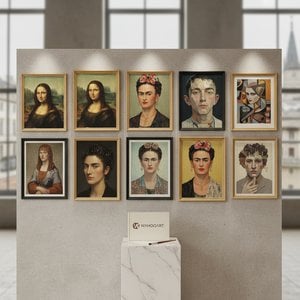
Explore 10 iconic portrait paintings – from Mona Lisa to Van Gogh’s self-portraits. Discover the stories behind these masterpieces, artistic techniques & find museum-quality art reproductions for your home at WahooArt.com.
고액 자산가를 위한 명품 맞춤 복제화 서비스. 뛰어난 화가들의 핸드 페인팅 기술로 예술적 가치를 높이고, 특별한 의미를 담은 유산을 창조하세요. 갤러리 품질과 전문 컨설팅을 제공합니다.

Explore the captivating world of Symbolism! Discover key artists, psychological themes & its lasting impact on modern art. Expert insights for collectors and enthusiasts at WahooArt.


최신 미술 뉴스, 특별 혜택 및 인테리어 아이디어를 가장 먼저 만나보세요.
프로젝트에 대해 알려주시면 저희 미술 전문가들이 맞춤형 아트 제안 3가지를 전달해 드립니다.
당신만을 위한 맞춤형 옵션 3가지를 무료로 추천해 드립니다!
 프린트 구매하기
 공유하기
공유하기 공유하기
공유하기
 상세 정보
상세 정보

 다운로드
다운로드
 유사 작품
유사 작품 X-레이
X-레이 슬라이드 쇼

 더 보기
더 보기






































 유리 옵션은 110cm 미만 크기에서만 선택 가능합니다.