빠른 제작과 다양한 마감 옵션을 제공하는 박물관 품질의 지클레이 또는 캔버스 프린트. ( 손으로 그린 그림 구매 디지털 이미지로 전환)





























작품의 원본 비율을 유지하는 미리 설정된 크기 중에서 선택하세요.

특정 프레임이나 공간에 맞춰 직접 치수를 입력하실 수 있습니다. 선택하신 사이즈가 원본 이미지의 비율과 일치하지 않을 경우, 작품을 크롭(자르기)하거나 이미지를 대칭 또는 단색 채우기로 확장하여 제작합니다. 제작 시작 전, 최종 확인을 위해 디지털 목업이 전송됩니다.
화면상의 미리보기는 실제 크롭이나 확장 상태를 반영하지 않으므로, 최종 구도는 오직 목업을 통해서만 정확하게 확인하실 수 있습니다.
맞춤 사이즈 제작도 가능하지만, 원본 비율을 유지하기 위해서는 사전 정의된 목록에서 치수를 선택하시는 것을 권장합니다.

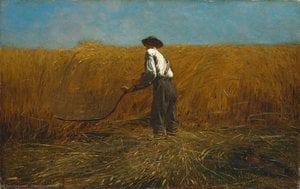
The Busy Bee
복제본 크기
Winslow Homer’s “The Busy Bee,” painted around the late 19th century, is more than just a depiction of a young boy; it’s a poignant snapshot of American life rendered with the meticulous observation and understated emotional power that defined Homer’s career. The painting captures a fleeting moment – a boy in a straw hat, seemingly absorbed in his task, set against a backdrop of rural New England tranquility. This isn't a grand historical scene or an idealized pastoral; it’s a grounded portrayal of everyday existence, reflecting Homer’s deep connection to the American spirit and his commitment to portraying scenes with remarkable clarity and detail.
Homer's mastery lies in his ability to translate observation into paint with remarkable precision. Executed primarily in black and white, “The Busy Bee” exemplifies his signature style – a blend of realism and tonal subtlety. The use of shading is particularly noteworthy, creating a strong sense of volume and texture within the boy’s clothing and the surrounding environment. This technique, honed during his years as an illustrator for Harper's Weekly, allowed him to capture not just the appearance but also the *feeling* of a scene – the light, the atmosphere, the very essence of the moment. The lack of color intensifies the focus on form and texture, echoing the stark clarity often found in journalistic illustration.
"The Busy Bee" transcends a simple portrait of a boy; it’s imbued with subtle symbolism. The boy’s determined expression suggests ambition, resilience, and perhaps even the burdens of responsibility – qualities often associated with the American character. The presence of the birds adds an element of freedom and aspiration, while the potted plant introduces a touch of domesticity and connection to nature. The painting evokes a sense of quiet contemplation and nostalgia, inviting viewers to reflect on themes of childhood, work, and the passage of time. It’s a testament to Homer's ability to capture not just what he saw, but also what he *felt* about it.
Painted during a period of significant social and economic change in America – the late 19th century – “The Busy Bee” reflects Homer’s fascination with depicting the lives of ordinary people. His work, rooted in his experiences as an illustrator and his deep connection to the American landscape, helped solidify his place as one of the most important figures in American art. Reproductions of this evocative piece offer a window into a bygone era, allowing us to appreciate Homer’s artistic vision and his enduring contribution to the nation's cultural heritage.


1836 - 1910 , 미국

Explore the profound beauty of American Realism. From Winslow Homer’s rural landscapes to the dignity of everyday life, discover how master artists captured the soul of a nation through evocative oil paintings and timeless fine art techniques.


 미리보기
미리보기
 공유하기
공유하기 공유하기
공유하기
 상세 정보
상세 정보

 다운로드
다운로드
 유사 작품
유사 작품 X-레이
X-레이 슬라이드 쇼
 통계 정보
통계 정보

 더 보기
더 보기









 유리 옵션은 110cm 미만 크기에서만 선택 가능합니다.