원하는 크기와 액자로 주문 제작되는, 작가들이 직접 캔버스에 손으로 그린 유화 작품입니다. ( 프린트 판매로 전환 디지털 이미지로 전환)





























작품의 원본 비율을 유지하는 미리 설정된 크기 중에서 선택하세요.

특정 프레임이나 공간에 맞도록 직접 크기를 입력할 수 있습니다. 선택하신 크기가 원본 이미지의 비율과 일치하지 않는 경우, 작품을 자르거나 추가적인 손으로 그린 요소를 사용하여 그림을 확장합니다. 제작 시작 전 승인을 위해 디지털 목업을 보내드립니다.
화면 미리 보기는 실제 자르기 또는 확장을 반영하지 않습니다. 최종 구성은 목업을 통해서만 정확하게 확인하실 수 있습니다.
맞춤 크기 제작도 가능하지만, 원본 비율을 유지하기 위해 사전 정의된 목록에서 크기를 선택하시는 것을 권장합니다.

Paddling at Dusk
복제본 크기
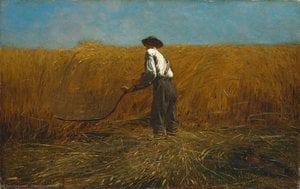
Winslow Homer's "Paddling at Dusk," painted in 1892, isn’t merely a depiction of a man and his canoe; it’s an immersion into a profound sense of tranquility. Housed within the Memorial Art Gallery of the University of Rochester, this watercolor captures a fleeting moment of perfect harmony between humanity and nature. Homer, a pivotal figure in American art, masterfully utilizes light and shadow to evoke not just a visual scene, but a palpable feeling – one of quiet contemplation and peaceful surrender to the beauty of the natural world.

Homer's signature style is immediately apparent in "Paddling at Dusk." He employs a loose, expressive watercolor technique, allowing the colors to bleed and blend naturally. The sky isn’t rendered with rigid lines but rather as a swirling mass of blues, purples, and greys – a dramatic backdrop that mirrors the subtle shifts in tone reflected on the water's surface. Notice how he builds up layers of color, creating depth and luminosity. The canoe itself is suggested through carefully placed washes of dark pigment, emphasizing its form without overwhelming the scene. The composition is remarkably simple yet powerfully effective; the central figure of the paddler draws the eye immediately, while the expansive sky and water create a sense of limitless space.
To understand "Paddling at Dusk," it’s crucial to consider Winslow Homer's broader artistic vision. Born in Boston in 1836, Homer rejected the formal training prevalent in Europe and instead developed his unique style through direct observation of America – its landscapes, its people, and its everyday life. His early work as a commercial illustrator honed his ability to capture detail with remarkable precision, skills he later applied to his paintings. "Paddling at Dusk" embodies this American realism, portraying a scene rooted in the familiar rhythms of rural New England. The solitary figure on the water speaks to themes of self-reliance and connection with nature – values deeply ingrained in the American ethos.
Beyond its technical brilliance, "Paddling at Dusk" resonates with a profound emotional depth. The act of paddling itself suggests a deliberate slowing down, a conscious choice to disconnect from the demands of daily life and immerse oneself in the present moment. The sunset symbolizes transition – the end of one day and the promise of another. The quiet solitude of the scene invites contemplation and introspection. Homer doesn’t offer a narrative; he simply presents a feeling—a sense of peace, serenity, and perhaps even a touch of melancholy. It's a reminder to appreciate the simple beauty that surrounds us, often overlooked in the hustle and bustle of modern life.
Interested in exploring more of Winslow Homer’s captivating works? His other celebrated paintings include "Sunrise," “Fishing in the Adirondacks,” and “On the Trail.” You can delve deeper into his life and artistic journey through resources like the Winslow Homer Foundation website (https://www.winslowhomerdotorg.com/) and online collections such as those at the Fine Arts Museums of San Francisco and the National Gallery of Art. For a fascinating look into his early career, consider researching Henry William Brewer and Arthur Boyd Houghton, influential artists who shaped the landscape of 19th-century illustration.

1836 - 1910 , 미국

Discover the ethereal beauty of watercolor through an art-historical lens. Master the delicate balance of light, fluidity, and pigment to capture the luminous essence of nature, inspired by the legendary techniques of the Old Masters and Impressionist greats.

Embark on a visual journey through the golden hour. Discover how master painters capture the ethereal glow of sunsets, from Monet's Impressionism to the Hudson River School. Explore timeless techniques and bring the magic of twilight into your home with exquisite fine art reproductions.

Discover the ethereal beauty of premium watercolor reproductions and bespoke commissions at WahooArt. From museum-quality landscapes to custom AI-enhanced portraits, our master artists deliver unparalleled craftsmanship and white-glove service for discerning collectors worldwide.

An expert guide for art collectors exploring the chemistry and artistry of oil, acrylic, tempera, and watercolor. Discover how medium specificity and material integrity define the longevity and value of fine art masterpieces.


 미리보기
미리보기
 공유하기
공유하기 공유하기
공유하기
 상세 정보
상세 정보

 다운로드
다운로드
 유사 작품
유사 작품 X-레이
X-레이 슬라이드 쇼
 통계 정보
통계 정보

 더 보기
더 보기









 유리 옵션은 110cm 미만 크기에서만 선택 가능합니다.