빠른 제작과 다양한 마감 옵션을 제공하는 박물관 품질의 지클레이 또는 캔버스 프린트. ( 손으로 그린 그림 구매 이미지 구매)





























작품의 원본 비율을 유지하는 미리 설정된 크기 중에서 선택하세요.

특정 프레임이나 공간에 맞춰 직접 치수를 입력하실 수 있습니다. 선택하신 사이즈가 원본 이미지의 비율과 일치하지 않을 경우, 작품을 크롭(자르기)하거나 이미지를 대칭 또는 단색 채우기로 확장하여 제작합니다. 제작 시작 전, 최종 확인을 위해 디지털 목업이 전송됩니다.
화면상의 미리보기는 실제 크롭이나 확장 상태를 반영하지 않으므로, 최종 구도는 오직 목업을 통해서만 정확하게 확인하실 수 있습니다.
맞춤 사이즈 제작도 가능하지만, 원본 비율을 유지하기 위해서는 사전 정의된 목록에서 치수를 선택하시는 것을 권장합니다.

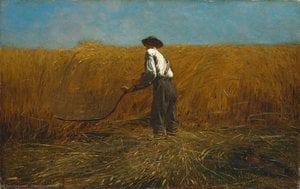
Man with a Sythe
복제본 크기
Winslow Homer's "Man with a Scythe," painted in 1867, isn’t merely a depiction of rural labor; it’s a profound meditation on the rhythms of life and death, inextricably linked to the American landscape. The painting immediately draws us into a scene both familiar and subtly unsettling – a solitary figure traversing a field, his task illuminated by an unseen light. Homer masterfully captures the essence of New England's agricultural heartland, transporting the viewer back to a time when work was intimately connected to the land and its cycles. The muted earth tones—ochre, umber, and sienna—create a sense of groundedness, while the subtle gradations of light and shadow imbue the scene with an almost palpable atmosphere. It’s a testament to Homer's ability to render not just what he saw, but also *how* it felt – the quiet dignity of honest toil under the vast expanse of the American sky.
The composition is deceptively simple yet remarkably effective. Homer employs a pyramidal structure, anchoring the figure at the base and drawing our eye upwards towards the distant horses. This arrangement lends stability to the scene while simultaneously suggesting an ongoing narrative – the man’s work, the animals' presence, and the implied continuation of life beyond the frame. Homer’s technique is characterized by meticulous detail and a remarkable understanding of color. He utilizes broken brushstrokes—tiny, distinct marks that blend optically—to create texture in the grass, the figure’s clothing, and even the metal of the scythe. This layering of paint builds depth and volume, giving the scene a tactile quality that invites close inspection. The artist's use of light is particularly noteworthy; it isn’t harsh or dramatic but rather diffused and atmospheric, casting long shadows and highlighting the contours of the man’s form.
“Man with a Scythe” is deeply rooted in its historical context – the aftermath of the Civil War and the subsequent shift in American society. The figure, armed with his scythe, represents the enduring cycle of labor and death, a constant reminder of humanity’s place within the natural order. The horses, often associated with wealth and prosperity, subtly underscore the contrast between the hard work of the farmer and the more privileged lives of others. Some art historians interpret the scene as a commentary on the changing social landscape of post-war America, where traditional agrarian values were being challenged by industrialization. The three figures in the background, possibly family or companions, add another layer of complexity, suggesting a community bound together by shared labor and experience.
Despite its subject matter—the often-unromanticized reality of rural life—"Man with a Scythe" possesses a remarkable emotional resonance. There’s a sense of quiet dignity in the figure's posture, a suggestion of stoicism and resilience. The painting doesn’t preach or moralize; instead, it invites contemplation on themes of mortality, labor, and the enduring connection between humanity and the land. It is this ability to evoke such profound emotions from a seemingly simple scene that solidifies Homer’s place as one of America's greatest artists. A reproduction of this work offers a powerful window into a bygone era, allowing us to connect with the spirit of a nation grappling with its identity.


1836 - 1910 , 미국

Explore the profound beauty of American Realism. From Winslow Homer’s rural landscapes to the dignity of everyday life, discover how master artists captured the soul of a nation through evocative oil paintings and timeless fine art techniques.

Embark on a visual journey through the American wilderness. Discover the sublime beauty of Hudson River School landscapes, from Thomas Cole to Homer Dodge Martin, and learn how to bring this timeless, untamed spirit into your home with museum-quality art reproductions.

Explore the profound beauty of American art history. From the Hudson River School to iconic landscapes, discover a curated journey through the masterpieces that defined a nation's spirit and the enduring legacy of American Romanticism.

Explore the profound beauty of American Regionalism. Delve into the art history of Grant Wood and John Steuart Curry, uncovering how these masters captured the soul of the American Heartland through iconic landscapes and rural identity.


 미리보기
미리보기
 공유하기
공유하기 공유하기
공유하기
 상세 정보
상세 정보

 다운로드
다운로드
 유사 작품
유사 작품 X-레이
X-레이 슬라이드 쇼

 더 보기
더 보기









 유리 옵션은 110cm 미만 크기에서만 선택 가능합니다.


![Indian Tobacco Shop Sign [reverse, Indian Facing Right] — 윈슬로우 호머, Contemporary Realism](/media/artworks/images-thumb/74/22/7422432cafc295265ef3b7f7fa62d35d.jpg)