원하는 크기와 액자로 주문 제작되는, 작가들이 직접 캔버스에 손으로 그린 유화 작품입니다. ( 프린트 판매로 전환 디지털 이미지로 전환)





























작품의 원본 비율을 유지하는 미리 설정된 크기 중에서 선택하세요.

특정 프레임이나 공간에 맞도록 직접 크기를 입력할 수 있습니다. 선택하신 크기가 원본 이미지의 비율과 일치하지 않는 경우, 작품을 자르거나 추가적인 손으로 그린 요소를 사용하여 그림을 확장합니다. 제작 시작 전 승인을 위해 디지털 목업을 보내드립니다.
화면 미리 보기는 실제 자르기 또는 확장을 반영하지 않습니다. 최종 구성은 목업을 통해서만 정확하게 확인하실 수 있습니다.
맞춤 크기 제작도 가능하지만, 원본 비율을 유지하기 위해 사전 정의된 목록에서 크기를 선택하시는 것을 권장합니다.

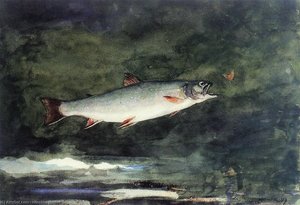
Leaping Trout 1
복제본 크기
To encounter Winslow Homer’s “Leaping Trout” is to step directly into the pulse of the American wilderness. Completed in 1889, this masterpiece transcends mere biological illustration, offering instead a profound meditation on the raw, unyielding energy of nature. During an era when much of the art world was preoccupied with grand European narratives and historical epics, Homer turned his gaze inward toward the rugged landscapes of the Adirondack Mountains. In this work, he does not simply depict fish in water; he captures the very breath of the wild, translating the subtle, shimmering transitions of light and movement into a canvas that feels vibrantly alive.
The scene centers on a breathtaking moment of kinetic drama: three trout battling for dominance amidst the rhythmic ripples of a serene mountain pool. One fish propels itself upward with singular purpose, breaking the surface in a display of pure, instinctive strength. This choice of perspective—focusing on the subject's struggle rather than the observer's triumph—is what makes the piece so deeply immersive. The viewer is not a distant fisherman watching from the bank, but an intimate witness to the frantic, beautiful struggle for survival. The presence of birds gliding above and perching nearby adds layers of life to the composition, creating a dynamic ecosystem where every element is caught in a fleeting, eternal moment of motion.
Homer’s technical brilliance in “Leaping Trout” lies in his ability to manipulate the medium of watercolor to achieve an almost ethereal luminosity. While his roots were in the precise world of commercial illustration, his mature style embraced a more fluid, impressionistic sensibility. He eschewed rigid outlines in favor of capturing the ephemeral quality of light reflecting off a disturbed water surface. Through a masterful layering of washes, colors bleed into one another with a soft, organic grace that mirrors the fluidity of the Adirondack streams.
One of the most captivating aspects of his technique is the use of scraping—a method where Homer would use a blunt or sharp tool to remove softened paint and paper fibers from the wet surface. This deliberate manipulation creates brilliant, textured highlights that mimic the dazzling sparkle of sunlight dancing upon the lake. These tactile imperfections lend the water a sense of depth and brilliance, making the ripples appear to move even as the viewer stands still. It is this marriage of meticulous observation and experimental technique that allows the painting to resonate with such profound emotional clarity.
For the art lover, the collector, or the interior designer, “Leaping Trout” offers much more than visual beauty; it provides a sense of tranquility intertwined with vitality. The cool palette of blues, silvers, and earthy tones makes it an exquisite centerpiece for spaces designed to evoke peace and natural elegance. Whether placed in a sun-drenched study or a sophisticated contemporary living room, the painting acts as a window into an unspoiled world, bringing the restorative power of the American landscape indoors.
Owning a high-quality reproduction of this work allows one to preserve a piece of American art history. It serves as a reminder of a time when artists sought truth in the quietest corners of the earth. As a tribute to Winslow Homer’s ability to find the extraordinary within the ordinary, “Leaping Trout” remains an essential acquisition for those who seek to surround themselves with art that possesses both technical mastery and a soul-stirring connection to the natural world.

1836 - 1910 , 미국

Explore the captivating world of watercolor painting! Discover its rich history, essential techniques, influential artists & collecting tips. A comprehensive guide for art enthusiasts from WahooArt.

윈슬로우 호머의 대표작 25선을 만나보세요. 미국 풍경화 거장의 수채화, 유화 걸작 속 숨겨진 이야기와 예술 세계를 탐험하고, WahooArt에서 고품질 아트 프린트로 감동을 재현하세요. 지금 바로 컬렉션을 확인하세요!

Explore the captivating history of watercolor painting, from ancient techniques to modern masters like Kandinsky & Blake. Discover essential artists, collecting tips & the emotional power of this luminous medium. Expert insights for art enthusiasts.

Journey through 10 legendary watercolor masterpieces by Sargent, Turner & Homer! Explore iconic landscapes, portraits & floral art that redefined history. Find museum-quality reproductions and curated decor ideas at WahooArt.com.

Explore the captivating world of watercolor painting! Discover its rich history, essential techniques, influential artists & collecting tips from art experts. A comprehensive guide for enthusiasts.


 미리보기
미리보기
 공유하기
공유하기 공유하기
공유하기
 상세 정보
상세 정보 가이드 보기

 다운로드
다운로드
 유사 작품
유사 작품 X-레이
X-레이 슬라이드 쇼
 통계 정보
통계 정보

 더 보기
더 보기









 유리 옵션은 110cm 미만 크기에서만 선택 가능합니다.