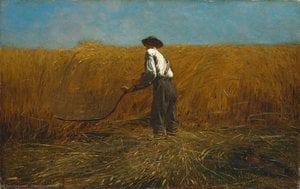
원하는 크기와 액자로 주문 제작되는, 작가들이 직접 캔버스에 손으로 그린 유화 작품입니다. ( 프린트 판매로 전환 디지털 이미지로 전환)





























작품의 원본 비율을 유지하는 미리 설정된 크기 중에서 선택하세요.

특정 프레임이나 공간에 맞도록 직접 크기를 입력할 수 있습니다. 선택하신 크기가 원본 이미지의 비율과 일치하지 않는 경우, 작품을 자르거나 추가적인 손으로 그린 요소를 사용하여 그림을 확장합니다. 제작 시작 전 승인을 위해 디지털 목업을 보내드립니다.
화면 미리 보기는 실제 자르기 또는 확장을 반영하지 않습니다. 최종 구성은 목업을 통해서만 정확하게 확인하실 수 있습니다.
맞춤 크기 제작도 가능하지만, 원본 비율을 유지하기 위해 사전 정의된 목록에서 크기를 선택하시는 것을 권장합니다.

Hilltop Barn
복제본 크기
Winslow Homer’s “Hilltop Barn,” completed in 1874, stands as a quintessential example of American Realism—a movement that sought to depict the everyday lives and landscapes of ordinary people with unflinching honesty. More than just a picturesque depiction of rural Vermont farmland, this watercolor captures a profound sense of stillness and contemplation, reflecting Homer’s deep connection to the natural world and his masterful ability to convey emotion through subtle visual cues.
The painting presents a deceptively simple scene: two horses patiently pulling a carriage down a dirt road leading up to a weathered barn. Scattered amongst the animals are three figures—presumably members of a family—and a dog, adding human presence to the expansive landscape. Homer’s careful positioning of these elements creates a harmonious balance between man and nature, emphasizing the quiet dignity of rural life.
Homer's signature technique—watercolor—is crucial to the painting’s atmosphere. He employs delicate brushstrokes that blend seamlessly together, layering washes of muted greens, browns, and blues to build up a rich textural surface. The artist skillfully captures the diffused light filtering through the trees, creating an ethereal glow that illuminates the barn and its surroundings. This technique isn't merely about representation; it’s about conveying feeling—a sense of serenity and timeless beauty.
"Hilltop Barn" aligns itself with the broader artistic currents of its time, particularly the Transcendentalist movement. Influenced by thinkers like Ralph Waldo Emerson and Henry David Thoreau, American artists sought to express spiritual truths through observation of nature. Homer’s work embodies this ethos—a belief in the inherent goodness of humanity and the transformative power of experience—mirroring the sentiments expressed in Thoreau's Walden.
The barn itself serves as a powerful symbol within the painting. It represents not just agricultural productivity but also resilience, permanence, and connection to tradition. Homer’s depiction of it—worn yet sturdy—suggests an enduring spirit—a quiet dignity that speaks to the fundamental values of rural America. The horse's patient demeanor reinforces this theme, embodying perseverance and acceptance of the natural order.
"Hilltop Barn" transcends mere visual description; it evokes a palpable emotional response. Its tranquil composition invites contemplation—a feeling of peace and contentment derived from observing the beauty of the countryside. Homer’s masterful use of watercolor captures not only the physical appearance of Vermont but also its intangible essence—the quiet dignity of rural life, untouched by the anxieties of modern existence.

1836 - 1910 , 미국

Discover the ethereal beauty of watercolor through an art-historical lens. Master the delicate balance of light, fluidity, and pigment to capture the luminous essence of nature, inspired by the legendary techniques of the Old Masters and Impressionist greats.


 미리보기
미리보기
 공유하기
공유하기 공유하기
공유하기
 상세 정보
상세 정보 가이드 보기

 다운로드
다운로드
 유사 작품
유사 작품 X-레이
X-레이 슬라이드 쇼
 통계 정보
통계 정보

 더 보기
더 보기









 유리 옵션은 110cm 미만 크기에서만 선택 가능합니다.