빠른 제작과 다양한 마감 옵션을 제공하는 박물관 품질의 지클레이 또는 캔버스 프린트. ( 손으로 그린 그림 구매 이미지 구매)





























작품의 원본 비율을 유지하는 미리 설정된 크기 중에서 선택하세요.

특정 프레임이나 공간에 맞춰 직접 치수를 입력하실 수 있습니다. 선택하신 사이즈가 원본 이미지의 비율과 일치하지 않을 경우, 작품을 크롭(자르기)하거나 이미지를 대칭 또는 단색 채우기로 확장하여 제작합니다. 제작 시작 전, 최종 확인을 위해 디지털 목업이 전송됩니다.
화면상의 미리보기는 실제 크롭이나 확장 상태를 반영하지 않으므로, 최종 구도는 오직 목업을 통해서만 정확하게 확인하실 수 있습니다.
맞춤 사이즈 제작도 가능하지만, 원본 비율을 유지하기 위해서는 사전 정의된 목록에서 치수를 선택하시는 것을 권장합니다.

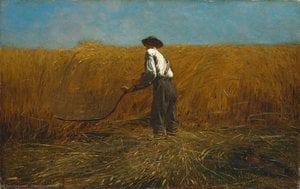
Farmer with a Pitchfork
복제본 크기
Winslow Homer (1836 – 1910), an artist who defied convention and forged his own path to artistic greatness, remains one of America's most beloved painters. Unlike many of his peers who pursued formal training in Europe, Homer cultivated a singular vision—a deeply rooted connection to the American landscape and its inhabitants—resulting in works that resonate with enduring power.
"The Pitchfork," completed in 1865, exemplifies this distinctive approach. Painted shortly after the Civil War’s conclusion, it depicts a solitary man standing amidst tall grass, clutching a pitchfork – an instrument of labor and sustenance – against a backdrop of muted blues and greens.
Homer favored watercolor as his primary medium. This technique allowed for remarkable subtlety and luminosity, capturing the ephemeral qualities of light and atmosphere with unparalleled grace. Unlike oil paints which build up layers of pigment, watercolor relies on transparent washes that blend seamlessly together, creating an image that feels both immediate and deeply contemplative.
The artist’s meticulous observation is evident in every detail—the texture of the grass, the posture of the man, even the slight curve of his hat. Homer employed a loose brushstroke style, prioritizing tonal harmony over precise delineation. This deliberate choice contributes to the painting's overall sense of tranquility and understated emotion.
“The Pitchfork” emerged from a period marked by profound social upheaval. The Civil War had irrevocably altered the fabric of American life, leaving scars of loss and division. Homer’s depiction of rural America—a scene of quiet resilience amidst devastation—can be interpreted as a symbolic affirmation of enduring values: perseverance, connection to the land, and the promise of renewal.
The painting wasn't merely documenting a moment in time; it was responding to it. Homer sought to convey not just what he *saw*, but also what he *felt*—a quiet dignity born from confronting hardship with unwavering resolve.
The pitchfork itself is laden with symbolic significance. Representing agricultural labor, it symbolizes the fundamental human need for sustenance and productivity. Yet, in Homer’s hands, it transcends its literal function to become a symbol of hope—a tool poised to cultivate new beginnings from the ashes of old.
"The Pitchfork" invites viewers to contemplate themes of vulnerability, fortitude, and the beauty inherent in simplicity. Its muted palette reinforces this emotional resonance, fostering a feeling of contemplative stillness. It’s a painting that speaks not to the intellect alone, but directly to the soul—a testament to Homer's ability to transform observation into profound artistic expression.
Winslow Homer’s “The Pitchfork” stands as an enduring emblem of American art. Its masterful technique, evocative symbolism, and poignant historical context continue to captivate audiences today. More than just a depiction of a rural scene, it's a meditation on the human spirit—a reminder that even in times of darkness, beauty and resilience can flourish.


1836 - 1910 , 미국

Explore the profound beauty of American Regionalism. Delve into the art history of Grant Wood and John Steuart Curry, uncovering how these masters captured the soul of the American Heartland through iconic landscapes and rural identity.

Explore the profound beauty of American Realism. From Winslow Homer’s rural landscapes to the dignity of everyday life, discover how master artists captured the soul of a nation through evocative oil paintings and timeless fine art techniques.


 미리보기
미리보기
 공유하기
공유하기 공유하기
공유하기
 상세 정보
상세 정보

 다운로드
다운로드
 유사 작품
유사 작품 X-레이
X-레이 슬라이드 쇼

 더 보기
더 보기









 유리 옵션은 110cm 미만 크기에서만 선택 가능합니다.


![Indian Tobacco Shop Sign [reverse, Indian Facing Right] — 윈슬로우 호머, Contemporary Realism](/media/artworks/images-thumb/74/22/7422432cafc295265ef3b7f7fa62d35d.jpg)