

빠른 제작과 다양한 마감 옵션을 제공하는 박물관 수준의 지클레이 및 캔버스 프린트. ( 수작업 채색 복제본 주문하기 디지털 이미지로 전환)
작품의 원본 비율을 그대로 유지하는 프리셋 사이즈 중에서 선택해 보세요.

액자나 벽면 크기에 맞춰 필요한 가로와 세로 길이를 입력해 주세요. 프린트는 원본 이미지보다 크게 제작할 수 없으며 오직 자르는 것만 가능하므로, 비율이 다른 사이즈를 선택할 경우 이미지의 일부가 잘려 나갈 수 있습니다. 인쇄 작업에 들어가기 전, 최종 확인을 위해 디지털 목업을 보내드립니다. 이 페이지에 표시된 이미지는 실제 잘리는 영역을 나타내지 않으며, 오직 목업을 통해서만 정확한 확인이 가능합니다.
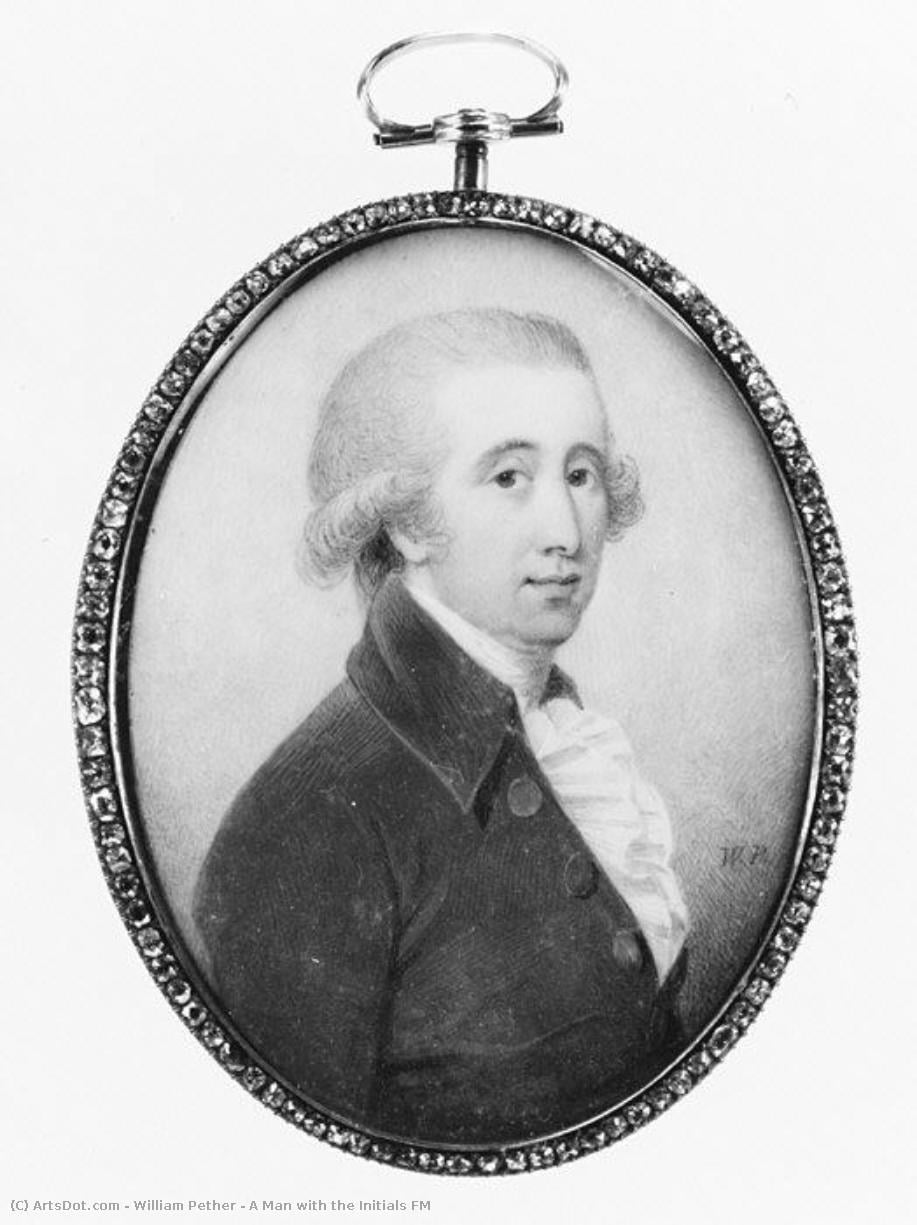
A Man with the Initials FM
복제본 크기

London, 1738. A child is born into a city of growing industry and shifting tastes. William Pether enters the world, eventually finding his way to the studio of Thomas Frye. This apprenticeship marks the beginning of a technical obsession with light. By 1761, he is no longer merely a student but a partner to Frye. The partnership provides a foundation for a career defined by the mezzotint—a method where darkness is carved away to reveal brilliance.
The work emerges from deep blacks. He does not simply draw; he excavates. His hands move across copper plates, translating the heavy shadows of Rembrandt and the dramatic, atmospheric lighting of Joseph Wright of Derby into print. In works like The Jewish Bride or A Lecture on the Orrery, the tension lies in the contrast. The light does not just sit on the surface; it seems to struggle against an encroaching gloom.
Beyond the heavy grain of the mezzotint, Pether’s hand finds a different scale. He moves from the broad, dark textures of large-scale engravings to the delicate precision of ivory. The transition is sharp. Here, the artist becomes a miniaturist, applying thin layers of paint to create intimate portraits that require a much closer gaze.
His reach extends even to the decorative arts. He applies his skill to the surface of porcelain, decorating objects with the same eye for detail found in his drawings. His repertoire is wide and occasionally unexpected:
The momentum of London life eventually gives way to a more fragmented existence. Pether moves between London, Nottingham, and Bristol. The prestige of being a foundation fellow of the Incorporated Society of Artists and a director of the same body remains, yet his physical presence drifts toward the edges of the capital. In Bristol, the grander ambitions of the engraver settle into the practicalities of a drawing-master and picture-cleaner.
The later years are marked by a quiet retreat from the center of the art world. He engages in engraving portraits of local figures like Edward Colston and Samuel Syer, working within the established traditions of his craft. By the time he reaches Montague Street in Bristol, the man who once captured the dramatic light of the masters has largely faded into obscurity. He dies in 1821, leaving behind a body of work that exists in the delicate balance between the deep shadows of the mezzotint and the fine lines of the miniature.

1738 - 1821
 미리보기
미리보기
 공유하기
공유하기 공유하기
공유하기
 상세 정보
상세 정보 가이드 보기

 다운로드
다운로드
 유사 작품 더 보기
 X-레이
X-레이 슬라이드 쇼 보기
 질의응답
질의응답
 통계 정보
통계 정보 더 보기
더 보기






































 유리 옵션은 110cm 미만 크기에서만 선택 가능합니다.


