미리보기 AR 미리보기 손으로 그린 그림 구매 디지털 이미지로 전환 공유하기
상세 정보 즐겨찾기에 추가 다운로드 유사 작품 X-레이 슬라이드 쇼 통계 정보

Taste in High Life

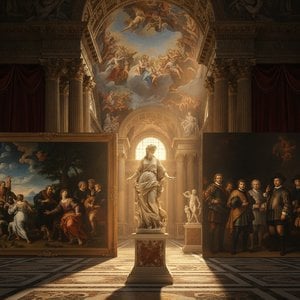
A masterful 18th-century satirical engraving by William Hogarth capturing the opulent yet frivolous world of Georgian aristocracy through intricate detail, inviting you to explore this timeless window into high society.

영국 미술의 선구자 호가스와 그의 대표작 ‘라케스 프레스’를 통해 18세기 사회 풍자와 예술적 혁신을 경험해보세요.

지클레 / 아트 프린트

빠른 제작과 다양한 마감 옵션을 제공하는 박물관 품질의 지클레이 또는 캔버스 프린트. ( 손으로 그린 그림 구매 디지털 이미지로 전환)

P118B $10
P118H $10
P118W $10
P438Z $10
P508JH $12
P508YH $12
P805H $10
P805Z $10
P919BZ $10
P919G $10
P919XJ $10
P959ZH $10
P968JZ $12
W106C $8
W218G $10
W218JH $8
W218Y $10
W307PJ $10
W316G $10
W316PJ $8
W316Y $10
W398PJ $8
W4111J $10
W500HY $15
W500JH $15
W692G $12
W849H $8
W940BG $15
W953PJ $8

표준 규격
맞춤형
CM
INCH

작품의 원본 비율을 유지하는 미리 설정된 크기 중에서 선택하세요.

가로 너비
세로 길이

특정 프레임이나 공간에 맞춰 직접 치수를 입력하실 수 있습니다. 선택하신 사이즈가 원본 이미지의 비율과 일치하지 않을 경우, 작품을 크롭(자르기)하거나 이미지를 대칭 또는 단색 채우기로 확장하여 제작합니다. 제작 시작 전, 최종 확인을 위해 디지털 목업이 전송됩니다.
화면상의 미리보기는 실제 크롭이나 확장 상태를 반영하지 않으므로, 최종 구도는 오직 목업을 통해서만 정확하게 확인하실 수 있습니다.
맞춤 사이즈 제작도 가능하지만, 원본 비율을 유지하기 위해서는 사전 정의된 목록에서 치수를 선택하시는 것을 권장합니다.

전 세계 배송()은 일반적인 4~5주의 소요 기간 대신 2주 이내에 완료됩니다. (18 9월)

why_choose_icon
전 세계 무료 특급 배송
why_choose_icon
프리미엄 린넨 캔버스
why_choose_icon
전체 배송 보험 보장
why_choose_icon
관세 환불 보장
why_choose_icon
실제 색상 일치 보장
why_choose_icon
100일 반품 정책 (결함 발생 시에만 적용)
why_choose_icon
100% 환불 보장
why_choose_icon
다량 구매 할인 혜택

총 합계 금액

$ 68

reproduction

Taste in High Life

지클레 / 아트 프린트

복제본 크기

-

최종 결제 금액

$ 68

작품 정보 요약

  • Dimensions: 21 x 28 cm
  • Movement: Georgian Art
  • Artist: William Hogarth
  • Subject or theme: Aristocratic leisure
  • Medium: Engraving on wove paper
  • Influences: Baroque
  • Artistic style: Satirical realism

예술 상식 퀴즈

각 질문의 정답은 하나뿐입니다.

질문 1:
What artistic technique is primarily employed in William Hogarth’s ‘Taste in High Life’?
질문 2:
The image depicts a scene of aristocratic leisure. What is the central theme conveyed by this depiction?
질문 3:
Describe the use of shading in ‘Taste in High Life’. How does it contribute to the overall impression of the artwork?
질문 4:
What is the significance of the dog holding the scroll in ‘Taste in High Life’?
질문 5:
The composition of ‘Taste in High Life’ is balanced, featuring prominent figures arranged around a central object. What does this arrangement suggest about Hogarth's artistic intention?

A Window into Georgian Opulence and Satire

In the grand tapestry of eighteenth-century British art, few threads are as vibrant or as biting as those woven by William Hogarth. His masterpiece, "Taste in High Life," serves as a profound window into the gilded age of the Georgian aristocracy, offering much more than a mere glimpse of aristocratic leisure. Etched with masterful precision after his own 1746 painting, this work captures a moment of staged sophistication that is simultaneously beautiful and deeply critical. As one gazes upon the scene, they are transported into a richly decorated chamber where every shadow and every stroke of the engraver's tool whispers tales of social ambition, intellectual pretension, and the subtle chaos lurking beneath a polished veneer.

The composition is a masterclass in narrative arrangement. At the heart of this opulent setting, three figures are gathered in an intimate moment of supposed erudition, their presence anchored by a small, charming dog perched atop a plush cushion. This canine companion, clutching a scroll within its jaws, acts as a silent sentinel of knowledge and learning. Yet, Hogarth cleverly disrupts this image of serene intellect; the eye is drawn away from the scholarly pursuit toward a moment of domestic disruption—a spilled tea tray that serves as a poignant metaphor for the frivolity and misplaced priorities of the upper classes. It is this tension between the high-minded pursuit of culture and the accidental descent into chaos that gives the piece its enduring emotional resonance.

The Mastery of Line and Light

To behold a reproduction of this engraving is to appreciate the breathtaking technical prowess of the Baroque tradition. Hogarth’s technique relies on the meticulous application of fine lines, where cross-hatching and stippling work in harmony to breathe life into the monochromatic palette. The artist utilizes a sophisticated range of grays, from the deepest, velvety blacks to the most delicate, luminous whites, creating a sense of volume and tactile reality. One can almost feel the weight of the heavy drapery, the smoothness of the polished furniture, and the intricate textures of the period clothing through the sheer precision of the etched lines.

For the discerning collector or interior designer, this artwork offers an unparalleled depth of character. The use of linear perspective creates a convincing illusion of space, drawing the viewer deeper into the room’s architectural grandeur. This sense of depth, combined with the soft, diffused lighting that bathes the scene in a calm, almost nostalgic glow, makes the piece an exquisite focal point for any sophisticated interior. Whether placed in a library, a formal study, or a contemporary gallery space, "Taste in High Life" provides a conversation piece that bridges the gap between historical storytelling and timeless aesthetic elegance.

A Legacy of Social Commentary

Beyond its visual splendor, the work remains a vital piece of social history. Produced during an era of intense intellectual ferment, Hogarth’s print functions as a "modern moral subject," a genre he helped pioneer. He invites us to look past the surface of the fine silks and marble sculptures to witness the underlying satire regarding societal pretensions. The way the figures interact—or fail to interact with their surroundings—reflects the anxieties of an age caught between the rigid structures of the past and the burgeoning enlightenment of the future.

Owning a high-quality reproduction of this work is not merely about acquiring a beautiful image; it is about preserving a piece of the human story. It is an invitation to contemplate the complexities of human behavior, the masks we wear in social settings, and the enduring nature of our social ambitions. For those who seek art that challenges the mind while delighting the eye, Hogarth’s "Taste in High Life" remains an incomparable treasure, offering a sophisticated blend of historical insight and masterful artistry.


작가 약력

A London Life in Ink and Paint: The World of William Hogarth

William Hogarth, born into the bustling heart of 18th-century London in 1697, was more than just an artist; he was a visual historian, a keen observer of human nature, and a satirical commentator on the societal currents of his age. His life story is inextricably linked to the very fabric of England during a period of significant transformation – its burgeoning ambitions, underlying anxieties, and pervasive hypocrisies all finding potent expression in his remarkably detailed and often biting works. The son of a struggling Latin schoolmaster, Hogarth’s early experiences instilled within him both a love for learning and a sharp awareness of social inequalities, a foundation that would prove crucial to shaping his artistic vision. Initially apprenticed to an engraver, he quickly demonstrated a talent extending beyond mere technical skill; he possessed an innate ability to observe the nuances of human behavior and translate them into compelling visual narratives. However, he chafed against the constraints of traditional engraving, seeking a more expressive outlet for his burgeoning creativity. This led him to studies at both St Martin’s Lane Academy and under Sir James Thornhill, where he honed his skills in painting and composition, absorbing influences that would later inform his unique style.

The Birth of Modern Moral Subjects

Hogarth's true innovation lay not simply *what* he painted, but *how*. He pioneered what he termed “modern moral subjects” – series of pictures designed to tell a story, often imbued with a strong satirical edge. These weren’t isolated portraits or landscapes; they were visual novels unfolding before the viewer’s eyes, offering pointed commentary on contemporary society. A Harlot's Progress, created in 1742, stands as perhaps his most famous example. This series of six paintings meticulously follows the tragic downfall of Mary, a young woman arriving in London full of hope but quickly succumbing to the temptations and dangers of city life. Each scene is rendered with painstaking detail, filled with symbolic elements that reveal the moral decay surrounding her. The figures are portrayed with unflinching realism, capturing every gesture and expression with remarkable accuracy—a deliberate departure from idealized depictions prevalent at the time. Similarly, A Rake's Progress, begun in 1733, charts the reckless decline of Tom Rakewell, a man who squanders his inheritance on gambling, debauchery, and ultimately, madness. These weren’t merely cautionary tales; they were unflinching portraits of a society grappling with issues of class, morality, and social mobility. Hogarth's genius resided in his ability to elevate everyday scenes – the bustling streets of London, the opulent interiors of the wealthy, the squalid lives of the poor – into works of art that resonated deeply with his audience. He didn’t shy away from depicting the harsh realities of life, presenting them with a blend of humor and pathos that forced viewers to confront uncomfortable truths about themselves and their society.

Technique and Influences: A Synthesis of Styles

Hogarth's artistic style was a unique amalgamation of diverse influences. He greatly admired the realism and narrative detail found in the works of Dutch genre painters like Pieter de Hooch, evident in his meticulous depictions of interiors and everyday life. The expressive dynamism of Rembrandt’s portraits also captivated him—a testament to his ability to convey emotion through subtle shading and composition. Furthermore, Hogarth was profoundly impacted by the satirical prints produced in France during the Enlightenment, particularly those of Jean-Honoré Fragonard and François Boucher, whose playful use of color and illusion inspired him to experiment with new visual techniques. However, Hogarth wasn’t simply imitating these sources; he was synthesizing them into something entirely new and distinctly his own. His technique was characterized by a masterful use of line and shading, particularly evident in his engravings. He employed a distinctive cross-hatching technique that created depth and texture, bringing his scenes to life with remarkable clarity—a method perfected through years of diligent practice. This meticulous approach allowed him to capture the subtleties of human expression and convey complex narratives with precision and power. Beyond visual art, Hogarth was influenced by literary works, particularly those of Jonathan Swift and Henry Fielding, whose satirical wit informed his own social observations. He believed that art should not merely be beautiful but should also serve a moral purpose, challenging viewers to think critically about the world around them and their place within it. He sought to hold a mirror up to nature, reflecting both its beauty and its ugliness with unflinching honesty.

Major Achievements and Legacy

Hogarth’s contribution to British art is undeniable. He established a distinctly British artistic identity—one rooted in observation, realism, and social critique—marking a decisive break from the conventions of earlier generations. His series of paintings, notably *A Harlot's Progress* and *A Rake's Progress*, remain enduring masterpieces of moral storytelling, continuing to provoke discussion and debate centuries after their creation. These works are not merely aesthetically pleasing; they serve as invaluable documents of 18th-century society, capturing the anxieties and aspirations of a nation undergoing rapid change. His engravings—particularly *Marriage A-la-Mode*—became immensely popular, disseminating his satirical ideas throughout England and beyond. He is widely considered a precursor to political cartooning and comic strips, laying the groundwork for visual storytelling in popular culture—a legacy that extends far into the 21st century. Artists like James Gillray and George Cruikshank drew inspiration from Hogarth’s style, perpetuating his tradition of social satire and challenging viewers to confront uncomfortable truths about themselves and their society. His influence can be seen throughout British art history, shaping the aesthetic sensibilities of subsequent generations of painters and printmakers.

Concluding Thoughts

William Hogarth died in 1764, leaving behind a body of work that continues to fascinate scholars and artists alike. He remains a pivotal figure in the history of British art—celebrated for his innovative approach to storytelling, his unflinching social commentary, and his enduring ability to capture the complexities of human life. His paintings and engravings are not merely historical artifacts; they are vibrant windows into a bygone era, offering timeless insights into the follies and foibles of humanity. He demonstrated that art could be both entertaining and enlightening—a powerful tool for fostering critical reflection and promoting social reform. Hogarth’s legacy endures as a testament to the transformative potential of artistic vision—a reminder that art can illuminate the human condition and inspire us to strive for a more just and compassionate world.
윌리엄 호가스

윌리엄 호가스

1697 - 1764 , 영국

주요 정보

  • Artistic Movement Or Style: 풍자적 사실주의
  • Artists Who Influenced This Artist:
    • 피에르 드 호흐
    • 존athan 스위프트
  • Date Of Birth: 1697년
  • Date Of Death: 1764년
  • Full Name: William Hogarth
  • Nationality: 영국인
  • Notable Artworks:
    • 해치와이드 프로그레스
    • 라크스 프로그레스
    • 결혼 모드
  • Place Of Birth: 런던 영국
테마, 스타일 및 특징별로 분류된 작품들을 만나보세요.