Glad Day by William Blake: A Vision of Joyful Ascension
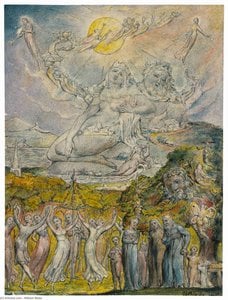
William Blake's "Glad Day," often referred to as "The Dance of Albion," is a captivating artwork that embodies the spirit of Romanticism and showcases Blake’s unique blend of artistic vision and profound symbolism. Created around 1803-1810, this piece transcends mere representation; it offers a glimpse into Blake's personal mythology and his exploration of spiritual awakening.
Subject and Composition
The central figure in "Glad Day" is a male form, often interpreted as Albion – a symbolic representation of England or humanity itself. He stands upon rocky formations that appear to float amidst a celestial landscape. The man's posture is dynamic; one arm reaches upwards towards the sky, while the other extends downwards, suggesting an act of offering or connection between earthly and divine realms. His wings, depicted in shades of blue, further emphasize his elevated state and potential for ascension. The composition is divided into distinct zones: a bright yellow area above, transitioning to red in the middle, and culminating in a dark blue/black base. This color scheme contributes significantly to the artwork's overall emotional impact.
Style and Technique
"Glad Day" exemplifies Blake’s distinctive artistic style – a fusion of neoclassical precision with Romantic expressiveness. He employed techniques such as etching and engraving, often incorporating hand-coloring to achieve vibrant hues and intricate details. The lines are bold yet graceful, creating a sense of movement and energy within the composition. Blake's use of color is particularly noteworthy; the yellows and reds evoke feelings of warmth, passion, and spiritual illumination, while the blues and blacks suggest depth, mystery, and the vastness of the cosmos. This combination creates a visually striking and emotionally resonant image.
Symbolism and Interpretation
The artwork is rich in symbolic meaning. Albion's upward gesture can be interpreted as an aspiration towards enlightenment or divine connection. The rocky landscape represents challenges overcome on the path to spiritual growth. The colors themselves carry symbolic weight: yellow often signifies intellect and clarity, red embodies passion and energy, and blue represents spirituality and transcendence. Some scholars suggest that the figure’s pose alludes to a dance – a celebration of life, freedom, and the union of body and spirit. Blake's personal mythology, interwoven with Christian and classical themes, adds layers of complexity to the artwork's interpretation.
Emotional Impact and Legacy
"Glad Day" evokes a sense of joy, liberation, and spiritual awakening. The vibrant colors and dynamic composition create an uplifting and inspiring atmosphere. Blake’s ability to convey profound philosophical ideas through visual imagery is remarkable. Today, "Glad Day" remains one of his most celebrated works, admired for its beauty, symbolism, and enduring message of hope and transcendence. It continues to inspire artists and art enthusiasts alike, solidifying William Blake's legacy as a visionary artist and poet.



 미리보기
미리보기
 손으로 그린 그림 구매
 공유하기
공유하기 공유하기
공유하기
 상세 정보
상세 정보

 다운로드
다운로드
 유사 작품
유사 작품 X-레이
X-레이 슬라이드 쇼

 더 보기
더 보기






































 유리 옵션은 110cm 미만 크기에서만 선택 가능합니다.