빠른 제작과 다양한 마감 옵션을 제공하는 박물관 품질의 지클레이 또는 캔버스 프린트. ( 손으로 그린 그림 구매 디지털 이미지로 전환)





























작품의 원본 비율을 유지하는 미리 설정된 크기 중에서 선택하세요.

특정 프레임이나 공간에 맞춰 직접 치수를 입력하실 수 있습니다. 선택하신 사이즈가 원본 이미지의 비율과 일치하지 않을 경우, 작품을 크롭(자르기)하거나 이미지를 대칭 또는 단색 채우기로 확장하여 제작합니다. 제작 시작 전, 최종 확인을 위해 디지털 목업이 전송됩니다.
화면상의 미리보기는 실제 크롭이나 확장 상태를 반영하지 않으므로, 최종 구도는 오직 목업을 통해서만 정확하게 확인하실 수 있습니다.
맞춤 사이즈 제작도 가능하지만, 원본 비율을 유지하기 위해서는 사전 정의된 목록에서 치수를 선택하시는 것을 권장합니다.

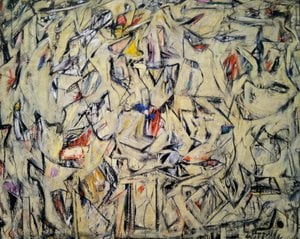
Study for backdrop (labyrinth),1946, private
복제본 크기
This vibrant, largely unknown work by Willem de Kooning, tentatively titled ‘Study for backdrop (labyrinth)’, offers a compelling glimpse into the artist's intensely personal and profoundly influential approach to Abstract Expressionism. Painted in 1946, during a period of intense experimentation and stylistic shifts within his oeuvre, the canvas pulsates with an almost primal energy – a testament to de Kooning’s relentless pursuit of raw emotion through purely formal means. The painting isn't simply a composition; it’s a visceral outpouring, a captured moment of restless contemplation rendered in bold, unapologetic color.
‘Study for backdrop (labyrinth)’ emerges from a pivotal moment in art history – the burgeoning Abstract Expressionist movement following World War II. De Kooning, along with artists like Jackson Pollock and Mark Rothko, was part of the “second generation” of American abstract painters who rejected European traditions and sought to forge a distinctly American artistic language. This period saw an increasing emphasis on individual expression and subjective experience, moving away from representational art towards purely formal concerns. De Kooning’s work reflects this shift, prioritizing the act of painting itself over any external subject or narrative.
The title, ‘Study for backdrop (labyrinth)’, hints at a process of exploration and experimentation. The term “study” suggests a preliminary sketch or working model, while "labyrinth" evokes a sense of complexity, disorientation, and perhaps even the artist's own internal struggles. It’s possible this piece was intended as a preparatory study for a larger mural or theatrical backdrop, further emphasizing its functional and dynamic nature.
Despite its abstract qualities, ‘Study for backdrop (labyrinth)’ is rich in symbolic potential. The animals themselves can be interpreted as representing primal instincts, anxieties, or even the artist’s own fragmented psyche. The sports ball, a seemingly incongruous element, might symbolize competition, chaos, or the disruption of established order – themes frequently explored by de Kooning.
Ultimately, the painting's power lies in its ability to evoke a strong emotional response. The frenetic energy, jarring colors, and fragmented forms combine to create a sense of unease, tension, and perhaps even exhilaration. It’s a work that demands attention, inviting viewers to confront their own perceptions and emotions.
This exceptional piece offers a rare opportunity to acquire a significant work by one of the 20th century’s most important artists. A hand-painted reproduction captures not only the visual impact of ‘Study for backdrop (labyrinth)’ but also the textural richness and emotional depth of de Kooning's technique. Its dynamic composition and bold use of color make it an ideal addition to a wide range of interior design schemes, from modern minimalist spaces to more eclectic settings. This artwork is more than just decoration; it’s an investment in art history and a testament to the enduring power of Abstract Expressionism.


1904 - 1997 , 네덜란드

Explore the profound elegance of De Stijl. Discover how Piet Mondrian and the masters of Neoplasticism utilized geometric harmony and primary colors to redefine modern abstraction. An authoritative guide for the discerning collector seeking timeless, structured beauty.


 미리보기
미리보기
 공유하기
공유하기 공유하기
공유하기
 상세 정보
상세 정보 가이드 보기

 다운로드
다운로드
 유사 작품
유사 작품 X-레이
X-레이 슬라이드 쇼
 통계 정보
통계 정보

 더 보기
더 보기









 유리 옵션은 110cm 미만 크기에서만 선택 가능합니다.