이 페이지에 표시된 작품은 저작권법의 보호를 받으며, 이에 따라 동일한 복제품을 제작하거나 판매하는 것은 법으로 금지되어 있습니다. 이러한 권리 보호는 다음과 같은 국제 협약에 따라 시행됩니다. 베른 협약 또한 다음에서 명시하는 법률을 포함한 국내법에 의해 보호됩니다. 미국 저작권법 제17조.
저희는 존중을 담은 합법적인 대안으로서, 원작에서 영감을 받은 맞춤형 수제 유화 작품을 제공합니다. 저희의 숙련된 전문 화가들은 원작의 스타일, 분위기, 예술적 정수를 면밀히 연구하여, 그 자체로 독창적인 창작물이면서도 원작과 동일한 감동을 불러일으키는 새로운 작품을 만들어냅니다.
이 방식은 저작권 보호를 받는 예술 작품을 복제하거나 그대로 재현하는 것이 아니기에 저작권 규정을 완벽히 준수합니다. 대신, 이는 창의적인 재해석의 과정을 거칩니다. 즉, 원작에서 영감을 받되 원작과 동일하지 않은 새로운 회화 작품을 의미합니다.
작가가 직접 캔버스에 손으로 그린 유화 작품으로, 원하는 크기와 액자로 맞춤 제작해 드립니다. ( 프린트 판매로 전환 디지털 이미지 판매 채널로 전환)





























작품의 원본 비율을 그대로 유지하는 프리셋 사이즈 중에서 선택해 보세요.

액자나 벽면 크기에 맞춰 필요한 가로와 세로 길이를 입력해 주세요. 본 작품은 수작업으로 제작되므로, 요청하신 비율에 따라 작가가 그림의 가장자리를 조금 더 넓게 그리거나 일부를 조정하여 작업할 수 있습니다. 작업 시작 전, 최종 확인을 위해 디지털 목업 이미지를 보내드립니다. 이 페이지에 표시된 이미지는 실제 결과물과 다를 수 있으며, 오직 목업 이미지만이 정확한 결과물을 보여줍니다.
Night
복제본 규격
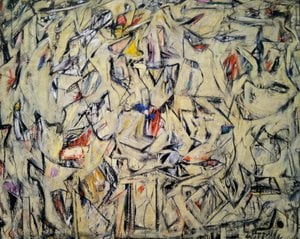
In the hauntingly rendered depths of Willem de Kooning’s 1948 masterpiece, “Night,” viewers are not merely observers but participants in a profound existential drama. The painting presents a striking, unsettling juxtaposition: a female face emerges from the shadows, only to be overlaid with the stark, skeletal imagery of a skull. This collision of beauty and decay establishes a central preoccupation that has defined much of de Kooning’s illustrious career. It is an image that refuses to offer comfort, instead forcing a confrontation with the fragility of life. The subject matter transcends simple portraiture, acting as a window into the human condition where the vitality of femininity battles against the encroaching darkness of mortality.
The emotional resonance of the piece is amplified by its place within the heart of Abstract Expressionism. Born from the profound disillusionment and psychological upheaval of the post-World War II era, "Night" embodies the movement's characteristic intensity. De Kooning abandons the safety of realism to prioritize raw feeling over precise form. There is a palpable sense of anxiety woven into every stroke, reflecting a period when artists were grappling with the trauma of global conflict and the terrifying uncertainties of a new atomic age. To stand before this work is to feel the weight of that historical tension, making it an essential piece for those who appreciate art that speaks to the deepest, often unspoken, layers of the human psyche.
Technically, "Night" is a masterclass in the action painting style that would soon define the New York School. De Kooning utilized a bold, visceral palette—dominated by deep blacks, fiery reds, and jarring yellows—to create a sense of movement and instability. His technique relies heavily on thick impasto, where layers of oil paint are applied with such vigor that the canvas takes on a three-dimensional, sculptural quality. These heavy, deliberate strokes do not merely depict a scene; they record the physical and emotional energy of the artist himself. The texture is so dense that it creates a rhythmic, almost turbulent surface, mirroring the internal chaos of the subject matter.
Beyond the central figures, the composition is enriched by subtle, enigmatic elements that invite endless reinterpretation. A checkered pattern drifts through the background, adding a layer of geometric tension and depth that contrasts sharply with the organic, fluid forms of the face and skull. The presence of fragmented motifs—hints of a bird or perhaps a distant car—suggests a world in flux, where the boundaries between the subconscious and reality are perpetually blurred. For the discerning collector or interior designer, this painting offers more than just visual impact; it provides a sophisticated focal point that commands attention through its complexity, making it a timeless addition to any space dedicated to profound artistic expression.
Neutrals 색조를 담은 윌렘 드 쿠닝의 "Night"는 Living Room에 배치하시길 추천드립니다. 이 작품의 색감이 이러한 제안의 이유이기도 합니다.
윌렘 드 쿠닝의 "Night"에 묘사된 주제: skull imagery, female figure, color palette, texture contrast, geometric pattern, symbolism, emotional expression.
Abstract Expressionism 양식의 작품 "Night"은 네덜란드에서 태어난 작가에 의해 제작되었습니다.

1904 - 1997 , 네덜란드

Explore the profound emotional depth of Abstract Expressionism. From Pollock's dynamic drips to de Kooning's gestural mastery, our expert guide offers art collectors a sophisticated analysis of this transformative movement and its enduring legacy in modern fine art.

 실제 크기로 보기
 보내기
보내기 공유하기
공유하기
 상세 보기
상세 보기 가이드 보기

 이미지 다운로드
 유사 작품 더 보기
 X-레이
X-레이 슬라이드 쇼 보기
 Q&A
Q&A 통계 정보
통계 정보

 상세 보기
상세 보기









 유리 옵션은 110cm 미만 크기에서만 선택 가능합니다.


![Abstract Composition [triptych] — Vaclav Vytlacil, Abstract Expressionism](/media/artworks/images-thumb/08/3c/083c0675045645fd42d4e6c6d63f1ced.jpg)