

 Classical Portraiture
 1794
1794 7.0 x 6.0 cm
이 페이지에 표시된 작품은 저작권법의 보호를 받으며, 이에 따라 동일한 복제품을 제작하거나 판매하는 것은 법으로 금지되어 있습니다. 이러한 권리 보호는 다음과 같은 국제 협약에 따라 시행됩니다. 베른 협약 또한 다음에서 명시하는 법률을 포함한 국내법에 의해 보호됩니다. 미국 저작권법 제17조.
저희는 존중을 담은 합법적인 대안으로서, 원작에서 영감을 받은 맞춤형 수제 유화 작품을 제공합니다. 저희의 숙련된 전문 화가들은 원작의 스타일, 분위기, 예술적 정수를 면밀히 연구하여, 그 자체로 독창적인 창작물이면서도 원작과 동일한 감동을 불러일으키는 새로운 작품을 만들어냅니다.
이 방식은 저작권 보호를 받는 예술 작품을 복제하거나 그대로 재현하는 것이 아니기에 저작권 규정을 완벽히 준수합니다. 대신, 이는 창의적인 재해석의 과정을 거칩니다. 즉, 원작에서 영감을 받되 원작과 동일하지 않은 새로운 회화 작품을 의미합니다.
작가가 직접 캔버스에 손으로 그린 유화 작품으로, 원하는 크기와 액자로 맞춤 제작해 드립니다. ( 프린트 판매로 전환 디지털 이미지 판매 채널로 전환)
작품의 원본 비율을 그대로 유지하는 프리셋 사이즈 중에서 선택해 보세요.

액자나 벽면 크기에 맞춰 필요한 가로와 세로 길이를 입력해 주세요. 본 작품은 수작업으로 제작되므로, 요청하신 비율에 따라 작가가 그림의 가장자리를 조금 더 넓게 그리거나 일부를 조정하여 작업할 수 있습니다. 작업 시작 전, 최종 확인을 위해 디지털 목업 이미지를 보내드립니다. 이 페이지에 표시된 이미지는 실제 결과물과 다를 수 있으며, 오직 목업 이미지만이 정확한 결과물을 보여줍니다.
Captain Joseph Anthony
복제본 규격

In the delicate, intimate world of eighteenth-century portraiture, few names evoke as much charm and technical reverence as Walter Robertson. Known affectionately in the United States as "The Irish Robertson," he was a master of the miniature, an art form that required not only immense skill but a profound psychological sensitivity. Born in Dublin around 1750, Robertson emerged from a family of skilled miniaturists and jewelers, a lineage that likely provided him with his foundational understanding of fine detail and precious materials. His early years in Ireland were marked by a burgeoning talent that saw him excelling in the Dublin Society's School of Drawing, where his prowess in human studies earned him early accolades and set the stage for a career that would traverse the great artistic hubs of Europe and America.
The trajectory of Robertson’s life was as much about movement as it was about artistry. His journey took him from the cobblestone streets of Dublin to the sophisticated circles of London, and eventually to the burgeoning cultural landscape of New York. A pivotal moment in his professional development was his friendship with the legendary American easel painter Gilbert Stuart. This connection facilitated his move to New York in 1793, allowing his work to reach a new audience of American elites. Whether working in the bustling studios of London or the vibrant atmosphere of the young United States, Robertson maintained a stylistic consistency that made his hand instantly recognizable—a blend of Neoclassical elegance and an almost ethereal luminosity.
To study a Robertson miniature is to witness a masterclass in the use of watercolor on ivory. This specific medium, favored by the era's most gifted miniaturists, offered a unique translucency that allowed light to pass through the pigment and reflect off the white surface of the ivory beneath. Robertson utilized this property to create skin tones that seemed to glow with life, capturing the subtle flush of a cheek or the soft contour of a jawline with unparalleled delicacy. His technique was characterized by fine, controlled brushstrokes that could convey the heavy texture of a velvet coat or the intricate lace of a cravat without ever overwhelming the small scale of the work.
His artistic development was deeply rooted in the Neoclassical tradition, an influence likely solidified during his apprenticeship under William Woolnoth. From Woolnoth, Robertson inherited a disciplined approach to form and a commitment to idealized yet accurate representation. This training allowed him to navigate the shifting aesthetic tides of the Napoleonic era, producing works that felt both timeless and contemporary. His portraits were not merely likenesses; they were carefully constructed windows into the social standing and character of his subjects. Through meticulous observation, he could imbue a tiny piece of ivory with the dignity of an aristocrat or the quiet intellect of a scholar.
The surviving body of Robertson's work serves as a precious historical record of the prominent figures of his age. His subjects were often individuals at the pinnacle of British and American society, captured in moments of poised sophistication. Some of his most notable achievements include:
Though historical records regarding his final years vary—with some accounts placing his death in London and others suggesting a more distant end in India—the impact of his artistry remains undiminished. Walter Robertson did more than just paint faces; he captured the very essence of an era defined by refinement, intellect, and a burgeoning global connection. His miniatures remain cherished treasures, offering a quiet, luminous glimpse into the hearts and histories of the past.
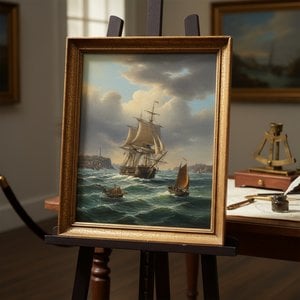
Explore the exquisite maritime paintings of Samuel Walters (1811-1882). Discover his mastery of detail, historical scenes & influence on Victorian art. Learn about collecting his works and find high-quality reproductions at WahooArt.

Explore the captivating world of Evan Walters, a Welsh artist renowned for his evocative landscapes & social commentary. Discover his Impressionistic style, unique journey, and lasting impact on 20th-century art – a valuable insight for collectors.

Explore the captivating world of Joseph Highmore, a leading British Rococo painter. Discover his elegant portraits, insightful 'Pamela' illustrations & contributions to 18th-century art history. Learn more at WahooArt.

Journey through 18th century art! Explore 10 iconic paintings – from Rococo elegance to Neoclassical grandeur. Discover Fragonard, David & more. Find museum-quality reproductions and elevate your home decor on WahooArt.com.

Explore the social commentary & artistic representation of 18th-century society. Discover Rococo masterpieces, portraiture's power, and shifting historical perspectives. Expert insights for art lovers.

 실제 크기로 보기
 보내기
보내기 공유하기
공유하기
 상세 보기
상세 보기 가이드 보기

 이미지 다운로드
 유사 작품 더 보기
 X-레이
X-레이 슬라이드 쇼 보기
 통계 정보
통계 정보 상세 보기
상세 보기






































 유리 옵션은 110cm 미만 크기에서만 선택 가능합니다.


