빠른 제작과 다양한 마감 옵션을 제공하는 박물관 품질의 지클레이 또는 캔버스 프린트. ( 손으로 그린 그림 구매 디지털 이미지로 전환)





























작품의 원본 비율을 유지하는 미리 설정된 크기 중에서 선택하세요.

특정 프레임이나 공간에 맞춰 직접 치수를 입력하실 수 있습니다. 선택하신 사이즈가 원본 이미지의 비율과 일치하지 않을 경우, 작품을 크롭(자르기)하거나 이미지를 대칭 또는 단색 채우기로 확장하여 제작합니다. 제작 시작 전, 최종 확인을 위해 디지털 목업이 전송됩니다.
화면상의 미리보기는 실제 크롭이나 확장 상태를 반영하지 않으므로, 최종 구도는 오직 목업을 통해서만 정확하게 확인하실 수 있습니다.
맞춤 사이즈 제작도 가능하지만, 원본 비율을 유지하기 위해서는 사전 정의된 목록에서 치수를 선택하시는 것을 권장합니다.

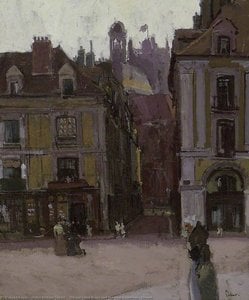
The Bar Parlour
복제본 크기
In the quiet, amber-hued corners of early twentieth-century London, Walter Richard Sickert found his most profound muses. The Bar Parlorp, painted in 1922, serves as a masterful window into a world that exists in the soft periphery of the bustling metropolis. This evocative piece captures a fleeting moment of repose within a dimly lit establishment, where the boundaries between public life and private intimacy begin to blur. Through his distinctive lens, Sickert does not merely document a scene; he invites the viewer to sit at the table, to feel the weight of the afternoon shadows, and to become a silent participant in this intimate tableau of everyday existence.
The composition is anchored by three figures who inhabit the space with a natural, unforced grace. Two women are seated at a table, their presence suggesting a shared confidence or perhaps a momentary respite from the world outside, while a man leans against the counter behind them, his posture embodying the weary yet watchful character of the urban dweller. There is a profound sense of theatricality in this arrangement—a nod to Sickert’s own early ambitions on the London stage. Every element, from the scattered bottles on the counter to the humble loaf of bread resting on the table, contributes to a narrative of domesticity found within the public sphere, creating a scene that feels both deeply personal and universally recognizable.
Technically, The Bar Parlour is a triumph of late Impressionist sensibility. Sickert eschews the sharp, clinical lines of realism in favor of loose, expressive brushstrokes that prioritize atmosphere over anatomical precision. This technique allows the light to perform its own magic; rather than being a harsh, direct force, the illumination is soft and diffused, as if filtering through a haze of tobacco smoke and dust motes. The color palette is a sophisticated study in earth tones—deep ochres, warm umbers, and muted shadows—which coalesce to create an inviting, nostalgic warmth that wraps around the viewer like a heavy velvet curtain.
For the discerning collector or interior designer, this painting offers more than mere decoration; it provides a focal point of profound emotional depth. The texture of the paint itself adds a tactile dimension to the work, suggesting the weathered surfaces of the bar and the soft fabrics of the figures' attire. When rendered as a high-quality reproduction, the interplay of light and shadow retains its ability to transform a room, lending an air of sophisticated melancholy and timeless elegance to any curated space. It is a piece that does not demand attention through loudness, but rather commands it through a quiet, irresistible magnetism.
To understand the emotional resonance of this work, one must consider Sickert’s unique position as an artist caught between German heritage and British urbanity. His fascination with the "marginalized" and the "unseen" is palpable here. There is no grand historical drama unfolding in The Bar Parlour; instead, the drama lies in the subtle psychological tension between the characters and the heavy, comforting stillness of their environment. It is a celebration of the mundane, elevated to the level of high art through sheer observational genius.
Owning or displaying a reproduction of this masterpiece allows one to bring a piece of London's historical soul into the modern home. It serves as a reminder of the beauty found in the quiet intervals of life—the moments of stillness amidst the chaos of progress. For those seeking to infuse their interiors with a sense of history, warmth, and intellectual depth, Sickert’s vision offers an unparalleled source of inspiration, bridging the gap between the fleeting present and the enduring past.


1860 - 1942 , 독일

Master the nuances of Impressionism vs. Post-Impressionism with our expert guide. Explore the revolutionary shift from Monet’s fleeting light to Van Gogh’s emotional depth. Discover how these iconic movements continue to inspire fine art collectors and modern interiors today.


 미리보기
미리보기
 공유하기
공유하기 공유하기
공유하기
 상세 정보
상세 정보 가이드 보기

 다운로드
다운로드
 유사 작품
유사 작품 X-레이
X-레이 슬라이드 쇼
 통계 정보
통계 정보


 더 보기
더 보기









 유리 옵션은 110cm 미만 크기에서만 선택 가능합니다.