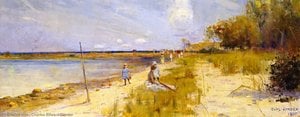
Oil On BoardWallArtHeidelberg School Impressionism
 189319th Century
 67.0 x 49.0 cm
 아트 갤러리 오브 뉴 사우스 웨일스
온라인 미리보기보다 훨씬 뛰어난 품질의 고해상도 디지털 이미지를 구매해 보세요.
각 파일은 사내 전문가가 고급 도구와 숙련된 수동 리터칭 기술을 사용하여 세심하게 준비합니다. 우리는 모든 이미지가 탁월한 선명도, 정확한 색상 재현력, 그리고 미세한 디테일까지 완벽하게 갖추도록 보장합니다.
최종 파일은 전문적인 편집 및 인쇄 환경에서 즉시 사용할 수 있도록 최적화되어 72시간 이내에 이메일로 발송됩니다. 이는 세계적인 디자인 스튜디오, 출판사 및 갤러리가 신뢰하는 것과 동일한 품질입니다.
개인 소장 및 전시, 인쇄, 창작 프로젝트를 위한 고해상도 파일을 다운로드하세요. ( 프린트 판매로 전환 손으로 그린 그림 구매)
WahooArt.com를 선택하시면 단순히 이미지를 받는 것을 넘어, 정밀한 보정 과정을 거친 전문적인 디지털 예술 작품을 만나보실 수 있습니다. 모든 작품에는 만족 보장 서비스가 함께 제공되며, 주문 시 다음과 같은 사항들이 자동으로 포함됩니다:

주문 후 72시간 이내에 고해상도 디지털 이미지 파일이 이메일로 발송되며, 즉시 사용하실 수 있습니다.

귀하의 작품은 고급 AI 도구와 수동 편집 과정을 거쳐 전문적으로 최적화되며, 이를 통해 디테일과 선명도, 색상의 정확도를 극대화합니다.

파일을 실수로 삭제하거나 분실하셨나요? 걱정 마세요. 언제든 무료로 다시 보내드립니다.

관세나 부가세, 배송비 부담 없이 작품을 즉시 감상하세요 - 디지털 다운로드는 언제나 면세 혜택이 적용됩니다.

전문적인 도구와 색상 관리 시스템을 통해 디지털 이미지가 원본의 색상을 최대한 정확하게 구현하도록 보장합니다.

구매하신 디지털 이미지에 만족하지 못하실 경우, 100일 이내에 별도의 조건 없이 수정 또는 100% 환불을 진행해 드립니다.

만족스럽지 않으신가요? 디지털 파일을 받으신 후 100일 이내에 어떠한 조건 없이 전액 환불해 드립니다.

이미지 3매 구매 시 10% 할인 - 5매 구매 시 15% 할인 - 10매 이상 구매 시 20% 할인. 크리에이티브 프로젝트, 갤러리, 에이전시에 매우 유용합니다.
In the shimmering heat of the Victorian goldfields, where the air vibrates with both hope and hardship, Walter Herbert Withers captured a moment of profound human endeavor. “Seeking for Gold – Cradling,” painted in 1893, is far more than a mere historical record; it is a poetic immersion into the soul of the Australian frontier. The scene unfolds within a shallow creek bed, where two men are locked in a rhythmic, diligent dance with the earth. As they operate the gold cradle—a primitive yet essential wooden apparatus designed to sift precious grains from the silt—the viewer is drawn into their quiet world of determination. There is a palpable sense of focus in their movements, a shared silence that speaks to the solitary nature of the pioneer's struggle against the elements.
Withers, a master of the Heidelberg School, utilizes the hallmarks of Impressionism to breathe life into this rugged landscape. Rather than clinging to rigid, photographic precision, he employs loose, spirited brushstrokes that allow the light to dance across the canvas. The technique prioritizes the ephemeral quality of the atmosphere, capturing how the brilliant Australian sun pierces through the canopy to illuminate the creek. This mastery of plein air sensibilities ensures that the painting feels alive, as if the warmth of the afternoon could be felt by anyone standing before it. The interplay of light and shadow does not merely define form; it creates a sense of movement, suggesting the flowing water and the shifting dust of the mining site.
The color palette of this masterpiece is a deliberate study in warmth and resilience. Dominated by sun-drenched ochres, deep earthy browns, and radiant golds, the work evokes an overwhelming sense of optimism. These warm hues are not merely descriptive of the soil and the sunlight; they serve as a symbolic heartbeat for the painting, representing the very prosperity the miners seek. Amidst these heavy, grounded tones, the subtle presence of nature—such as the birds gliding through the sky above—adds a layer of tranquil continuity to the scene, reminding us that while man seeks to extract wealth from the land, the landscape remains an enduring, majestic force.
For the discerning collector or interior designer, this artwork offers a sophisticated anchor for any space. Its historical gravity and emotional depth make it a perfect centerpiece for rooms that value character and storytelling. Whether placed in a sunlit study to evoke a sense of adventure or in a contemporary living area to provide a warm, organic contrast to modern minimalism, the painting brings with it an aura of timelessness. To possess a reproduction of this work is to hold a fragment of Australian history—a tribute to the enduring human spirit and the beautiful, untamed light of the Antipodes.

Born amidst the industrial landscapes of Aston Manor, Warwickshire, in 1854, Walter Herbert Withers would eventually become a primary architect of the Australian visual identity. His journey from the United Kingdom to the heart of the Antipodes was more than a mere geographical relocation; it was an artistic pilgrimage that allowed him to translate the rugged, sun-drenched essence of the Australian bush into the sophisticated language of Impressionism. Though his father initially harbored reservations about a life dedicated to the brush, the burgeoning passion within Withers could not be suppressed. This early struggle between familial expectation and creative calling forged a resilient spirit that would later define his approach to the challenging, ever-shifting light of the Australian landscape.
The foundation of Withers’ technical mastery was laid through rigorous academic training and a deep immersion in the European tradition. His time at the Académie Julian in Paris served as a pivotal chapter, where he absorbed the revolutionary techniques of plein air painting. This method—the practice of stepping out from the studio to capture nature directly under the open sky—became the heartbeat of his work. By studying the interplay of light and shadow through a French lens, Withers developed a meticulous eye for detail that remained grounded in the atmospheric spontaneity of the Impressionist movement. His early years as a drawing and painting master further refined his ability to observe the subtle nuances of form and texture, skills he would later share with a new generation of Australian talent.
Upon arriving in Melbourne in 1883, Withers found himself at the epicenter of a burgeoning national art movement. He became an integral member of the Heidelberg School, joining forces with legendary figures such as Arthur Streeton and Fred McCubbin. Together, these artists sought to move away from colonial, European-centric depictions of Australia, striving instead to capture the authentic, raw beauty of the local environment. Withers’ contribution to this movement was characterized by a unique ability to blend the structural precision of his academic training with the emotive, vibrant color palettes favored by his contemporaries.
His work often moved beyond mere landscape to explore the human connection to the land. One of his most evocative themes involved the depiction of Australian life and the grit of the gold rush era. In masterpieces such as 'Seeking for Gold - Cradling', Withers utilized a masterful command of light to narrate stories of resilience and hope. Through these scenes, he captured the rhythmic labor of gold panning and the quiet dignity of those navigating the frontier, transforming historical moments into timeless, atmospheric studies of human endurance.
The significance of Walter Herbert Withers lies in his role as a bridge between tradition and modernity. While his techniques were rooted in the classical academies of Europe, his soul was firmly planted in the Australian soil. His ability to render the eucalyptus-scented air, the harsh midday sun, and the tranquil winter shadows helped establish a visual vocabulary that allowed Australians to see their own country through an elevated, artistic lens.
Throughout his career, Withers remained a dedicated observer of nature’s fleeting moments. His legacy is preserved not only in the galleries that house his landscapes but in the very way we perceive the Australian light today. He remains a cornerstone of Australian art history, remembered as a painter who could capture both the monumental scale of the bush and the intimate, quiet whispers of the natural world.

1854 - 1914


 미리보기
미리보기
 공유하기
공유하기 공유하기
공유하기
 상세 정보
상세 정보

 다운로드
다운로드
 유사 작품
유사 작품 X-레이
X-레이 슬라이드 쇼
 통계 정보
통계 정보 더 보기
더 보기