

원하는 크기와 액자로 주문 제작되는, 작가들이 직접 캔버스에 손으로 그린 유화 작품입니다. ( Switch to Print Switch to Digital Image)





























작품의 원본 비율을 유지하는 미리 설정된 크기 중에서 선택하세요.

특정 프레임이나 공간에 맞도록 직접 크기를 입력할 수 있습니다. 선택하신 크기가 원본 이미지의 비율과 일치하지 않는 경우, 작품을 자르거나 추가적인 손으로 그린 요소를 사용하여 그림을 확장합니다. 제작 시작 전 승인을 위해 디지털 목업을 보내드립니다.
화면 미리 보기는 실제 자르기 또는 확장을 반영하지 않습니다. 최종 구성은 목업을 통해서만 정확하게 확인하실 수 있습니다.
맞춤 크기 제작도 가능하지만, 원본 비율을 유지하기 위해 사전 정의된 목록에서 크기를 선택하시는 것을 권장합니다.

Ring. Theatrical
복제본 크기
Born in Kyiv, Ukraine, in 1980, Vitalii Khomenko is more than a jewelry designer; he’s a meticulous translator of emotion and memory into shimmering silver. His work isn't merely decorative; it’s a quiet rebellion against the constraints of Soviet artistic expression, a revival of traditional Ukrainian techniques imbued with a distinctly modern sensibility. While much of his early life remains private, Khomenko’s journey as an artist is inextricably linked to the turbulent history of Ukraine – a nation grappling with identity and resilience.
Khomenko's initial foray into art began in the 1980s, a period marked by artistic suppression under the Soviet regime. This environment fostered a deep appreciation for craftsmanship and a yearning for creative freedom. His early pieces, notably “Ring. Theatrical” (1980), demonstrate an immediate mastery of filigree – a complex technique involving delicate wirework that was both technically demanding and deeply rooted in Ukrainian folk art traditions. The choice of silver as his primary medium speaks volumes; it’s a metal historically associated with wealth, status, and spiritual significance within Ukrainian culture. The ‘Ring. Theatrical’ piece itself is a miniature stage set, capturing a moment of dramatic intensity through intricate detail and symbolic imagery – a testament to Khomenko's early ambition and technical skill.
Khomenko’s style defies easy categorization. He isn’t bound by rigid movements or stylistic labels, instead, he seems to draw inspiration from a wide range of sources – Ukrainian folklore, the natural world, and perhaps most profoundly, the historical context of his homeland. His work is characterized by an almost obsessive attention to detail; every curve, every facet, every tiny embellishment feels deliberately placed, contributing to a larger narrative. The use of techniques like granulation (creating textured surfaces through layering metal powder) and enameling adds depth and richness to his pieces, transforming them into miniature works of art.
A key influence on Khomenko’s work is the revival of traditional Ukrainian jewelry making. Following the collapse of the Soviet Union, there was a renewed interest in reclaiming cultural heritage. Khomenko embraced this movement, meticulously studying and adapting ancient techniques while simultaneously injecting his own artistic vision. His pieces often incorporate elements inspired by Ukrainian folk art – stylized floral motifs, geometric patterns, and symbolic imagery—but rendered with a contemporary aesthetic. The ‘Jewellery set. Winter Carol’ (1972), exemplifies this perfectly, featuring delicate silver earrings and a brooch adorned with a large agate inset, evoking the spirit of winter through its use of color and texture.
Khomenko's work is deeply intertwined with the complex history of Ukraine. The period in which he began his career was marked by political upheaval and cultural suppression, experiences that undoubtedly shaped his artistic sensibilities. His decision to work primarily with silver reflects a deliberate choice – a metal associated with both wealth and spiritual significance within Ukrainian culture, yet also one that was often restricted during the Soviet era. This restriction fueled a desire for creative expression and contributed to the revival of traditional techniques.
Furthermore, Khomenko’s work can be seen as a subtle act of resistance – a quiet assertion of Ukrainian identity in a context where cultural expression was frequently controlled. His meticulous craftsmanship and attention to detail are not merely aesthetic choices; they represent a commitment to preserving and celebrating Ukrainian artistic traditions. The incorporation of elements like agates, often associated with spiritual power and good fortune, further reinforces this theme.
Despite the challenges faced by Ukrainian artists during his formative years, Vitalii Khomenko has continued to create stunning jewelry that resonates deeply with contemporary audiences. His work is exhibited internationally, showcasing the beauty and resilience of Ukrainian craftsmanship. While much remains unknown about his personal life, his artistic legacy speaks volumes – a testament to the power of art to transcend political boundaries and preserve cultural heritage.
Khomenko’s continued dedication to his craft suggests a future filled with further explorations of form, texture, and symbolism. As an artist deeply rooted in Ukrainian tradition, he is undoubtedly poised to continue shaping the landscape of contemporary jewelry design for years to come, offering viewers a glimpse into the soul of Ukraine through the shimmering language of silver.

1980 - , Ukraine
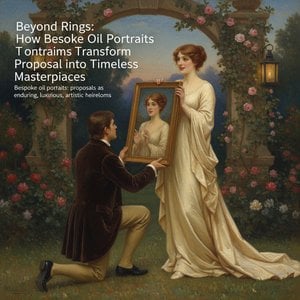
Elevate engagement storytelling with bespoke art. Discover how custom oil portraits transform proposals into unforgettable, heirloom-quality experiences. A guide for wedding planners seeking luxury, romantic alternatives to traditional rings that create lasting legacies.

 미리보기
미리보기
 공유하기
공유하기 공유하기
공유하기
 상세 정보
상세 정보

 다운로드
다운로드
 유사 작품
유사 작품 X-레이
X-레이 슬라이드 쇼
 Stats
Stats


 더 보기
더 보기









 유리 옵션은 110cm 미만 크기에서만 선택 가능합니다.


