
 캔버스에 유채월아트Post-Impressionism
 1888
1888 73.0 x 92.0 cm
빠른 제작과 다양한 마감 옵션을 제공하는 박물관 품질의 지클레이 또는 캔버스 프린트. ( 손으로 그린 그림 구매 디지털 이미지로 전환)





























작품의 원본 비율을 유지하는 미리 설정된 크기 중에서 선택하세요.

특정 프레임이나 공간에 맞춰 직접 치수를 입력하실 수 있습니다. 선택하신 사이즈가 원본 이미지의 비율과 일치하지 않을 경우, 작품을 크롭(자르기)하거나 이미지를 대칭 또는 단색 채우기로 확장하여 제작합니다. 제작 시작 전, 최종 확인을 위해 디지털 목업이 전송됩니다.
화면상의 미리보기는 실제 크롭이나 확장 상태를 반영하지 않으므로, 최종 구도는 오직 목업을 통해서만 정확하게 확인하실 수 있습니다.
맞춤 사이즈 제작도 가능하지만, 원본 비율을 유지하기 위해서는 사전 정의된 목록에서 치수를 선택하시는 것을 권장합니다.

The Novel Reader
복제본 크기
Vincent van Gogh’s “The Novel Reader” isn't merely a portrait; it’s a carefully constructed distillation of the artist’s profound understanding of human emotion and his masterful command of light and color. Painted in 1888 during his intensely productive period in Arles, France, this oil-on-canvas work offers a glimpse into a solitary moment of intense focus – a woman utterly absorbed in the world contained within the pages of her book. The painting immediately draws the viewer in with its muted palette and the subtle dynamism of Van Gogh’s brushstrokes, creating an atmosphere both serene and subtly charged.
The composition is deceptively simple yet remarkably effective. A woman, rendered in shades of brown, grey, and ochre, sits comfortably in a chair, her head bowed slightly as she loses herself within the narrative unfolding before her eyes. The room around her – a collection of chairs, books, and a table – feels lived-in, suggesting a space of quiet contemplation rather than an austere study. Van Gogh’s genius lies not just in depicting these objects but in imbuing them with a sense of presence and character. Notice the slight tilt of the chair, the way the light catches on the spines of the books, each hinting at untold stories.
“The Novel Reader” firmly places itself within the Post-Impressionist movement, a period characterized by a shift away from purely objective representation towards a more subjective and expressive approach to art. Van Gogh, like his contemporaries such as Gauguin and Cézanne, rejected the Impressionists’ focus on capturing fleeting moments of light and instead sought to convey their own emotional responses to the world around them. This is evident in the thick, impasto brushstrokes that define the painting – each stroke a deliberate act of expression, adding texture and vitality to the scene.
The use of color is particularly noteworthy. Van Gogh employs a restrained palette, dominated by earthy tones, but strategically introduces splashes of brighter hues—a touch of yellow on the book’s cover, a hint of red in the chair – to draw the eye and create visual interest. These subtle accents aren't merely decorative; they contribute to the painting’s overall mood, suggesting warmth, intimacy, and perhaps even a touch of melancholy.
Beyond its immediate depiction, “The Novel Reader” is rich in symbolism. The act of reading itself represents an escape from reality, a journey into another world – a concept that resonated deeply with Van Gogh, who often struggled to find solace in his own life. The woman’s posture suggests not just absorption but also a degree of vulnerability and introspection. She's lost in the story, perhaps grappling with her own thoughts and emotions.
Furthermore, the books themselves are symbolic objects, representing knowledge, imagination, and the power of storytelling. The fact that she is reading a novel – a work of fiction – underscores the idea that stories can transport us to different times and places, allowing us to experience lives beyond our own. The painting invites us to contemplate the relationship between reality and illusion, truth and fiction.
“The Novel Reader” stands as a testament to Van Gogh’s ability to capture the essence of everyday life with extraordinary depth and emotion. It's a poignant reminder of his enduring legacy as one of art history’s most influential figures, whose work continues to resonate with viewers today. Reproductions of this iconic painting offer a beautiful way to bring a touch of Van Gogh’s evocative style into any space, inviting contemplation and sparking the imagination.


1853 - 1890 , 네덜란드

Explore the profound emotional depth of Van Gogh's impasto technique. Discover how his sculptural brushstrokes and textured oil layers define Post-Impressionism through an expert art-historical lens, perfect for discerning collectors and fine art enthusiasts.

Master the nuances of Impressionism vs. Post-Impressionism with our expert guide. Explore the revolutionary shift from Monet’s fleeting light to Van Gogh’s emotional depth. Discover how these iconic movements continue to inspire fine art collectors and modern interiors today.
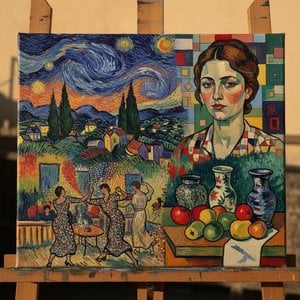
Unveil the profound revolution of Post-Impressionism. Explore how masters like Van Gogh and Cézanne utilized bold colors and emotional depth to transcend mere representation, laying the foundation for modern art. A sophisticated journey through history's most emotive brushstrokes.


 미리보기
미리보기
 공유하기
공유하기 공유하기
공유하기
 상세 정보
상세 정보

 다운로드
다운로드
 유사 작품
유사 작품 X-레이
X-레이 슬라이드 쇼
 통계 정보
통계 정보 더 보기
더 보기









 유리 옵션은 110cm 미만 크기에서만 선택 가능합니다.


![Olive Trees [1889] — 빈센트 반 고흐, Post-impressionism](/media/artworks/images-thumb/e4/68/e4688f7160b2dc16059fc15af708ca73.jpg)


